Qutub Minar, Delhi
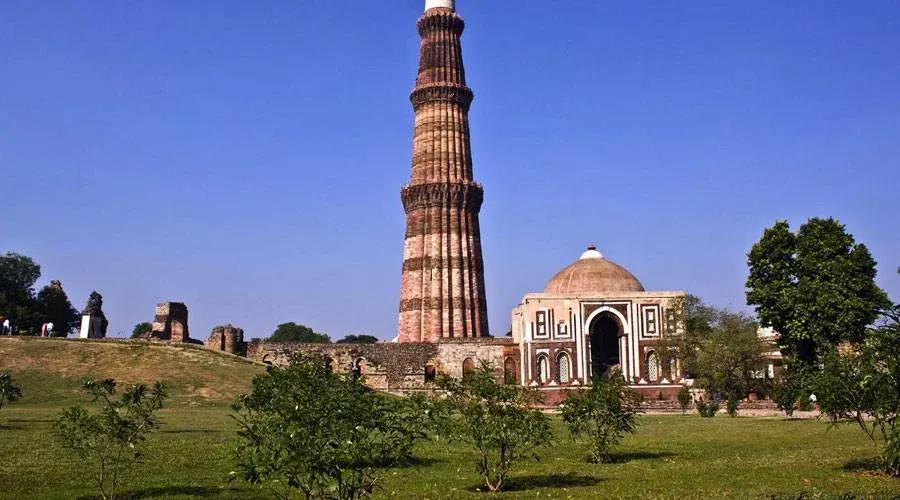
Qutub Minar is a minaret or a victory tower located in Qutub complex, a UNESCO World Heritage Site in Delhi's Mehrauli area. With a height of 72.5 meters (238 ft), Qutub Minar is the second tallest monument in Delhi.
Its construction was started in 1192 by Qutb Ud-Din-Aibak, founder of Delhi Sultanate after he defeated the last Hindu Ruler of Delhi. He constructed the basement, after which the construction was taken over by his son-in-law and successor Iltutmish who constructed three additional stories. The fourth and fifth stories were built by Firoz Shah Tuglak.
History of Qutub Minar
A UNESCO World Heritage Site, Qutub Minar has always been shrouded in mysteries galore and conflicting views. According to historians, the minaret was named after Qutb-ud-din Aibak, responsible for erecting the monument while some others opine that it was named after Khwaja Qutb-ud-din Bakhtiar Kaki, who was a saint from Baghdad held in high regard by Iltutmish.
The Alai Minar was to be the tallest tower in the world twice the size of Qutub Minar envisioned by Alauddin Khilji but post his death his ambitions were never carried on by anyone. Today Alai Minar stands at 27 meters to the north of Quwwat-ul-Islam Mosque and Qutub Minar. One of the last remaining monuments depicting the Afghan-styled architecture, Qutub Minar was inspired by the Minaret of Jam in Afghanistan.
Built as a symbol of victory for Muslim invaders over the Hindu land, Qutub Minar served as a victory tower when Muhammad Ghori took over the Rajput king, Prithviraj Chauhan, in 1192. Later Ghori’s viceroy, Qutb-ud-din Aibak, who went on to become the first ruler of the Mamluk dynasty began the construction of Qutub Minar.
The minar has endured the forces of nature and time - it is said to be struck by lightning in 1368, which damaged its top storey, which was later replaced by the existing two floors by Firoz Shah Tughlaq. Then in 1803, an earthquake jolted the minaret, and the then major in the British Indian Army, Robert Smith renovated the tower in 1828 and even installed a cupola over the fifth floor which added another storey to the tower. But in 1848 then Governor-General of India, Viscount Hardinge instructed to take down the cupola and place it at the ground level to the east of Qutab Minar where it exists even today and known as Smith's Folly.
This is one of the reasons why the structure has a varied architectural facade ranging from the time of Aibak to that of the Tughlaq dynasty.
Architecture of Qutub Minar
Qutub Minar is renowned for its stunning Indo-Islamic architecture, combining red sandstone and marble with intricate carvings. It features:
- Five tapering stories with a spiral staircase of 379 steps.
- Lower three stories: Red sandstone, adorned with circular balconies and Muqarnas (stalactite designs).
- Fourth story: Constructed of marble.
- Fifth story: Marble and sandstone, engraved with Quranic verses and decorative motifs.
- Inscriptions: Nagari and Persian-Arabic scripts detailing construction and reconstruction efforts by successive rulers.
The minar slightly leans about 65 cm but remains structurally safe, monitored regularly by conservation experts. Its design has inspired monuments like Chand Minar in Daulatabad, Maharashtra.
Things to Do at Qutub Minar
- Explore the Quwwat-ul-Islam Mosque: The first mosque built in India after Islamic conquest.
- Visit Alai Darwaza: A beautiful gateway constructed by Alauddin Khilji.
- Photograph the Minar: Capture stunning views from multiple angles, especially during sunrise and sunset.
- Walk through the gardens: Lush lawns with Mughal-era landscaping perfect for leisure strolls.
- Visit nearby tombs: Jamali Kamali Mosque and Tomb, Balban’s Tomb, and other historical sites.
Nearby Attractions
| Attraction | Distance from Qutub Minar | Entry Fee | Best Time to Visit |
|---|---|---|---|
| Mehrauli Archaeological Park | 2 km | ?25 | October – March |
| Jamali Kamali Mosque & Tomb | 1 km | Free | October – March |
| Balban’s Tomb | 1.5 km | Free | October – March |
| Hauz Khas Village | 7 km | Free | Evening |
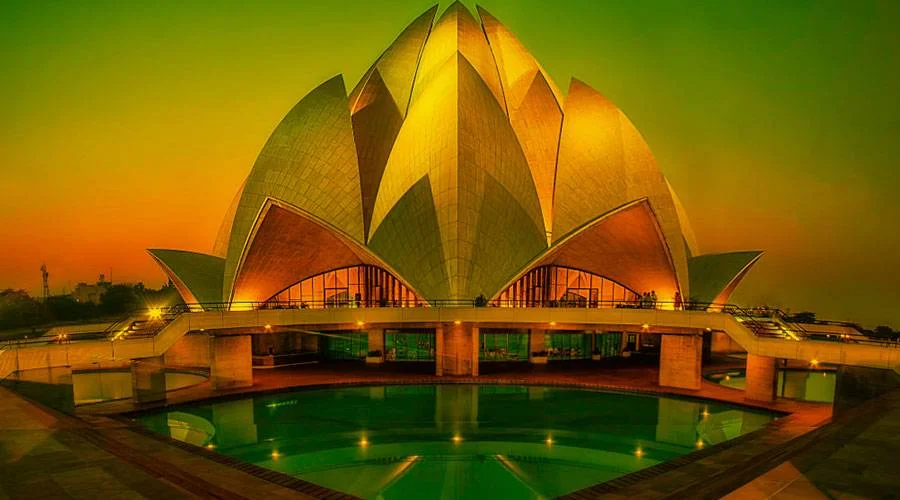
| Lotus Temple | 11 km | Free | October – March |
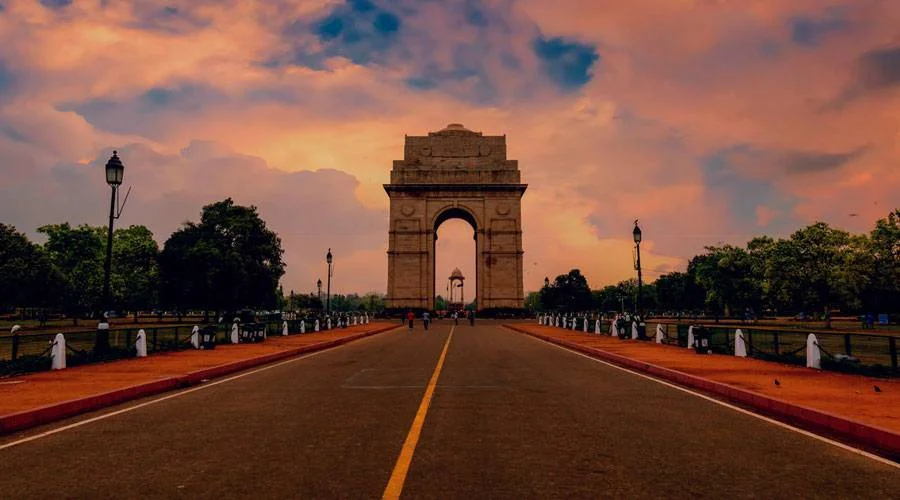
| India Gate | 15 km | Free | Evening / Night |
Quick Facts about Qutub Minar
- Location: Mehrauli, South Delhi
- Height: 72.5 meters (238 ft)
- Constructed: 1192–1368 AD
- UNESCO World Heritage Site: Since 1993
- Famous For: Indo-Islamic architecture, historic inscriptions, Alai Minar
Travel Tips
- Wear comfortable shoes; exploring the complex involves walking.
- Carry water and sunscreen, especially in summer.
- Early morning or late afternoon visits avoid crowds.
- Photography is allowed, but drone use is prohibited.
- Combine your visit with nearby attractions for a full-day historical tour.
Qutub Minar, a symbol of Delhi’s glorious history, stands as an architectural masterpiece and a beacon of India’s rich cultural heritage. Whether you are exploring its intricate carvings, photographing the tall minaret, or visiting the surrounding historical monuments, a trip to Qutub Minar promises an enriching journey back in time.