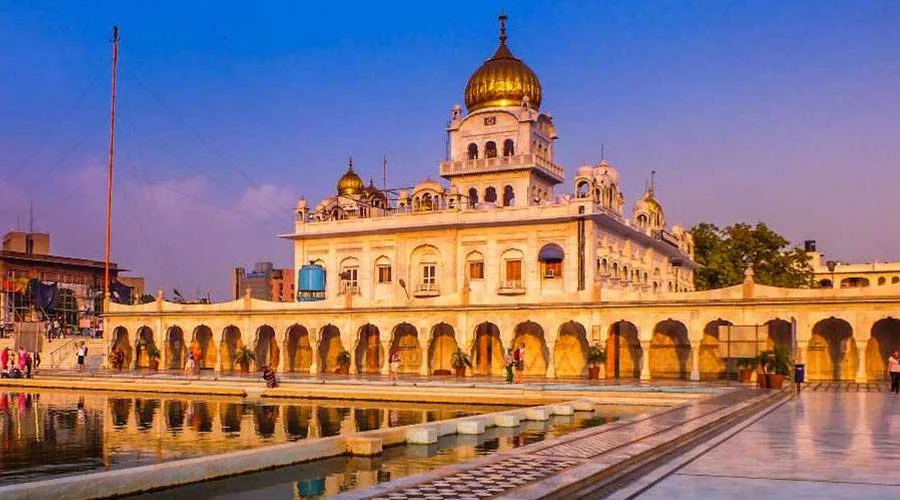
Gurudwara Bangla Sahib, Delhi
Undoubtedly, the most eminent Sikh pilgrimage site in Delhi, Gurudwara Bangla Sahib is one of the major parts of the city for a long time. Originally, Bangla Sahib was a bungalow that belonged to Raja Jai Singh - a 17th-century Indian ruler, and hence, the place was touted as Jaisinghpura Palace.
The small Sarovar at this gurdwara in Delhi has a huge religious reverence for pilgrims, especially Sikhs. It is said that a holy dip in the water of this Sarovar can wash away all the sins of an individual. Similarly, it is believed that a dip can also remove all skin-related problems.
Gurudwara Bangla Sahib is reckoned amongst the most popular Sikh pilgrimage centers in India, and thus, witnesses thousands of devotees every day. Inside the complex of Gurdwara Bangla Sahib, there is a gurdwara, a school and art gallery, a small pond (Sarovar), a kitchen, and a large dining hall. At the dining hall, the non-stop langar is served to the devotees irrespective of their caste, religion, and gender.
Moreover, there is a tradition where one covers his/her head throughout the period when he/she is in this Sikh temple in Delhi. Therefore, you can expect to be pointed out by anyone if you are not covering your head with a small cloth. Besides, the gurdwara complex also includes Baba Baghel Singh Museum, a higher secondary school along with a hospital and a library. Of late, the gurdwara has undergone renovation work that brings the facility of multi-level parking and travelers hostel named Yatri Niwas and has also made langar hall fully air-conditioned.
One of the most fascinating about this place is that people from the Sikh community are mostly the ones who come up to be volunteers to either serve food at langar hall or to wash dishes in the kitchen or to collect and take care of the shoes at the shoe-minding room.
History of Gurudwara Bangla Sahib
Unlike many Sikh shrines that were built from inception as places of worship, Gurudwara Bangla Sahib began as Jaisinghpura Palace, a residence of Raja Jai Singh, a senior general in the Mughal court. When Guru Har Krishan Ji visited Delhi in 1664, he stayed here. During this time, a deadly epidemic of cholera and smallpox broke out. The Guru provided relief by giving water from the well inside the bungalow, believed to have healing powers. Unfortunately, he contracted the disease himself and passed away at the young age of 8.
After his death, Raja Jai Singh dedicated his palace to honor the Guru. Later, in 1783, Sardar Bhagel Singh Dhaliwal, a Sikh general, rebuilt the gurdwara. The present structure, with its iconic golden dome, was largely constructed post-1947.
Architecture of Gurudwara Bangla Sahib
The architectural brilliance of Gurudwara Bangla Sahib adds to its spiritual aura. Built in classic Sikh architectural style, the shrine is constructed using pristine white marble with an iconic golden central dome that glitters under sunlight. The Nishan Sahib, a tall Sikh flagpole, stands majestically atop the building.
The interiors are adorned with intricate marble carvings, while the Sarovar (holy pond) inside the complex is the most significant feature. The waters are believed to possess miraculous healing properties, drawing devotees for a holy dip. The complex also houses:
- A prayer hall
- A museum and art gallery
- Baba Baghel Singh Museum
- A school and library
- A hospital offering free services
Recent renovations have introduced a multi-level parking facility, a traveler’s hostel (Yatri Niwas), and a fully air-conditioned langar hall.
The Sacred Sarovar
The Sarovar (holy pond) at Gurudwara Bangla Sahib is revered by devotees for its spiritual and healing qualities. Pilgrims believe that a dip in the Sarovar washes away sins and cures skin ailments. The serene waters reflect the golden dome of the shrine, offering a mesmerizing view to visitors.
Langar at Gurudwara Bangla Sahib
The tradition of Langar (community kitchen) at Gurudwara Bangla Sahib is one of its most significant practices. Every day, thousands of devotees and visitors, regardless of religion, caste, or gender, are served free meals. The simple yet delicious food typically includes dal, roti, rice, and sabzi.
Many visitors also volunteer in the langar by cooking, serving food, washing dishes, or managing shoes, considering it a form of seva (selfless service). This tradition symbolizes equality, compassion, and the Sikh principle of community service.
Timings of Gurudwara Bangla Sahib
The gurdwara remains open 24 hours, allowing devotees to visit at any time. However, the best time to experience its divine atmosphere is during morning and evening prayers when the soulful kirtans (hymns) echo in the prayer hall.
Travel Tips for Visitors
- Head Covering: It is mandatory to cover your head with a scarf/cloth while inside the complex.
- Shoes: Footwear must be removed before entering; shoe-minding services are available.
- Photography: Allowed in certain areas but avoid inside the prayer hall.
- Best Time to Visit: Early morning or late evening for peaceful prayers.
- Accessibility: The gurdwara is wheelchair accessible.
- Nearest Metro Station: Patel Chowk Metro Station (Yellow Line), 1 km away.
Nearby Attractions
When visiting Gurudwara Bangla Sahib, you can also explore nearby attractions:
- Connaught Place (CP) – Shopping & dining hub (1 km)
- Jantar Mantar – 18th-century astronomical observatory (2 km)
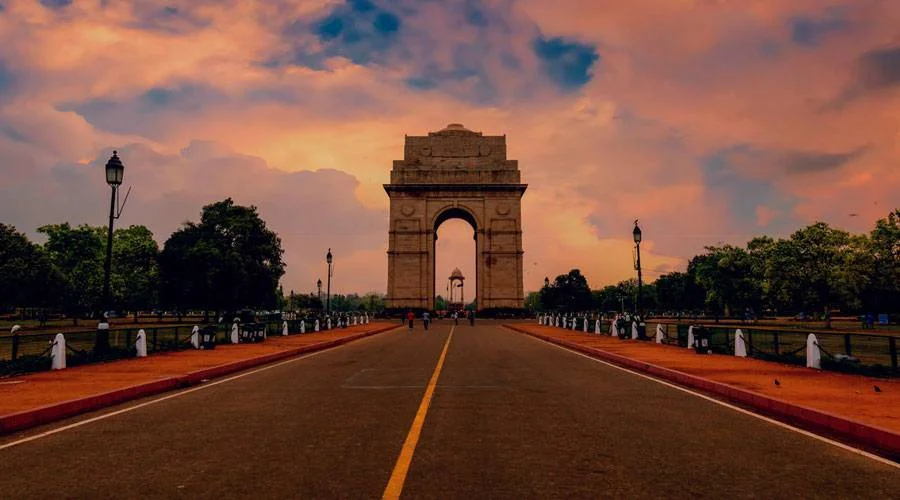
- India Gate – Iconic war memorial (3 km)
- Rashtrapati Bhavan – Presidential residence (4 km)
- Janpath Market – Street shopping paradise (1.5 km)
Quick Facts about Gurudwara Bangla Sahib
| Feature | Details |
|---|---|
| Location | Connaught Place, New Delhi |
| Founded | 1783 by Sardar Bhagel Singh |
| Original Structure | Raja Jai Singh’s Bungalow (17th century) |
| Guru Associated | Guru Har Krishan Ji (8th Sikh Guru) |
| Famous For | Sarovar with healing properties, Langar |
| Timings | Open 24x7 |
| Entry Fee | Free for all visitors |
Gurudwara Bangla Sahib in Delhi is not just a religious shrine but also a symbol of service, compassion, and unity. With its fascinating history, awe-inspiring architecture, healing Sarovar, and heartwarming tradition of Langar, it stands as one of the most important Sikh pilgrimage sites in India. Whether you are a devotee seeking blessings or a traveler exploring Delhi’s heritage, a visit to Bangla Sahib offers peace and spiritual fulfillment like no other.