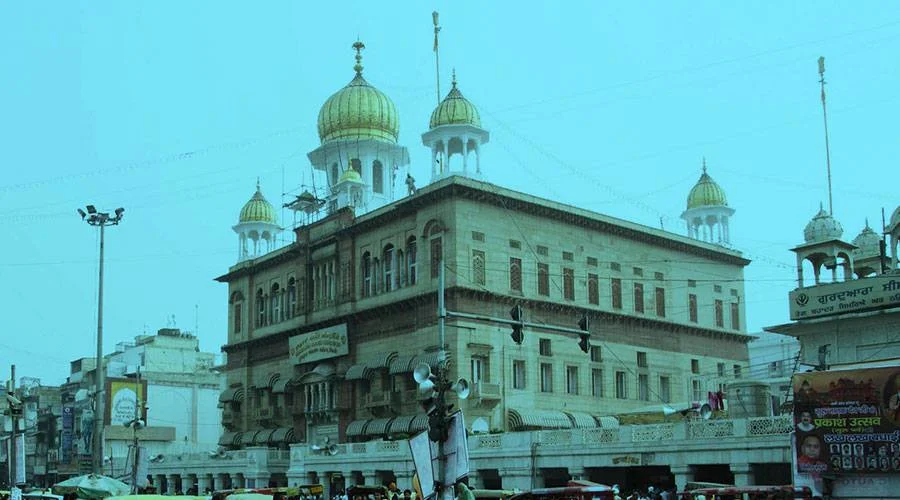
Gurudwara Sis Ganj Sahib, Delhi
On the glitz and glamouring streets of Chandni Chowk, there is located one of the most popular Sikh pilgrimage centers in Delhi - Gurdwara Sis Ganj Sahib. The gurdwara was constructed in the year 1783 by Baghel Singh to pay honor to the martyrdom site of Guru Tegh Bahadur - the ninth Sikh Guru.
This historical site in Delhi was built at the same spot where Guru Tegh Bahadur was decapitated on edicts of Aurangzeb - the great Mughal Emperor. However, the present building of this popular gurdwara in Delhi was built in the year 1930. Inside the complex of the gurdwara, there is a preserved tree where Guru Teg Bahadur was beheaded which now holds a sacred significance. Along with that, a well is also preserved where he used to drink the water during his prison time.
Every day, thousands of devotees visit this place to commemorate the guru. Besides, the gurdwara vicinity also includes a prayer hall which is a two-story structure accompanied by glass chandeliers and a high ceiling. Along with that, the holy book of Guru Granth Sahib is also kept at the front.
In the prayer hall, one can listen to the reciting of holy texts and the bhajan kirtans. Gurdwara Sis Ganj Sahib also has a separate dedicated building for langar where food is served to devotees without a halt. Numerous things set this place apart from other sacred sites in Delhi; of those, one is that the gurdwara signifies the love and unity amongst people of the society irrespective of race, religion, and gender. Moreover, the Sikh gurus inside the gurdwara are also very much helpful and kind to the people.
History of Gurdwara Sis Ganj Sahib
Guru Tegh Bahadur sacrificed his life in 1675 to protect the religious freedom of Kashmiri Pandits who were being forced to convert to Islam under Aurangzeb’s rule. After his execution in Chandni Chowk, two of his brave disciples preserved his body and severed head at great personal risk.
- His body was secretly taken away by Baba Lakhi Shah Vanjara, who cremated it by setting fire to his own house near Rakab Ganj (now Gurdwara Rakab Ganj).
- His head (Sis) was carried by Bhai Jaita (later Bhai Jivan Singh) to Anandpur Sahib, where it was cremated.
The present-day Gurdwara Sis Ganj Sahib marks the very site of his martyrdom and continues to remind visitors of his supreme sacrifice.
Architecture of Gurdwara Sis Ganj Sahib
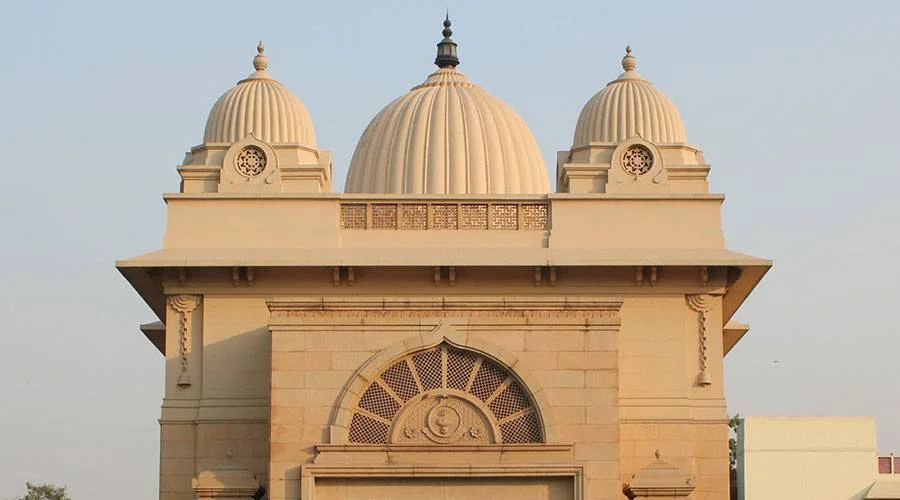
Unlike many Sikh shrines built in white marble, Gurdwara Sis Ganj Sahib reflects Mughal-style architecture with red sandstone, meshwork windows, and carved parapets.
- Main Prayer Hall: A two-story hall with a high ceiling, magnificent chandeliers, and the Guru Granth Sahib placed in full grandeur.
- Sacred Relics: The preserved tree where the Guru was executed and the historic well from which he drank water.
- Langar Hall: A separate building serves langar (free community kitchen) every day, offering food to all visitors regardless of religion, caste, or creed.
- Golden Domes: The structure was renovated in 1930 with striking gilded domes that stand out in the bustling Chandni Chowk area.
Across the road stands a small shrine that commemorates the site where three of the Guru’s disciples were martyred in the same period.
Religious Significance
The gurdwara not only honors the bravery and martyrdom of Guru Tegh Bahadur Ji but also symbolizes Sikhism’s core principles of equality, courage, and protection of religious freedom. Devotees from all walks of life visit to seek blessings, listen to soulful Bhajan Kirtans, and experience the serenity amidst Chandni Chowk’s chaos.
Travel Tips for Visitors
- Cover your head with a handkerchief or scarf before entering. Free head coverings are available at the gurdwara.
- Remove shoes at the shoe-minding area before entering the sanctum.
- Photography is generally restricted inside the sanctum.
- Try the Langar meal, a simple yet fulfilling experience of Sikh hospitality.
- Arrive early in the morning or evening to experience soulful kirtans in the prayer hall.
Nearby Attractions
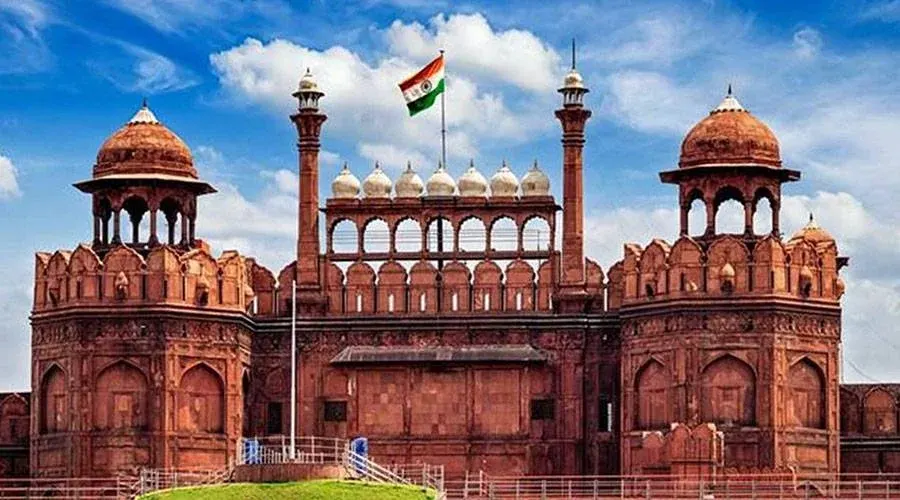
- Red Fort (Lal Qila) – A UNESCO World Heritage Site, just a 10-minute walk.
- Jama Masjid – One of India’s largest mosques, located close by in Old Delhi.
- Chandni Chowk Market – Famous for street food, jewelry, and traditional bazaars.
- Raj Ghat – Memorial of Mahatma Gandhi, located a short drive away.
- Gurdwara Rakab Ganj Sahib – Another Sikh shrine linked to Guru Tegh Bahadur Ji, near Parliament House.
Quick Facts about Gurdwara Sis Ganj Sahib
| Fact | Detail |
|---|---|
| Location | Chandni Chowk, Old Delhi |
| Built | 1783 by Baghel Singh |
| Current Structure | Completed in 1930 |
| Dedicated To | Guru Tegh Bahadur Ji |
| Timings | 5:00 AM – 10:00 PM (Daily) |
| Entry Fee | Free |
| Best Time to Visit | Early morning or evening |
| District | Central Delhi |
Gurdwara Sis Ganj Sahib is not just a religious site but also a monument of courage and sacrifice. Standing tall amidst the busy streets of Chandni Chowk, it continues to inspire visitors with its powerful history and serene spiritual aura. Whether you are a devotee, a history lover, or a traveler exploring Old Delhi, this gurdwara is a must-visit landmark.