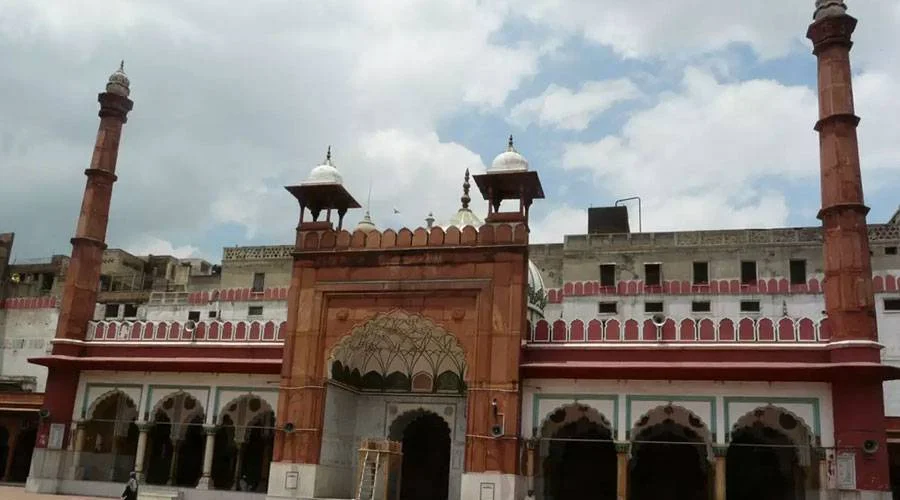
Fatehpuri Masjid, Delhi
In the year 1650, Fatehpuri Masjid was built by one of the Shah Jahan’s wife - Fatehpuri Begum. Located in Chandni Chowk, this mosque is a true specimen of the art of Mughal architecture, and thus, it stands out when it comes to the heritage attractions of Delhi. Buland Darwaza (Victory Gate) having a height of 54 m leads to the main entrance of the mosque. The gate was built to pay homage to the military victory of Akbar in Gujarat.
Inside the temple, there is a glorious white marble tomb of Shaikh Salim Chisti who was a great Sufi Saint. At the tomb, numerous threads on the jaalis (lattice screen) can be seen that are tied by the women who wish to have children. On the right of this tomb, there lie the tombstones of the family members of Shaikh Salim Chisti. Moreover, in its nearby, there is an entrance to the underground tunnel (now barred) which leads to the Agra Fort.
Apart from this, the main mosque which is built on a three-and-a-half feet elevated platform is flanked by two imposing minarets.
History of Fatehpuri Masjid
Fatehpuri Masjid was built in 1650 by Fatehpuri Begum, one of emperor Shah Jahan's wives who was from Fatehpur Sikri The British had auctioned the mosque after the 1857 war to Rai Lala Chunnamal for Rs. 19,000(whose descendants still live in the Chunnamal haveli in Chandni Chowk, who preserved the mosque.
Later in 1877 it was acquired by the government in exchange for four villages and was restored to the Muslims at the Delhi Durbar when the British allowed the Muslims back in Old Delhi. A similar mosque, called Akbarabadi Masjid built by the Akbarabadi Begum was destroyed by the British. The Khari Baoli, which is today Asia's largest spice market, gradually developed after the construction of the mosque.
Architecture of Fatehpuri Masjid
The mosque is a true example of Mughal architecture, with influences of Persian and Indian design. Built entirely of red sandstone, the structure radiates grandeur and simplicity.
- The mosque stands on an elevated platform, around 3.5 feet high.
- It has three grand gates – one facing the Red Fort, another towards Khari Baoli (Asia’s largest spice market), and the third towards Katra Baryan.
- A large courtyard lies at the center, featuring a tank for cleansing rituals.
- Surrounding verandas, about 12 feet high, add balance and elegance.
- The pulpit is carved out of white marble, adding a touch of sophistication.
- The mosque is flanked by two tall minarets, a signature feature of Mughal mosque design.
The harmonious blend of Islamic, Persian, and Indian styles makes Fatehpuri Masjid an architectural jewel of Old Delhi.
Religious & Cultural Significance
Apart from being a functioning mosque, Fatehpuri Masjid has deep religious significance for Delhi’s Muslim community. It continues to host daily prayers and special gatherings during festivals such as Eid-ul-Fitr and Eid-ul-Adha. Its location near Khari Baoli also turned the area into a hub for trade, culture, and community bonding over centuries.
Things to Do at Fatehpuri Masjid
- Explore the Mosque Complex – Admire its courtyards, domes, and Mughal-era design.
- Visit Khari Baoli – Just behind the mosque, Asia’s largest spice market awaits.
- Photograph Mughal Architecture – Capture its red sandstone beauty and contrasting market surroundings.
- Experience Chandni Chowk – Combine your visit with Red Fort, Jama Masjid, and street food.
Location & District
- District: Central Delhi
- Area: Chandni Chowk, Old Delhi
- Nearest Metro Station: Chandni Chowk Metro (Yellow Line)
Nearby Attractions to Fatehpuri Masjid
When visiting Fatehpuri Masjid, you can also explore several famous landmarks located nearby:
- Red Fort (Lal Qila) – 1.5 km
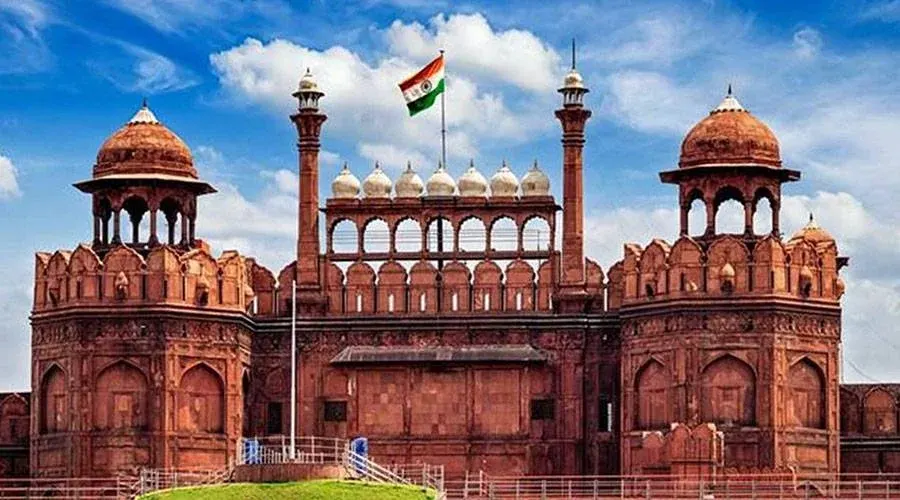
A UNESCO World Heritage Site and iconic Mughal fort, known for its grand architecture and evening sound-and-light show. - Jama Masjid – 2 km
One of the largest mosques in India, built by Shah Jahan, offering panoramic views of Old Delhi from its minarets. - Khari Baoli Spice Market – 200 m
Asia’s largest spice market, right behind the mosque, buzzing with colors, aromas, and trading activity. - Chandni Chowk Market – 500 m
A historic shopping street famous for jewelry, textiles, food, and traditional Indian items. - Raj Ghat – 3 km
The memorial dedicated to Mahatma Gandhi, set in serene gardens along the Yamuna River. - Gurudwara Sis Ganj Sahib – 1 km
A historic Sikh shrine commemorating Guru Tegh Bahadur, located in the heart of Chandni Chowk.
Travel Tips
- Wear modest clothing as it is a place of worship.
- Remove footwear before entering the mosque.
- Best combined with visits to Red Fort, Jama Masjid, and Chandni Chowk markets.
- Early mornings or evenings are ideal to avoid heavy crowds.
Quick Travel Guide to Fatehpuri Masjid
| Feature | Details |
|---|---|
| Location | Chandni Chowk, Central Delhi |
| District | Central Delhi |
| Built By | Fatehpuri Begum (wife of Shah Jahan) in 1650 |
| Architecture Style | Mughal with Persian & Indian influences |
| Entry Fee | Free for all visitors |
| Timings | 6:00 AM – 10:00 PM (daily) |
| Nearest Metro | Chandni Chowk Metro Station (Yellow Line) |
| Best Time to Visit | October – March (pleasant weather) |
| Nearby Attractions | Red Fort, Jama Masjid, Khari Baoli, Chandni Chowk Market, Raj Ghat, Gurudwara Sis Ganj Sahib |
| Photography | Allowed, but respect prayer times |
Fatehpuri Masjid is not just a mosque but a living testimony to the Mughal era and Delhi’s rich heritage. Its red sandstone architecture, historical legacy, and cultural significance make it one of the must-visit attractions in Chandni Chowk. Whether you are exploring Old Delhi’s bustling bazaars, savoring street food, or diving into history, a visit to Fatehpuri Masjid offers the perfect blend of spirituality and heritage. It continues to stand tall as a symbol of resilience, preserved through centuries of change.