Tughlaqabad Fort, Delhi
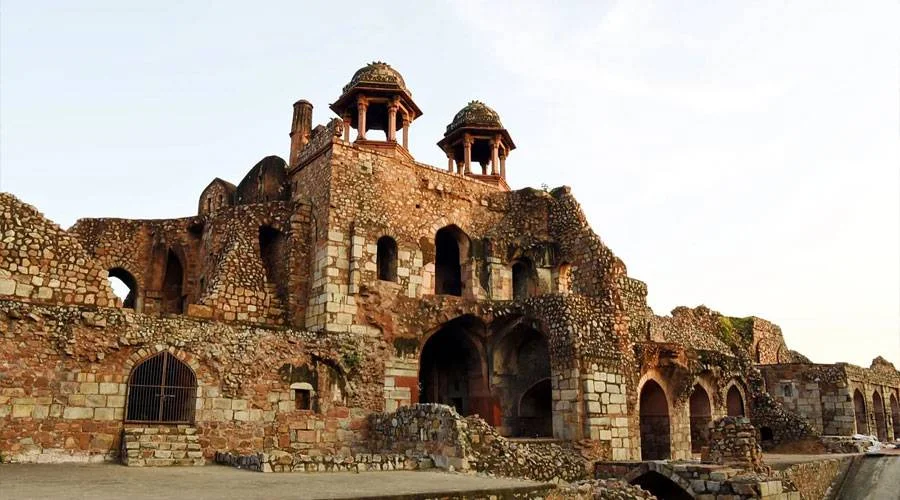
Tughlaqabad Fort is a ruined fort in Delhi built by Ghiyas-ud-din Tughlaq, founder of the Tughlaq dynasty and ruler of Delhi Sultanate in 132. Located near the Okhla industrial area, the fort is one of the most beautiful specimens of Islamic architecture.
Along with the high walls, palaces, and citadel, the great gateways, the fort area also have the mausoleum of the founder and first ruler of the fort - Ghiyas-ud-din Tughlaq and his wife and son. It took four years to construct the fort, and15 years later, it was abandoned. It is said that Sufi saint Nizammudin Auliya cursed Tughlaqabad as a punishment for the arrogance of Ghiyasuddin. The fort is believed to be haunted by djinns.
Adilabad Fort, a small fort built by Muhammad-bin-Tughlaq is located around 2 km from the fort. The two forts were earlier separated by a reservoir that stood between the two hills, but it dried up now.
History of Tughlaqabad Fort
Tughlaqabad Fort was built between 1321 and 1325 AD by Ghiyas-ud-din Tughlaq (originally Ghazi Malik), who established the Tughlaq dynasty after defeating the Khalis rulers. Upon ascending to the throne, Ghiyas-ud-din aimed to create a capital that was strong, secure, and capable of withstanding invasions, particularly from the Mongols. The construction of Tughlaqabad Fort, along with its surrounding city, was completed in just four years, demonstrating the ruler’s efficiency and strategic vision.
Legend has it that the famous Sufi saint Nizamuddin Auliya cursed the fort. He was angered because the construction had forced all workers, including his followers, into labor. This curse is often cited as the reason why the fort was abandoned approximately 15 years later, after Ghiyas-ud-din Tughlaq’s death.
Additionally, Adilabad Fort, built by Muhammad-bin-Tughlaq, is located just about 2 km from Tughlaqabad Fort. Originally, the two forts were separated by a reservoir that has since dried up.
Architecture of Tughlaqabad Fort
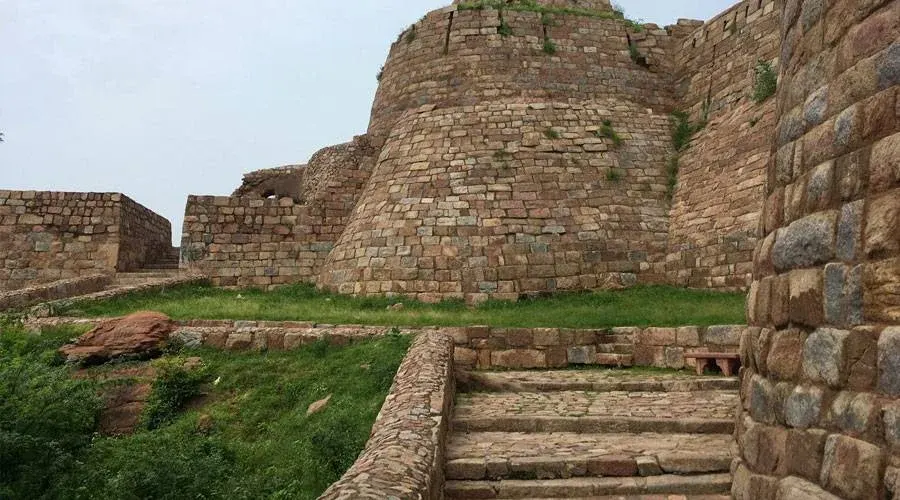
Despite its ruined state, Tughlaqabad Fort showcases the brilliance of 13th-14th century Islamic architecture, with a blend of Hindu architectural elements. Designed primarily for military defense, the fort was constructed using enormous sandstone blocks and rubble masonry, making it resilient against invasions.
Key Architectural Features:
- Fort Walls and Bastions –
The fort is perched on a high rocky outcrop, with thick defensive walls that stretch across the fort’s perimeter. Pointed barbicans and circular bastions were strategically designed to protect the citadel and palace complex. - Citadel and Palace Sections –
The fort was divided into three major sections:- Palace Section: Residential quarters and administrative buildings.
- Citadel: Main defense and royal area.
- Residential City: Area for citizens and soldiers.
- Grand Gateways –
The fort features massive gateways that display a combination of Islamic arches and Hindu motifs, reflecting a fusion of architectural styles. - Underground Passages –
One of the most intriguing aspects of Tughlaqabad is its underground passageways and chambers, which were likely used for security and escape routes during attacks. - Mausoleum of Ghiyas-ud-din Tughlaq –
Within the fort complex lies the mausoleum of Ghiyas-ud-din Tughlaq, along with tombs of his son and wife, adding a spiritual and historical layer to the fort’s grandeur.
Significance
Tughlaqabad Fort is more than just a ruined structure; it is a historical marvel that showcases the military ingenuity, architectural skills, and strategic foresight of the Tughlaq dynasty. Though it was abandoned in the 14th century, the fort remains a symbol of Delhi’s rich medieval history.
It is also said that the fort is haunted by djinns, adding a mystical allure for visitors and history enthusiasts alike.
Nearby Attractions
- Adilabad Fort – 2 km away, built by Muhammad-bin-Tughlaq.
- Okhla Bird Sanctuary – Around 5 km away, ideal for nature enthusiasts.
- Nizamuddin Dargah – 10 km away, the tomb of the Sufi saint who cursed the fort.
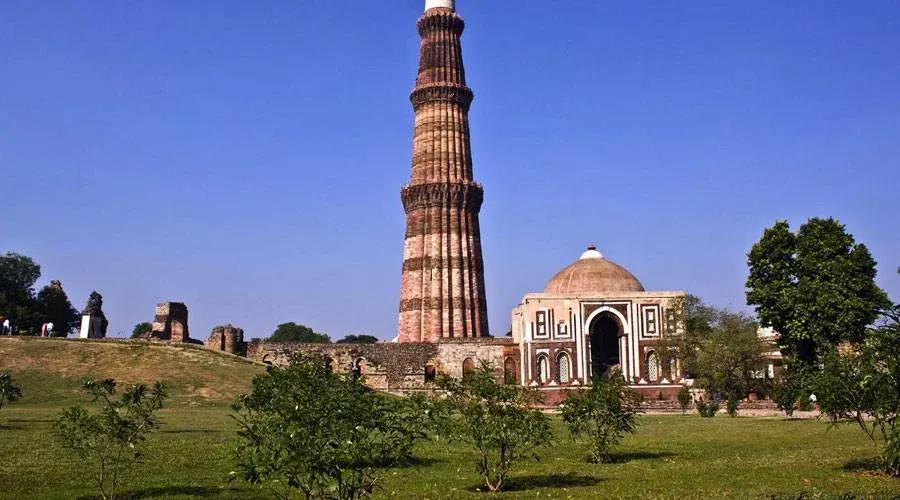
- Qutub Minar – About 12 km away, another UNESCO World Heritage site.
Travel Tip: Wear comfortable shoes, as exploring the fort involves climbing uneven stone paths and stairs.
| Attraction | Distance from Tughlaqabad Fort | Entry Fee | Best Time to Visit |
|---|---|---|---|
| Adilabad Fort | 2 km | Free | Morning or Late Afternoon |
| Qutub Minar | 13 km | ?40 (Indians), ?600 (Foreigners) | October to March, Early Morning |
| Lotus Temple | 12 km | Free | Sunrise to Evening, October to March |
| Hauz Khas Village | 15 km | Free | Evening, October to March |
| Mehrauli Archaeological Park | 14 km | Free | Morning or Late Afternoon |
| Sultan Ghari Tomb | 5 km | Free | Morning, October to March |
| Okhla Bird Sanctuary | 7 km | Free | November to February, Early Morning |
| Chattarpur Temple | 10 km | Free | Early Morning or Evening, October to March |
| Garden of Five Senses | 12 km | ?30 (Indians), ?150 (Foreigners) | October to March, Morning to Evening |
| Hauz Khas Deer Park | 15 km | Free | Morning or Late Afternoon |
Travel Tips:
- Start your day early to avoid crowds and Delhi traffic.
- Carry water and wear comfortable shoes for exploring ruins and parks.
- Photography enthusiasts should visit Qutub Minar, Hauz Khas, and Mehrauli Archaeological Park during the golden hour.
- Combine multiple attractions in one trip since most of them are within 15 km of Tughlaqabad Fort.
Quick Facts – Tughlaqabad Fort:
- Location: Near Okhla Industrial Area, South Delhi, Delhi
- Established: 1321–1325 AD by Ghiyas-ud-din Tughlaq
- Built For: Capital defense and protection against Mongol invasions
- Architecture Style: Blend of Islamic and Hindu military architecture
- Key Features: High walls, citadel, palace, underground passages, mausoleum of Ghiyas-ud-din Tughlaq
- Nearby Fort: Adilabad Fort (approx. 2 km)
- Entry Fee: Free for Indian citizens; minimal fee for foreigners (if applicable)
- Best Time to Visit: October to March (pleasant weather)
- Notable Fact: Saint Nizamuddin Auliya allegedly cursed the fort, contributing to the downfall of the Tughlaq dynasty
- Activities: Sightseeing, photography, exploring ruins, nearby nature walks and historical sites
Tughlaqabad Fort is not just a testament to Delhi’s rich medieval history but also a gateway to exploring several nearby heritage sites, gardens, and cultural attractions. From the imposing ruins of the fort itself to nearby gems like Qutub Minar, Hauz Khas Village, and Okhla Bird Sanctuary, the area offers a perfect blend of history, nature, and leisure activities. Whether you are a history enthusiast, a nature lover, or a photography aficionado, Tughlaqabad Fort and its surroundings promise an enriching and memorable experience in Delhi.