Jantar Mantar, Delhi
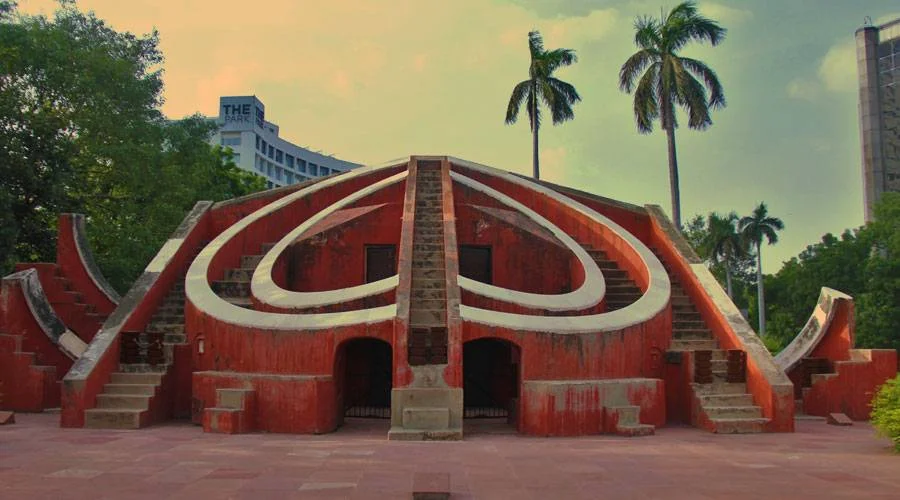
An astronomical marvel situated right in the heart of the capital Delhi, Jantar Mantar is a phenomenal piece of architecture in the form of a sundial. Built-in 1724 by Maharaja Jai Singh II of Jaipur, it is among the five observatories, the biggest one located in Jaipur. The rest are in Ujjain, Varanasi, and Mathura. The prime motive of the observatory was to gauge and collate the astronomical charts, and to estimate the time by tracking the movements of the planets, moon, and sun. A spectacular specimen of astronomy from the past, Jantar Mantar doesn’t fail to impress even in this age.
Standing at 723 ft, the Jantar Mantar in Delhi comprises 13 astronomical instruments, and the most important of them are Misra yantra, Jaiprakash yantra, Samrat yantra, and Ram yantra. Painted in red, the observatory and its instruments have been mended and fixed over the years. The sundial is based on the ancient Egyptian Ptolemaic structure and adheres to the following celestial orders: the equatorial, the ecliptic, and the horizon-zenith local arrangement.
History of Jantar Mantar
Jantar Mantar, New Delhi, is one of the five observatories built by Maharaja Jai Singh II of Jaipur in the year 1724. This time observatory was built after Mughal emperor Muhammad Shah allotted the task of re-examining the calendar and astronomical records to Maharaja Jai Singh II. This observatory completed the purpose of compiling astronomical records along with the task of estimating time and tracking the movement of celestial bodies such as the moon, sun, and other planets.
Architecture and Astronomical Instruments
The Delhi Jantar Mantar is 723 ft long and houses 13 astronomical instruments, each designed for a specific purpose. The key instruments include:
1. Samrat Yantra (Supreme Instrument)
- Height: 70 ft | Thickness: 10 ft | Hypotenuse: 128 ft
- Functions as a giant sundial, measuring hours, minutes, and seconds.
- Helps determine the declination of celestial bodies.
- Hypotenuse points toward the North Pole, running parallel to the Earth’s axis.
2. Misra Yantra (Combined Instrument)
- A combination of five instruments used to determine the shortest and longest days of the year.
- Measures noon in different cities around the world, a unique feature for its time.
3. Jaiprakash Yantra
- Comprises hollow hemispheres with marked crosswires.
- Designed to measure positions of celestial bodies and their altitudes.
4. Rama Yantra
- Made of cylindrical open-top structures.
- Measures the altitude and azimuth of planets relative to Earth.
The red-painted masonry of the instruments has been maintained over the years, preserving its grandeur and functionality. The design incorporates ancient Egyptian Ptolemaic principles, adhering to equatorial, ecliptic, and horizon-zenith arrangements.
Things to Do at Jantar Mantar
- Explore the 13 instruments and learn their astronomical significance.
- Take guided tours to understand how ancient Indian astronomers measured time and predicted celestial events.
- Photography: The geometric shapes, red sandstone structures, and intricate design offer perfect photo opportunities.
- Educational visits: Great for students and astronomy enthusiasts to study early astronomical instruments.
- Attend special events or workshops occasionally conducted for astronomy awareness.
Nearby Attractions in Delhi
Visiting Jantar Mantar can be combined with other iconic Delhi landmarks:
| Attraction | Distance | Highlights |
|---|---|---|
| Connaught Place | 1.5 km | Shopping, restaurants, and colonial architecture |
| India Gate | 2.5 km | War memorial and evening strolls |
| Humayun’s Tomb | 3 km | UNESCO World Heritage site, Mughal architecture |
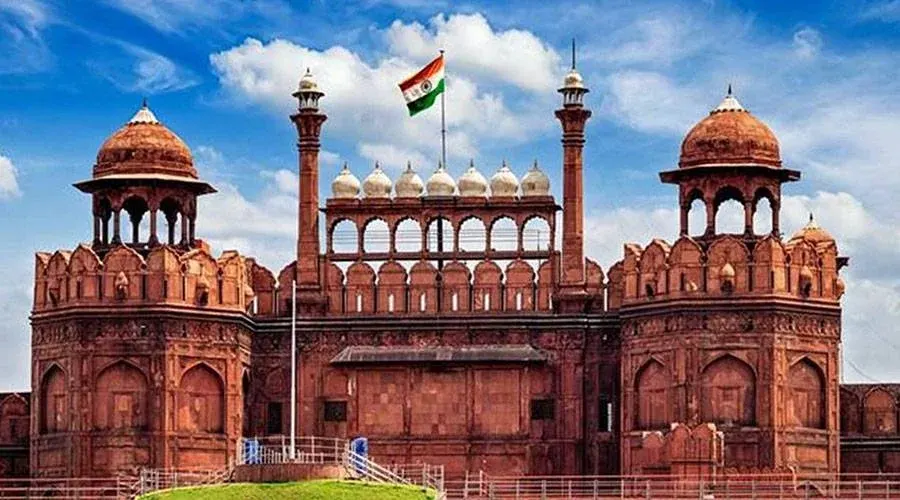
| Red Fort | 5 km | Historic fort, museums, and cultural events |
| Rajpath & Rashtrapati Bhavan | 3 km | Presidential residence and ceremonial boulevard |
Travel Tips
- Best time to visit: October to March for pleasant weather.
- Timings: 9:00 AM to 5:00 PM daily.
- Entry fee: Nominal entry fee applicable for adults and children.
- How to reach:
- By Metro: Nearest station is Kashmere Gate Metro Station (Red/Yellow Line).
- By Road: Easily accessible by cab or auto-rickshaw from Connaught Place, India Gate, and other Delhi landmarks.
- Nearby attractions: Red Fort, India Gate, Connaught Place, Chandni Chowk, Humayun’s Tomb.
- Guided tours recommended to understand the scientific principles behind each instrument.
Quick Facts about Jantar Mantar
| Fact | Detail |
|---|---|
| Location | Connaught Place, New Delhi, India |
| Built | 1724 CE |
| Built by | Maharaja Jai Singh II of Jaipur |
| Number of Instruments | 13 |
| Notable Instruments | Samrat Yantra, Misra Yantra, Jaiprakash Yantra, Rama Yantra |
| Purpose | Measure time, track celestial movements, astronomical research |
| Nearest Metro | Kashmere Gate |
| Entry Fee | Rs. 10–20 (approx) |
Jantar Mantar, Delhi, is not just a historical monument but also an educational hub that bridges the past and the present. With its unique instruments, architectural brilliance, and astronomical importance, it remains a must-visit destination for tourists, students, and history enthusiasts.
Visiting Jantar Mantar offers a chance to witness science from the 18th century and marvel at the intellect and artistry of ancient Indian astronomers.