Shanti Stupa, Leh Ladakh
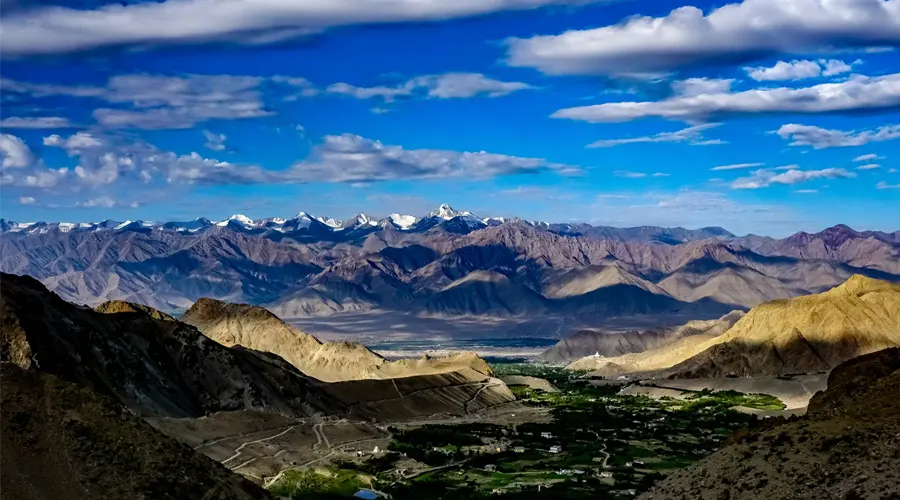
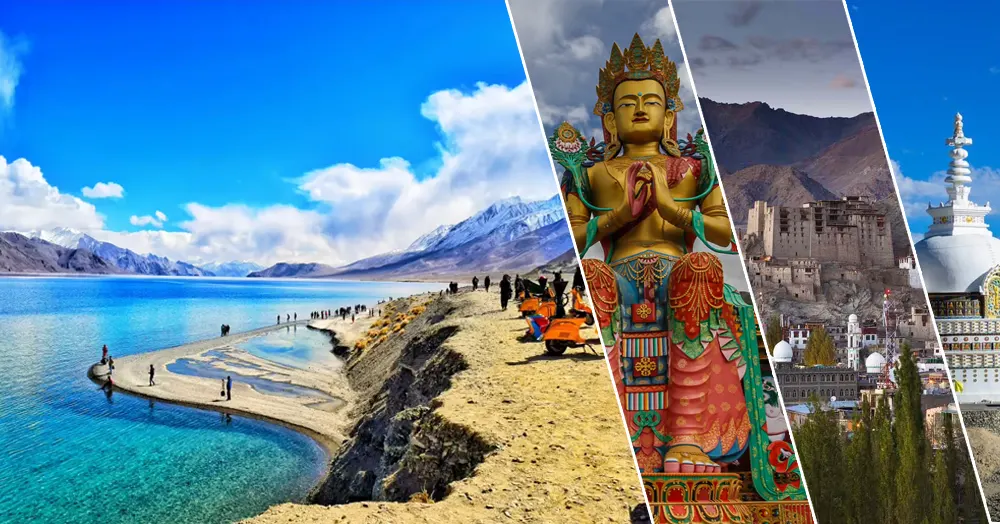
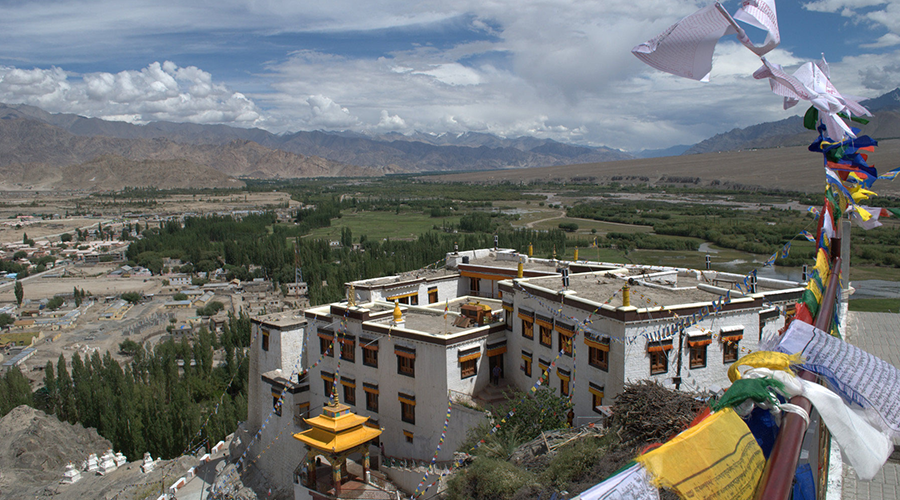
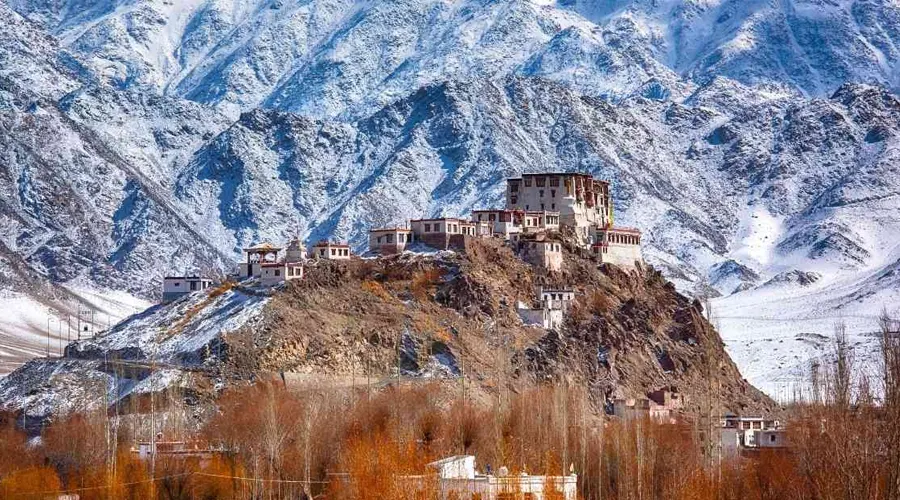
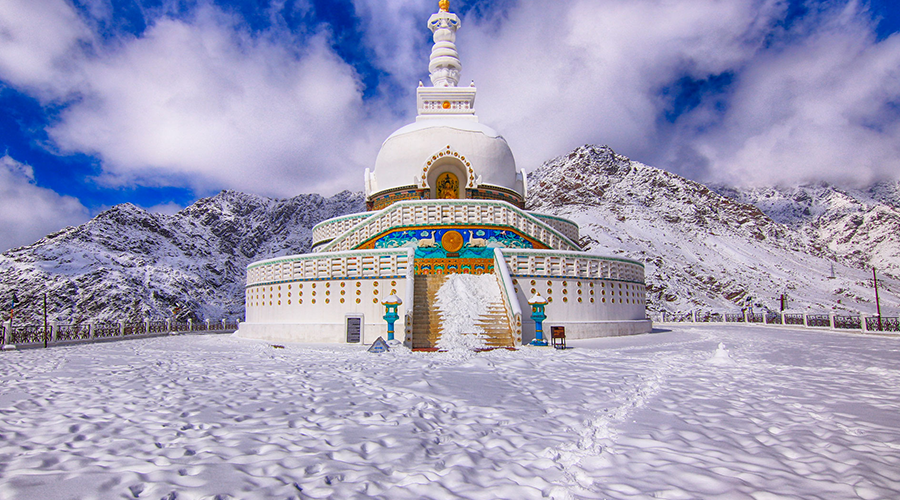
Perched on a hilltop in Leh, Shanti Stupa is one of the most famous landmarks of Ladakh. Built to promote world peace and commemorate 2500 years of Buddhism, the stupa combines spiritual significance with breathtaking panoramic views of Leh town and the Indus River valley. Sunrise and sunset offer the best photographic opportunities.
History of Shanti Stupa, Leh Ladakh
The idea of constructing Shanti Stupa was conceived by Japanese Buddhist monk Nichidatsu Fujii (Fuji Guruji) in 1914. Built as part of the Peace Pagoda Mission, it aimed to spread messages of peace worldwide.
Construction began in 1983 under Bhikshu Gyomyo Nakamura and Kushok Bakula, the then Lama of Ladakh. The stupa was completed in 1984 and formally inaugurated in 1991 by His Holiness the 14th Dalai Lama.
Shanti Stupa symbolizes the unity between Japanese and Ladakhi Buddhists and promotes spiritual harmony.
Architecture of Shanti Stupa Leh
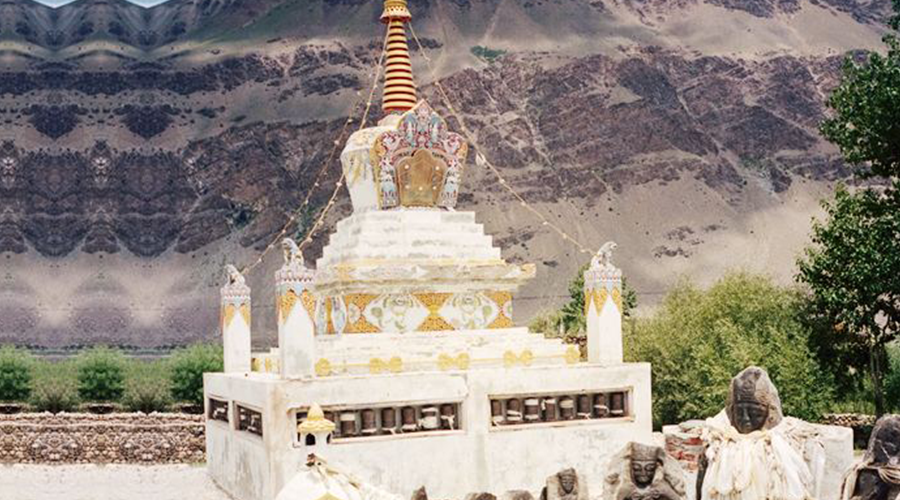
Shanti Stupa is unique in its architectural design:
- Two-Level Structure:
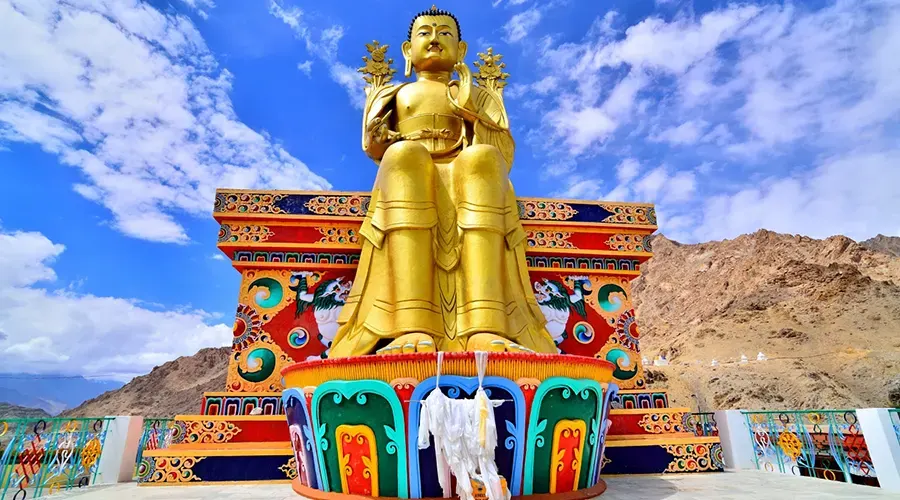
- First Level: Features Buddha turning the Dharmachakra wheel, symbolizing the spread of Buddhism.
- Second Level: Decorated with murals depicting significant events from Buddha’s life.
- Dome: Represents the sacred mound under which Buddha was buried, surrounded by a protective railing.
- 500 Steps: A staircase flanked by Buddhist stone pyramids leads to the top, offering breathtaking views.
- Buddha Relics: Preserved in the base, adding spiritual significance to the visit.
Best Time to Visit Shanti Stupa Leh
- Ideal Months: May to September for clear skies, pleasant weather, and easy access.
- Avoid Winters: November to March, due to heavy snow, icy steps, and temperatures dropping below -20°C.
- Best Time of Day: Sunrise and sunset provide magical views of Leh and surrounding mountains.
Itinerary for Visiting Shanti Stupa
- Day 1: Arrive in Leh, acclimatize, and explore Leh Palace and local markets.
- Day 2: Early morning visit to Shanti Stupa for sunrise. Explore the stupa, panoramic views, and nearby attractions.
- Day 3: Optional trip to Thiksey Monastery or Spituk Monastery; return to Leh for shopping and sightseeing.
Travel Tips for Shanti Stupa
- Wear comfortable shoes for climbing the 500 steps.
- Carry water, sunscreen, and light snacks.
- Respect local customs and avoid littering.
- Visit at sunrise or sunset for the best views.
- Steps provide multiple vantage points for photography enthusiasts.
Nearby Attractions to Shanti Stupa Leh
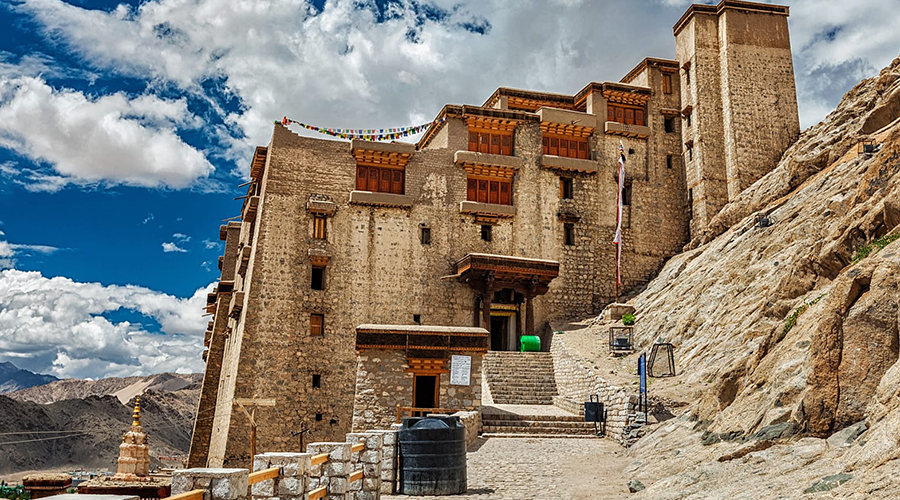
- Leh Palace: Historic palace 3 km away.
- Sankar Gompa: 4 km away, a small monastery with unique architecture.
- Indus River Viewpoints: Multiple scenic spots around the stupa base.
- Local Markets in Leh: Handicrafts, souvenirs, and traditional Ladakhi items.
Quick Facts about Shanti Stupa Leh
| Fact | Details |
|---|---|
| Location | Leh, Leh district, Ladakh |
| Elevation | 3,600 meters above sea level |
| Built By | Nichidatsu Fujii & Kushok Bakula |
| Year Built | 1983–1984, inaugurated 1991 |
| Sect | Peace Pagoda / Buddhist Relics |
| Distance from Leh | 5 km |
| Main Attraction | Panoramic views, Buddha relics, unique architecture |
| Steps to Climb | 500 steps |
How to Reach Shanti Stupa Leh
- By Road: 5 km from Leh town; reachable by taxi, bike, or e-rickshaw.
- On Foot: Moderate 500-step climb to the stupa; takes 20–30 minutes.
- From Airport: Leh Airport is 13 km away; hire a taxi or private vehicle.
Shanti Stupa is a must-visit attraction in Leh, Ladakh, combining spirituality, history, and breathtaking views. Whether you are a photography lover, culture enthusiast, or spiritual traveler, the stupa provides an unforgettable experience, especially during sunrise or sunset