
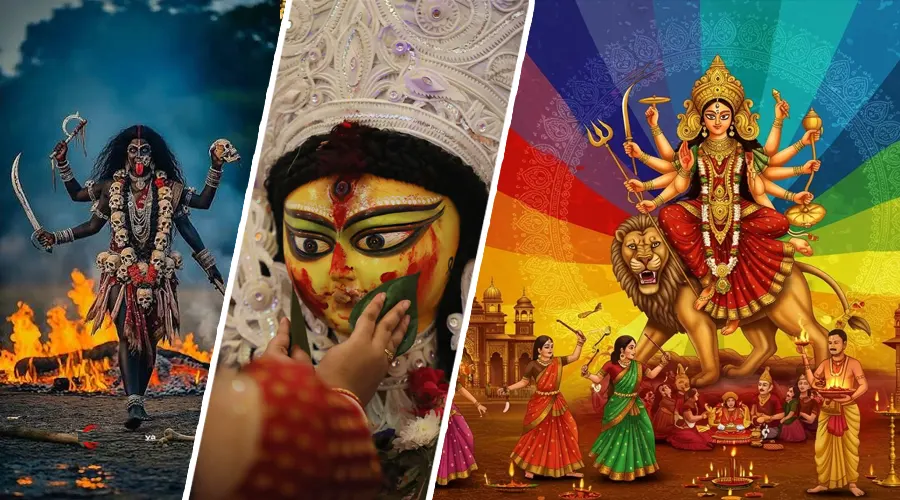
Navratri 2026: Dates, Puja, Significance & Celebrations
Navratri is one of the most vibrant and spiritually significant festivals in India. Celebrated with devotion, music, dance, fasting and elaborate rituals, the festival brings communities together to worship Goddess Durga in her nine forms.
Among the several Navratris observed during the year, Sharad Navratri, also known as Shardiya Navratri or Maha Navratri, is the most widely celebrated. It takes place during the autumn season and leads to the festival of Dussehra or Vijayadashami.
In 2026, Shardiya Navratri will begin on Sunday, October 11, with Ghatasthapana, and the celebrations will culminate with Vijayadashami on Tuesday, October 20.
From the energetic Garba nights of Gujarat to the grand Durga Puja celebrations of West Bengal and the traditional Mysore Dasara festivities in Karnataka, Navratri showcases India's extraordinary cultural diversity.
Navratri 2026 Dates, Tithis, Colours & Goddess Names
| Day | Date | Tithi & Occasion | Goddess | Colour |
|---|---|---|---|---|
| Day 1 | Sun, 11 Oct | Pratipada · Ghatasthapana | Shailaputri | Orange |
| Day 2 | Mon, 12 Oct | Dwitiya | Brahmacharini | White |
| Day 3 | Tue, 13 Oct | Tritiya | Chandraghanta | Red |
| Day 4 | Wed, 14 Oct | Chaturthi | Kushmanda | Royal Blue |
| Day 5 | Thu, 15 Oct | Panchami | Skandamata | Yellow |
| Day 6 | Fri, 16 Oct | Shashthi | Katyayani | Green |
| Day 7 | Sat, 17 Oct | Saptami | Kalaratri | Grey |
| Day 8 | Sun, 18 Oct | Ashtami · Durga Ashtami · Sandhi Puja | Mahagauri | Purple |
| Day 9 | Mon, 19 Oct | Navami · Maha Navami · Navami Homa | Siddhidatri | Peacock Green |
| Day 10 | Tue, 20 Oct | Dashami | Vijayadashami · Dussehra | — |
“नौ रातें भक्ति की, हर दिन शक्ति की।”
When Is Navratri 2026?
Shardiya Navratri 2026 begins on October 11 and continues through October 19, followed by Vijayadashami on October 20.
The first day is marked by Ghatasthapana, the ceremonial installation of the sacred Kalash that represents the presence of Goddess Shakti.
According to the Panchang calculation for Delhi/New Delhi, Ghatasthapana Muhurat on October 11 is 6:19 AM to 10:12 AM, while the Abhijit Muhurat is 11:44 AM to 12:31 PM. Muhurat timings are location-specific, so devotees in other cities should check their local Panchang.
What Is Navratri?
The word Navratri literally means "nine nights."
During these nine nights and ten days, devotees worship different manifestations of Goddess Durga, representing the divine feminine power or Shakti.
The festival is associated with the triumph of good over evil and is celebrated differently across different parts of India.
In northern India, devotees often observe fasting and participate in Durga worship. Gujarat is famous for Garba and Dandiya nights, while West Bengal, Assam and parts of eastern India celebrate Durga Puja on a grand scale.
In Karnataka, Mysore Dasara combines religious traditions with royal heritage, while several regions of India observe the festival through local rituals, fairs and cultural performances.
Why Is Navratri Celebrated?
Navratri is deeply connected with the worship of Goddess Durga and the victory of good over evil.
One of the most popular traditions tells the story of Goddess Durga's battle with the buffalo demon Mahishasura. After a fierce battle, Durga defeated Mahishasura, symbolising the victory of righteousness over arrogance, injustice and destructive forces.
The festival therefore carries a message that goes beyond religious observance.
It represents:
- The victory of good over evil
- The power of Shakti
- Courage and inner strength
- Spiritual purification
- Renewal and new beginnings
- Devotion and self-discipline
- The importance of righteousness
For many devotees, Navratri is also a time for introspection, prayer and reconnecting with family and community.
The Nine Forms of Goddess Durga
Each day of Navratri is traditionally associated with one form of Goddess Durga, collectively known as Navadurga.
| Day | Goddess | Significance |
| Day 1 | Shailputri | Strength, stability and devotion |
| Day 2 | Brahmacharini | Knowledge, devotion and determination |
| Day 3 | Chandraghanta | Courage and protection |
| Day 4 | Kushmanda | Energy, creativity and prosperity |
| Day 5 | Skandamata | Motherhood and compassion |
| Day 6 | Katyayani | Courage and victory |
| Day 7 | Kalaratri | Protection from negativity |
| Day 8 | Mahagauri | Purity and peace |
| Day 9 | Siddhidatri | Spiritual wisdom and fulfilment |
The forms of Durga highlight different aspects of divine feminine energy and provide a spiritual theme for each day of the festival.
The Nine Forms of Goddess Durga
During Navratri, devotees worship nine manifestations of Goddess Durga, collectively known as Navadurga. Each form represents a distinct quality of divine feminine power, such as strength, devotion, courage, compassion, protection, purity and spiritual wisdom. Worshipping these nine forms over the nine days of Navratri is an important tradition that reflects the different aspects of Shakti and the journey towards inner strength and spiritual growth.
Day 1 – Goddess Shailputri
Goddess Shailputri, meaning the “daughter of the mountains,” is worshipped on the first day of Navratri. She represents strength, stability, purity and devotion. The day begins with Ghatasthapana, marking the auspicious start of the nine-day festival.
Significance of Goddess Shailputri:
- Symbol of strength and stability
- Represents purity and devotion
- Associated with the mountains
- Worshipped on the first day of Navratri
- Ghatasthapana is traditionally performed on this day
Day 2 – Goddess Brahmacharini
Goddess Brahmacharini represents devotion, discipline, patience and determination. Her worship reminds devotees of the importance of perseverance and spiritual strength, making the second day of Navratri a time for self-discipline and inner reflection.
Importance of Goddess Brahmacharini:
- Symbol of devotion and determination
- Represents patience and discipline
- Associated with spiritual growth
- Inspires perseverance and inner strength
- Worshipped on the second day of Navratri
Day 3 – Goddess Chandraghanta
Goddess Chandraghanta is associated with courage, protection and inner strength. Her name refers to the crescent moon adorning her forehead, while her worship is traditionally believed to inspire devotees to overcome fear, negativity and life's challenges with confidence.
Symbolism of Goddess Chandraghanta:
- Represents courage and protection
- Symbol of inner strength
- Recognised by the crescent moon on her forehead
- Associated with overcoming fear and negativity
- Worshipped on the third day of Navratri
Day 4 – Goddess Kushmanda
Goddess Kushmanda is associated with cosmic energy, vitality, creativity and abundance. She is traditionally regarded as a powerful manifestation of divine energy and is worshipped for prosperity, health and positive energy on the fourth day of Navratri.
Significance of Goddess Kushmanda:
- Symbol of energy and vitality
- Represents creativity and abundance
- Associated with cosmic energy
- Worshipped for prosperity and positive energy
- Worshipped on the fourth day of Navratri
Day 5 – Goddess Skandamata
Goddess Skandamata is worshipped as the mother of Lord Kartikeya, also known as Skanda. She represents motherhood, compassion, protection and unconditional love. Her worship highlights the nurturing and protective aspect of divine feminine power.
Importance of Goddess Skandamata:
- Symbol of motherhood and compassion
- Represents protection and unconditional love
- Known as the mother of Lord Kartikeya
- Associated with nurturing and protective energy
- Worshipped on the fifth day of Navratri
Day 6 – Goddess Katyayani
Goddess Katyayani is regarded as a powerful warrior form of Goddess Durga. She represents courage, determination and the power to overcome evil. Devotees worship her seeking strength, confidence and the ability to face challenges with determination.
Power and Symbolism of Goddess Katyayani:
- Symbol of courage and strength
- Represents determination and victory
- Considered a warrior form of Goddess Durga
- Associated with protection from evil
- Worshipped on the sixth day of Navratri
Day 7 – Goddess Kalaratri
Goddess Kalaratri is one of the fiercest forms of Goddess Durga and is traditionally associated with protection and the destruction of negativity. Despite her fearsome appearance, devotees worship her as a protective mother who removes fear and helps overcome obstacles.
Significance of Goddess Kalaratri:
- Symbol of protection and divine power
- Represents the destruction of negativity
- Associated with courage and fearlessness
- Considered one of the fiercest forms of Goddess Durga
- Worshipped on the seventh day of Navratri
Day 8 – Goddess Mahagauri
Goddess Mahagauri represents purity, peace, serenity and spiritual clarity. Her worship is associated with cleansing negative influences and seeking peace and prosperity. The eighth day is widely observed as Durga Ashtami in many parts of India.
Importance of Goddess Mahagauri:
- Symbol of purity and peace
- Represents spiritual clarity and serenity
- Associated with peace and prosperity
- Worshipped during Durga Ashtami
- Worshipped on the eighth day of Navratri
Day 9 – Goddess Siddhidatri
Goddess Siddhidatri is worshipped on the ninth and final day of Navratri. She represents spiritual wisdom, accomplishment and fulfilment. Devotees seek her blessings for knowledge, inner growth and the completion of their spiritual journey during the festival.
Significance of Goddess Siddhidatri:
- Symbol of wisdom and fulfilment
- Represents spiritual accomplishment
- Associated with knowledge and inner growth
- Worshipped on Maha Navami
- Marks the final day of the nine-day Navratri worship
Ghatasthapana During Navratri
Ghatasthapana, also called Kalash Sthapana, marks the beginning of Shardiya Navratri.
A sacred Kalash is established at the place of worship, symbolising the presence of divine energy. Barley or other grains may also be sown as part of the traditional setup, with their growth observed throughout the festival.
For Delhi/New Delhi in 2026, the main Ghatasthapana Muhurat is 6:19 AM to 10:12 AM on October 11. The Abhijit Muhurat is 11:44 AM to 12:31 PM.
Because religious timings can vary according to location, sunrise and local Panchang calculations, devotees should use the timing applicable to their city.
Navratri Puja Rituals
Navratri puja rituals are an important part of the festival and may differ slightly across regions, communities and families. However, the central practices focus on worshipping Goddess Durga, maintaining spiritual discipline and seeking divine blessings. From Kalash Sthapana and daily prayers to fasting, Aarti and Kanya Pujan, each ritual adds meaning to the nine-day celebration.
1. Ghatasthapana
Ghatasthapana, also known as Kalash Sthapana, marks the beginning of Navratri. A sacred Kalash is ceremonially installed at the place of worship as a symbol of divine presence and prosperity. It is generally performed during an auspicious Muhurat on the first day of Navratri.
Significance of Ghatasthapana:
- Marks the beginning of Navratri
- Involves the installation of a sacred Kalash
- Represents divine energy and prosperity
- Performed on the first day of Navratri
- Considered one of the most important Navratri rituals
2. Daily Prayer and Puja
Devotees perform daily prayers to Goddess Durga throughout Navratri. Flowers, fruits, incense, lamps, sweets and other traditional offerings are presented during the puja as expressions of devotion and gratitude.
Daily Navratri Puja Practices:
- Daily worship of Goddess Durga
- Flowers and fruits are commonly offered
- Diyas and incense are used during puja
- Prayers are performed at homes and temples
- Families often gather for morning or evening worship
3. Durga Saptashati or Devi Mahatmya
Reading or listening to the Durga Saptashati, also known as the Devi Mahatmya, is a significant spiritual practice for many devotees during Navratri. The sacred text describes the power and glory of Goddess Durga and her victory over forces of evil.
Importance of Durga Saptashati:
- Sacred text dedicated to Goddess Durga
- Recited or heard during Navratri
- Describes the power of Shakti
- Associated with devotion and spiritual reflection
- Often included in daily Navratri worship
4. Navratri Fasting
Fasting is observed by many devotees as an expression of devotion and self-discipline. Practices vary widely, with some people observing a complete fast while others consume fruits, dairy products and specific fasting foods such as samak rice, sabudana and kuttu.
Navratri Fasting Traditions:
- Encourages self-discipline and devotion
- Fasting practices vary by family and region
- Fruits and dairy products are commonly consumed
- Kuttu, singhara and samak are popular fasting foods
- Rock salt is often used instead of regular salt
5. Aarti
Aarti is commonly performed during morning and evening worship throughout Navratri. Devotees gather around the shrine, light a diya and sing devotional prayers in honour of Goddess Durga.
Role of Aarti in Navratri Worship:
- Usually performed in the morning or evening
- Involves a lit diya or traditional lamp
- Devotional songs are sung
- Often performed collectively with family or community
- Creates a peaceful and spiritual atmosphere
6. Kanya Pujan
Kanya Pujan, also known as Kanjak or Kumari Puja in some regions, is traditionally associated with Ashtami or Navami. Young girls are respectfully worshipped as symbolic manifestations of the divine feminine, and families often offer them food, gifts and blessings.
Kanya Pujan Traditions:
- Commonly observed on Ashtami or Navami
- Young girls are honoured as manifestations of Shakti
- Traditional food is offered
- Gifts or small tokens may be given
- Represents respect for feminine energy
7. Navratri Havan
Many families and temples perform a Havan or Homa during the later stages or conclusion of Navratri. Sacred offerings are made into the fire while mantras are recited, symbolising devotion, purification and gratitude.
Significance of Navratri Havan:
- Performed by families and temples
- Involves a sacred fire
- Mantras are recited during the ritual
- Often performed toward the end of Navratri
- Symbolises purification, devotion and positive energy
Navratri Fasting and Food Traditions
Fasting is an important part of Navratri for many devotees.
The exact rules vary between households and communities, but common fasting foods include:
- Sabudana
- Samak rice
- Kuttu flour
- Singhara flour
- Potatoes
- Fruits
- Milk and dairy products
- Nuts and dry fruits
- Rock salt
Popular Navratri dishes include sabudana khichdi, kuttu puri, singhara roti, samak rice, fruit chaat and vrat-friendly snacks.
However, fasting practices are personal and can vary significantly. People with dietary restrictions or health concerns should follow appropriate professional advice rather than adopting a fasting routine simply because it is traditional.
Garba and Dandiya During Navratri
One of the most recognisable aspects of Navratri is Garba, particularly in Gujarat.
Garba is a traditional circular dance performed around a lamp or symbolic representation of the divine feminine. The circular movement is often interpreted as representing the cycle of life.
Dandiya Raas, performed using decorated wooden sticks, is another major attraction during Navratri.
Modern Navratri celebrations have transformed these traditional dances into large cultural events featuring:
- Live music
- Traditional costumes
- Food stalls
- Cultural performances
- Competitions
- Celebrity appearances
- Large community gatherings
Ahmedabad, Vadodara, Surat and Rajkot are among the places known for large-scale Navratri celebrations.
Famous Places to Experience Navratri in India
Navratri is celebrated across India, but every region gives the festival its own distinctive character. From Gujarat's energetic Garba nights and Kolkata's magnificent Durga Puja pandals to Mysuru's royal Dasara and Katra's spiritual atmosphere, these destinations offer travellers an opportunity to experience India's diverse traditions, food, music, dance and festive culture.
1. Ahmedabad, Gujarat
Ahmedabad is one of India's most popular destinations for experiencing Navratri and traditional Garba. During the festival, the city comes alive with colourful traditional attire, energetic music, decorated venues and large community gatherings. For travellers looking to experience the lively and cultural side of Navratri, Ahmedabad offers an unforgettable festive atmosphere.
What Makes Ahmedabad Special:
- Famous for large-scale Garba celebrations
- Traditional Garba and Dandiya performances
- Colourful traditional Gujarati attire
- Large community and cultural events
- Excellent opportunity to experience Gujarati cuisine and culture
2. Vadodara, Gujarat
Vadodara has a strong Garba tradition and is widely known for its vibrant Navratri celebrations. The city attracts visitors from different parts of India who come to experience traditional dance, music and community festivities. Its lively atmosphere makes Vadodara another excellent destination for a Navratri trip.
Why Visit Vadodara During Navratri:
- Strong traditional Garba culture
- Large community celebrations
- Traditional music and dance
- Popular destination for Dandiya events
- Vibrant festive atmosphere throughout the city
3. Kolkata, West Bengal
In Kolkata, the festive season is closely associated with the spectacular Durga Puja celebrations. Magnificent pandals, beautifully crafted idols, artistic decorations, cultural performances and neighbourhood festivities transform the city into a vibrant cultural centre. For travellers interested in art, heritage, food and local traditions, Kolkata offers one of India's most memorable festival experiences.
Durga Puja Highlights in Kolkata:
- Elaborately designed Durga Puja pandals
- Artistic Goddess Durga idols
- Traditional rituals and cultural performances
- Bengali festive cuisine
- Night-time pandal hopping and illuminated streets
- Strong neighbourhood and community celebrations
4. Mysuru, Karnataka
Mysuru is famous for Mysore Dasara, one of Karnataka's most celebrated festivals and a major cultural attraction during the Navratri season. The illuminated Mysore Palace, traditional ceremonies, cultural programmes and grand processions reflect the city's royal heritage and make Mysuru a fascinating destination for festival and heritage travellers.
Mysore Dasara Experiences:
- Beautifully illuminated Mysore Palace
- Traditional cultural performances
- Grand Dasara procession
- Royal heritage and ceremonies
- Local food and cultural experiences
- Excellent combination of festival and heritage tourism
5. Katra, Jammu & Kashmir
Katra is an important pilgrimage destination associated with Mata Vaishno Devi, and Navratri brings a particularly spiritual atmosphere to the town and its surrounding pilgrimage route. Devotees from across India visit Katra during this period to seek blessings and participate in religious activities. Travellers should plan accommodation and transportation well in advance because of increased demand.
Navratri Experience in Katra:
- Pilgrimage to Mata Vaishno Devi
- Spiritual atmosphere during Navratri
- Temple prayers and devotional activities
- Opportunity for pilgrimage and mountain travel
- Accommodation should be booked early
6. Delhi
Delhi celebrates Navratri in many different ways, making it an interesting destination for experiencing India's cultural diversity. Temple worship, Ramlila performances, Durga Puja celebrations, Garba events and community gatherings take place across the city. Its diverse population allows visitors to experience traditions from different parts of India without leaving the capital.
Navratri Attractions in Delhi:
- Ramlila performances
- Durga Puja celebrations
- Temple worship and devotional events
- Garba and Dandiya programmes
- Community festivals and cultural gatherings
- Diverse regional traditions in one city
7. Himachal Pradesh
Several towns and temples across Himachal Pradesh observe Navratri through local fairs, religious ceremonies and traditional celebrations. The combination of mountain landscapes, ancient temples and regional culture makes the state an appealing choice for travellers looking to combine spirituality with a scenic holiday.
Navratri Experiences in Himachal Pradesh:
- Traditional temple celebrations
- Local fairs and cultural events
- Pilgrimage opportunities
- Mountain landscapes and scenic surroundings
- Opportunity to experience Himachali traditions and cuisine
Navratri and Durga Puja: What Is the Difference?
Navratri and Durga Puja are closely connected but are not exactly the same celebration.
Navratri traditionally spans nine nights dedicated to Goddess Durga and her different manifestations.
Durga Puja, especially in West Bengal and eastern India, focuses strongly on the worship of Goddess Durga and commemorates her victory over Mahishasura.
The celebrations overlap during Shardiya Navratri, but regional customs, rituals and styles of celebration differ.
This is one of the best examples of India's festival diversity: the same broad spiritual tradition can take remarkably different forms across states.
Navratri Colours 2026
Wearing a particular colour on each day has become a popular Navratri tradition, especially in Maharashtra and Gujarat.
The colour associated with each day can vary according to regional calendars and the weekday on which the festival falls.
For this reason, travellers planning outfits for Garba or temple visits should check the local Navratri colour calendar being followed in their destination.
The bigger idea behind the tradition is simple: colours add a sense of unity, celebration and visual energy to the festival.
Navratri Celebrations Across India
Navratri does not have a single style of celebration.
Different regions bring their own traditions to the festival.
| Region | Popular Celebration |
| Gujarat | Garba and Dandiya |
| Maharashtra | Garba, Dandiya and Devi worship |
| West Bengal | Durga Puja |
| Karnataka | Mysore Dasara |
| Himachal Pradesh | Local fairs and temple celebrations |
| Jammu & Kashmir | Vaishno Devi pilgrimage and temple traditions |
| Delhi | Ramlila, Durga Puja and temple celebrations |
| Uttar Pradesh | Ramleela and Devi worship |
| Rajasthan | Garba, devotional events and local fairs |
| Tamil Nadu | Golu / Bommai Kolu traditions |
This regional diversity makes Navratri an excellent time to explore India's culture beyond conventional sightseeing.
Why Navratri Is a Great Time for Cultural Travel
For travellers, Navratri offers something that ordinary sightseeing often cannot provide: the opportunity to experience a destination while its cultural life is at its most active.
A city during Navratri can look completely different from the same city at another time of year.
You can experience:
- Local religious traditions
- Traditional clothing
- Regional cuisine
- Folk music
- Dance performances
- Temple rituals
- Decorative art
- Local fairs
- Community celebrations
- Historic cultural traditions
However, travellers should remember that Navratri is a religious festival first and a tourism experience second.
Respecting local customs makes the experience more meaningful.
Travel Tips for Navratri 2026
Planning a Navratri trip? A little preparation can help you enjoy the celebrations comfortably and respectfully.
- Book Early: Popular destinations like Ahmedabad, Vadodara, Kolkata, Mysuru and Katra can get crowded. Book hotels and transport in advance.
- Check Festival Schedules: Garba events, Durga Puja pandals and cultural programmes may follow different timings. Check local schedules before visiting.
- Dress Appropriately: Choose comfortable and modest clothing for temples and religious places. Traditional outfits are popular at Garba events.
- Be Prepared for Crowds: Major celebrations can be very busy. Allow extra travel time and keep your belongings safe.
- Respect Local Customs: Follow photography rules and avoid disturbing religious rituals or ceremonies.
- Travel Responsibly: Use public transport when possible, avoid plastic waste and keep festival destinations clean.
Navratri and the Spirit of Community
One of the most beautiful aspects of Navratri is its ability to bring people together.
Families decorate homes, communities organise events, temples conduct prayers and young people gather for Garba and Dandiya.
In cities, neighbourhood celebrations can become major social events.
The festival creates a sense of shared identity while allowing different communities to express the same broader values through their own traditions.
Eco-Friendly Navratri Celebrations
As festival celebrations become larger, responsible celebration is increasingly important.
Travellers and local communities can make Navratri more sustainable by:
- Avoiding single-use plastic
- Using reusable decorations
- Supporting local artisans
- Choosing public transport where possible
- Avoiding litter around temples and event venues
- Reducing unnecessary noise
- Respecting local wildlife and public spaces
- Supporting eco-friendly event practices
Sustainable celebrations help protect the same cultural and natural heritage that makes India's festivals special.
Navratri 2026 for Travellers: Where Should You Go?
Your destination can depend on the experience you want.
| If you want... | Consider |
| Garba & Dandiya | Ahmedabad / Vadodara |
| Durga Puja | Kolkata |
| Royal heritage & Dasara | Mysuru |
| Spiritual pilgrimage | Katra |
| Delhi's diverse celebrations | Delhi |
| Mountain culture | Himachal Pradesh |
| Temple-focused experience | Uttar Pradesh / Rajasthan |
For a first Navratri trip, Gujarat is ideal for Garba, while Kolkata is exceptional for Durga Puja and cultural immersion.
If heritage and royal traditions interest you, Mysuru Dasara offers a very different experience.
Navratri 2026: A Celebration Beyond Religion
Navratri is more than nine nights of prayer.
It is a celebration of strength, devotion, culture and community. Its traditions have evolved over centuries, yet the festival remains deeply connected to everyday life across India.
From a quiet morning prayer at home to thousands of people dancing Garba together, Navratri brings together spirituality and celebration in a uniquely Indian way.
For travellers, it is also an opportunity to see India's cultural diversity at its most vibrant.
Whether you choose the energetic Garba nights of Gujarat, the artistic Durga Puja celebrations of Kolkata, the royal grandeur of Mysuru or a peaceful temple celebration closer to home, Navratri 2026 offers countless ways to experience India's living traditions.
Navratri 2026 begins on October 11 and culminates with Vijayadashami on October 20. The festival celebrates Goddess Durga, the victory of good over evil, and the strength of faith and community.
From Garba nights and Durga Puja pandals to temple celebrations, Navratri takes many beautiful forms across India. For travellers, it is a wonderful opportunity to experience India’s diverse culture while respecting local traditions.
Faq About Navratri 2026: Dates, Puja, Significance & Celebrations
Ans: Shardiya Navratri 2026 begins on October 11, 2026, and the nine-day observance leads to Vijayadashami on October 20.
Ans: Ghatasthapana will be observed on October 11, 2026. In Delhi/New Delhi, the main Muhurat is from 6:19 AM to 10:12 AM.
Ans: Navratri celebrates Goddess Durga and the divine feminine power of Shakti. It is widely associated with the victory of good over evil.
Ans: Navratri means nine nights. Shardiya Navratri is observed over nine nights and culminates with Vijayadashami on the tenth day.
Ans: The nine forms are Shailputri, Brahmacharini, Chandraghanta, Kushmanda, Skandamata, Katyayani, Kalaratri, Mahagauri and Siddhidatri.
Ans: Gujarat is particularly famous for Garba and Dandiya, while Kolkata is renowned for Durga Puja and Mysuru for Dasara celebrations.
Ans: Navratri is a nine-night festival dedicated to Goddess Durga and Shakti, while Durga Puja is a major regional celebration focused on Goddess Durga, especially prominent in West Bengal and eastern India.
Ans: Yes. Many organised Garba events welcome visitors, although some private or ticketed events may have specific entry rules. Travellers should check the event details beforehand.
Ans: Common fasting foods include sabudana, kuttu, singhara, samak rice, potatoes, fruits, nuts and dairy products. Practices vary between families and regions.
Ans: It depends on the experience you want. Choose Ahmedabad or Vadodara for Garba, Kolkata for Durga Puja, Mysuru for Dasara and Katra for a spiritual pilgrimage experience.
Comments (0)