
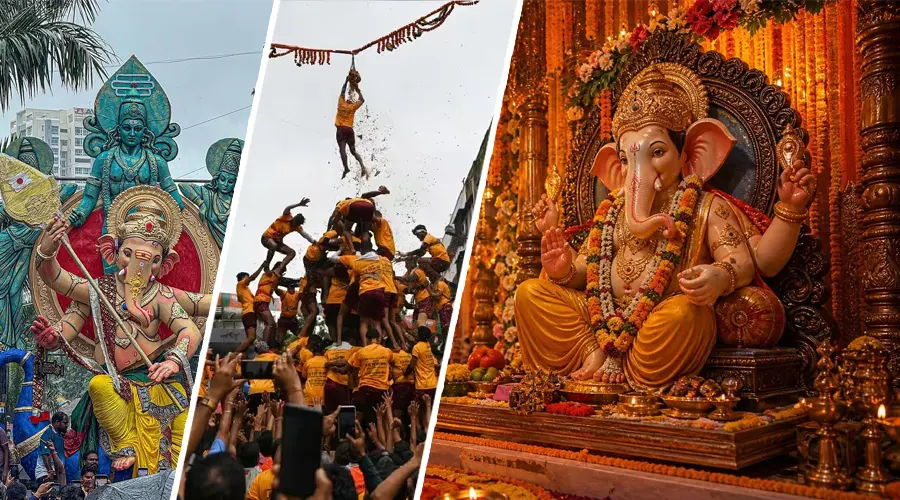
Ganesh Chaturthi 2026: Date, Puja Muhurat, Rituals & Celebrations
Ganesh Chaturthi 2026 will be celebrated on Monday, 14 September, marking the auspicious birth anniversary of Lord Ganesha, the Hindu deity associated with wisdom, prosperity, good fortune and the removal of obstacles. The festival is celebrated with immense devotion across India and is particularly famous for the grand Ganeshotsav celebrations in Maharashtra.
For devotees, Ganesh Chaturthi is a time to welcome Lord Ganesha into homes and communities, offer prayers and seek his blessings. For travellers, it is also an opportunity to experience India's vibrant cultural traditions, spectacular processions, beautifully decorated pandals and centuries-old religious practices.
From the grand celebrations of Mumbai and Pune to traditional festivities in Karnataka, Telangana, Andhra Pradesh and other parts of India, Ganesh Chaturthi brings together spirituality, art, music and community celebrations.
When Is Ganesh Chaturthi 2026?
Ganesh Chaturthi will be celebrated on Monday, 14 September 2026.According to the Panchang, the Chaturthi Tithi begins at 7:06 AM on 14 September and ends at 7:44 AM on 15 September. The preferred period for Ganapati Puja is during Madhyahna, around midday.
Because Hindu festival timings are calculated according to the local sunrise and geographical location, the exact Puja Muhurat differs between cities.
Why Is Ganesh Chaturthi Celebrated?
Ganesh Chaturthi celebrates the birth of Lord Ganesha, who is widely worshipped as the remover of obstacles and the deity of wisdom, intellect and prosperity.
Devotees traditionally begin important activities by remembering Lord Ganesha. His blessings are believed to bring success and help overcome difficulties.
The festival also has a strong cultural and social significance. Communities come together to create elaborate pandals, organise cultural programmes, perform aarti and participate in processions.
What begins with the installation of the Ganesha idol eventually culminates in Ganesh Visarjan, symbolising the temporary nature of physical existence and the return of the deity to his divine abode.
The Story and Significance of Lord Ganesha
According to popular Hindu traditions, Goddess Parvati created Ganesha and gave him the responsibility of guarding her while she was away. When Lord Shiva returned, Ganesha stopped him from entering.
A conflict followed, and Ganesha eventually lost his head. Later, Lord Shiva restored his life with the head of an elephant and accepted him as his son.
This story is interpreted in different ways across Hindu traditions, but Lord Ganesha's elephant head has become one of the most recognisable symbols of wisdom, strength and new beginnings.
Ganesh Sthapana: Welcoming Lord Ganesha Home
One of the most important rituals of Ganesh Chaturthi is Ganesh Sthapana, when devotees install an idol of Lord Ganesha in their homes, temples or community pandals.
The idol is placed on a decorated platform and worshipped with flowers, fruits, sweets and other offerings.
Common Preparations for Ganesh Sthapana
- Clean and decorate the puja area.
- Prepare a raised platform for the idol.
- Decorate the space with flowers and rangoli.
- Arrange puja materials in advance.
- Place the Ganesha idol respectfully.
- Perform the prescribed puja rituals.
- Offer flowers, fruits and sweets.
- Light diyas and incense.
- Perform Ganesh Aarti.
- Distribute prasad among family members and devotees.
Ganesh Chaturthi Puja Vidhi
The exact rituals may differ according to regional and family traditions, but a typical Ganesh Chaturthi puja includes several important steps.
Basic Puja Steps
- Take a bath and wear clean clothes.
- Clean the puja area.
- Decorate the place with flowers and rangoli.
- Install the Ganesha idol.
- Invoke Lord Ganesha through prayers.
- Perform Abhishek according to family tradition.
- Offer flowers and Durva grass.
- Offer Modak and other prasad.
- Light a diya and incense.
- Recite Ganesh mantras or prayers.
- Perform Ganesh Aarti.
- Seek blessings for health, prosperity and wisdom.
Devotees may follow their family tradition or consult a priest for detailed Shodashopachara Puja.
What Is Offered to Lord Ganesha?
Ganesh Chaturthi celebrations are incomplete without traditional offerings.
| Offering | Significance / Tradition |
| Modak | Traditionally associated with Lord Ganesha |
| Durva Grass | A sacred offering in Ganesha worship |
| Ladoos | Popular festive offering |
| Coconut | Commonly offered during Hindu worship |
| Bananas & Fruits | Traditional prasad |
| Flowers | Used for decoration and worship |
| Jaggery | Commonly used in festive offerings |
| Panchamrit | Used in many Hindu puja traditions |
Why Are Modaks Associated With Ganesh Chaturthi?
Modak is perhaps the most famous sweet associated with Lord Ganesha.
Made traditionally using ingredients such as rice flour, coconut and jaggery, modaks are prepared in different varieties across India. Steamed Ukadiche Modak is especially popular in Maharashtra during Ganeshotsav.
The sweet is offered as prasad during Ganesh Chaturthi and has become an inseparable part of the festival's culinary tradition.
Ganeshotsav: The 10-Day Celebration
Ganesh Chaturthi can be celebrated for different durations depending on local and family traditions. In many places, the festival continues for several days and culminates on Anant Chaturdashi.
During Ganeshotsav, communities create large and beautifully decorated pandals where devotees gather for prayers and cultural activities.
Typical celebrations include:
- Daily Ganesh Aarti
- Bhajan and devotional music
- Cultural performances
- Community meals
- Decorative pandals
- Religious ceremonies
- Social and charitable activities
- Processions
- Ganesh Visarjan
Ganesh Visarjan 2026
The festival traditionally concludes with Ganesh Visarjan, when devotees carry the idol in a procession before immersing it in water.
In 2026, Anant Chaturdashi falls on Friday, 25 September, which is traditionally observed as an important day for Ganesh Visarjan.
The ritual represents the cycle of creation and dissolution. Devotees bid farewell to Lord Ganesha with prayers and the hope that he will return again the following year.
The familiar chant:
“Ganpati Bappa Morya!”
fills the streets during the farewell processions.
Famous Ganesh Chaturthi Celebrations in India
Ganesh Chaturthi is celebrated across India, but some destinations are particularly famous for their large-scale festivities.
Mumbai, Maharashtra
Mumbai is arguably the most famous destination for experiencing Ganeshotsav.
During the festival, neighbourhoods across the city are transformed with elaborate pandals, decorations, music and processions.
Some famous celebrations include:
- Lalbaugcha Raja
- Ganesh Galli Ganpati
- GSB Seva Mandal Ganpati
- Andheri Cha Raja
- Khetwadi Ganraj
Visitors should expect large crowds, traffic diversions and significant public gatherings during major celebration days.Pune Ganeshotsav
Pune has a deep historical connection with organised public Ganesh celebrations.
The city is famous for its five Manache Ganpati, which hold a special place in Pune's Ganeshotsav traditions.
Major traditional Ganpati temples and celebrations include:
- Kasba Ganpati
- Tambdi Jogeshwari Ganpati
- Guruji Talim Ganpati
- Tulshibaug Ganpati
- Kesari Wada Ganpati
Pune's combination of history, culture, music and traditional rituals makes it an excellent destination for experiencing Maharashtra's Ganeshotsav.
Ganesh Chaturthi in Other Parts of India
Although Maharashtra is particularly famous for Ganeshotsav, the festival is celebrated in many other regions.
| Region | Popular Celebration Style |
| Maharashtra | Large pandals, public celebrations & processions |
| Karnataka | Traditional home and community worship |
| Telangana | Large public Ganesha idols and processions |
| Andhra Pradesh | Community celebrations and puja |
| Goa | Family-oriented traditional celebrations |
| Tamil Nadu | Vinayagar Chaturthi celebrations |
| Kerala | Temple and community worship |
| Gujarat | Public pandals and cultural events |
| Delhi | Community pandals and cultural programmes |
Eco-Friendly Ganesh Chaturthi
One of the most important changes in modern Ganesh Chaturthi celebrations is the growing awareness around environmentally responsible festivities.
Traditional idols made with natural clay can be a more environmentally friendly option than idols made from materials that may contribute to water pollution.
How to Celebrate an Eco-Friendly Ganesh Chaturthi
- Choose a natural clay Ganesha idol.
- Avoid harmful paints and non-biodegradable decorations.
- Use natural flowers and reusable decorations.
- Avoid excessive plastic.
- Prefer community immersion tanks where available.
- Reduce unnecessary noise and waste.
- Reuse decorative materials.
- Follow local environmental regulations.
Celebrating responsibly allows devotees to honour tradition while also caring for rivers, lakes and other water bodies.
Quick Facts about Ganesh Chaturthi 2026
Particular | Details |
Festival | Ganesh Chaturthi |
Year | 2026 |
Date | Monday, 14 September 2026 |
Deity Worshipped | Lord Ganesha |
Hindu Month | Bhadrapada |
Main Ritual | Ganesh Sthapana & Puja |
Popular Celebration | Ganeshotsav |
Famous For | Ganesh Pandals, Processions & Visarjan |
Major Celebration | Maharashtra |
Visarjan | Friday, 25 September 2026 |
Festival Duration | Traditionally up to 10 days |
The Ganesh Chaturthi date for 2026 is 14 September, while Anant Chaturdashi, traditionally associated with the concluding Ganesh Visarjan, falls on 25 September.
Best Places to Experience Ganesh Chaturthi
If you want to experience Ganesh Chaturthi as a cultural traveller, these destinations offer distinctive celebrations.
- Mumbai: Best known for its massive public Ganpati celebrations, iconic pandals and spectacular immersion processions.
- Pune: Ideal for experiencing traditional Maharashtrian Ganeshotsav and the historic Manache Ganpati tradition.
- Hyderabad: Known for its huge Ganesha idols, especially during the final days of the festival.
- Bengaluru: Offers a blend of traditional temple worship and modern community celebrations.
- Goa: A good choice for travellers interested in smaller, community-oriented celebrations combined with Goa's cultural heritage.
Travelling during Ganesh Chaturthi can be exciting, but major cities such as Mumbai and Pune can become extremely crowded.
Before You Travel
- Book hotels well in advance.
- Reserve trains or flights early.
- Check local traffic restrictions.
- Plan your sightseeing around festival events.
- Keep comfortable footwear for walking.
- Carry a small water bottle.
- Avoid carrying unnecessary valuables.
- Follow crowd-control instructions.
During the Festival
- Respect religious customs.
- Ask before photographing people or private rituals.
- Avoid blocking processions.
- Keep public places clean.
- Follow local police and administration instructions.
- Use public transport where practical.
Ganesh Chaturthi Food and Traditional Delicacies
Food is an important part of the festival, particularly in Maharashtra.
Popular Ganesh Chaturthi dishes include:
- Ukadiche Modak
- Fried Modak
- Puran Poli
- Sabudana preparations
- Ladoo
- Shrikhand
- Coconut-based sweets
- Seasonal fruits
- Traditional Maharashtrian meals
Many households prepare special dishes and distribute them among relatives, friends and neighbours.
Ganesh Chaturthi and Community Spirit
One of the most remarkable aspects of Ganesh Chaturthi is its ability to bring people together.
Public celebrations often involve people from different age groups and backgrounds working together to organise:
- Pandal decorations
- Cultural programmes
- Religious ceremonies
- Community meals
- Charity initiatives
- Cleanliness drives
- Social awareness campaigns
The festival therefore extends beyond religious worship and becomes an expression of community participation and cultural identity.
What Makes Ganesh Chaturthi Special?
Ganesh Chaturthi combines spirituality with art, culture and community life.
Key Highlights
- Worship of Lord Ganesha
- Beautifully decorated idols
- Traditional puja rituals
- Modak and festive food
- Community celebrations
- Cultural performances
- Grand processions
- Ganesh Visarjan
- Strong regional traditions
- Growing focus on eco-friendly celebrations
Ganesh Chaturthi 2026: A Festival of Faith and Culture
Ganesh Chaturthi is much more than a festival marked on the Hindu calendar. It is a celebration of faith, new beginnings, family traditions and community spirit.
For travellers, it provides an opportunity to experience a vibrant side of India's cultural heritage, from the colourful streets of Mumbai to the historic Ganeshotsav traditions of Pune and the diverse celebrations found across the country.
Whether celebrated at home with family or experienced through a large public festival, the central message remains the same: welcome Lord Ganesha with devotion and seek blessings for wisdom, prosperity and the removal of obstacles.
Ganesh Chaturthi 2026 will be celebrated on Monday, 14 September, with devotees across India welcoming Lord Ganesha through prayers, idol installation, offerings and cultural celebrations. The festival will continue according to local traditions, with Anant Chaturdashi and major Visarjan celebrations falling on 25 September 2026.
From the grand Ganpati celebrations of Mumbai and Pune to intimate family ceremonies across India, Ganesh Chaturthi reflects the country's ability to bring spirituality, tradition, creativity and community together.
As you celebrate this auspicious festival, choose traditions that respect both faith and the environment.
Ganpati Bappa Morya!
Faq About Ganesh Chaturthi 2026: Date, Puja Muhurat, Rituals & Celebrations
Ans: Ganesh Chaturthi will be celebrated on Monday, 14 September 2026. The festival marks the birth of Lord Ganesha and is observed with prayers, idol installation and cultural celebrations.
Ans: Ganesh Chaturthi celebrates the birth of Lord Ganesha, who is worshipped as the deity of wisdom, prosperity, good fortune and the remover of obstacles.
Ans: The Madhyahna Puja Muhurat varies by location because Hindu Panchang timings depend on the local sunrise and geographical location. Devotees should check the timing for their city before performing the puja.
Ans: Ganesh Chaturthi celebrations can vary from one day to several days, depending on family and regional traditions. Many public celebrations continue for up to 10 days and conclude on Anant Chaturdashi.
Ans: Anant Chaturdashi falls on Friday, 25 September 2026, and is traditionally one of the major days for Ganesh Visarjan. Some families and communities perform visarjan earlier according to their traditions.
Ans: Mumbai is particularly famous for its grand Ganeshotsav celebrations, including large public pandals, beautifully decorated idols and spectacular immersion processions.
Ans: Some of the best destinations include Mumbai, Pune, Hyderabad, Bengaluru and Goa. Each destination offers its own regional traditions, rituals and cultural celebrations.
Ans: Popular offerings include modak, ladoos, Durva grass, coconut, fruits, flowers and jaggery. Modak is especially associated with Lord Ganesha and is a popular festive sweet.
Ans: Devotees can choose natural clay idols, avoid harmful paints and plastic decorations, reduce waste and use designated immersion tanks or locations where available.
Ans: Ganesh Visarjan symbolises the cycle of creation and dissolution. Devotees bid farewell to Lord Ganesha with prayers and the belief that he will return again the following year.
Comments (0)