
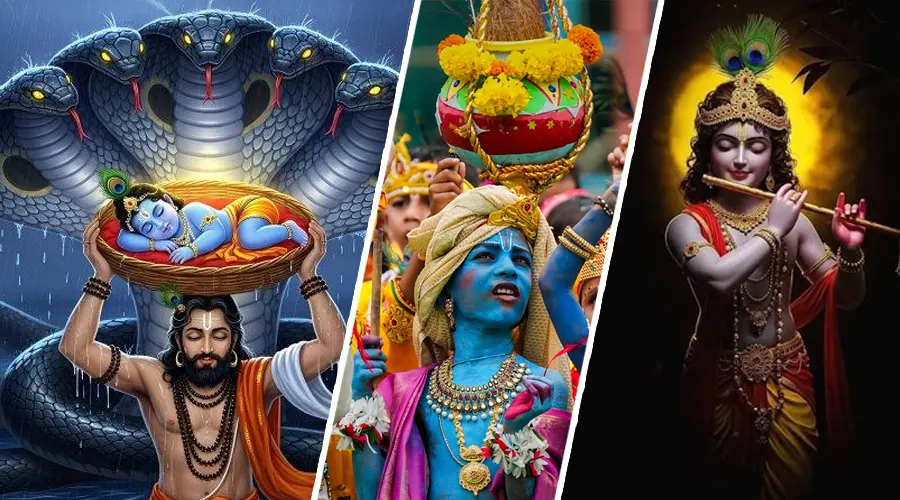
Janmashtami 2026: Date, Puja Muhurat, Significance, Rituals & Celebration
Janmashtami, also known as Krishna Janmashtami or Gokulashtami, is one of the most revered Hindu festivals celebrated to mark the birth of Lord Krishna, the eighth incarnation of Lord Vishnu. Observed with immense devotion across India and many parts of the world, the festival symbolizes the triumph of righteousness over evil and reminds devotees of Lord Krishna's teachings on love, compassion, wisdom, and selfless action. Temples are beautifully decorated, devotional songs fill the air, and devotees gather to celebrate the divine birth of Krishna at midnight.
The festival is celebrated with fasting, bhajans, kirtans, recitation of sacred scriptures, and the ceremonial bathing and worship of Lord Krishna's idol. Children are often dressed as Bal Gopal, while homes and temples recreate scenes from Krishna's childhood in beautifully decorated Jhankis. In states like Maharashtra, the excitement continues with the energetic Dahi Handi celebration, where teams form human pyramids to break an earthen pot filled with curd and butter, recalling Krishna's playful childhood.
Whether you wish to observe a Janmashtami fast, visit famous Krishna temples, understand the spiritual significance of the festival, or simply learn about India's rich cultural traditions, this comprehensive guide to Janmashtami 2026 covers everything you need to know.
Why is Janmashtami Celebrated?
Janmashtami commemorates the birth of Lord Krishna, who is believed to have descended on Earth to free humanity from injustice and restore Dharma (righteousness). According to Hindu scriptures, Krishna was born in Mathura to Devaki and Vasudeva during a time when the tyrannical King Kansa ruled with cruelty and oppression.
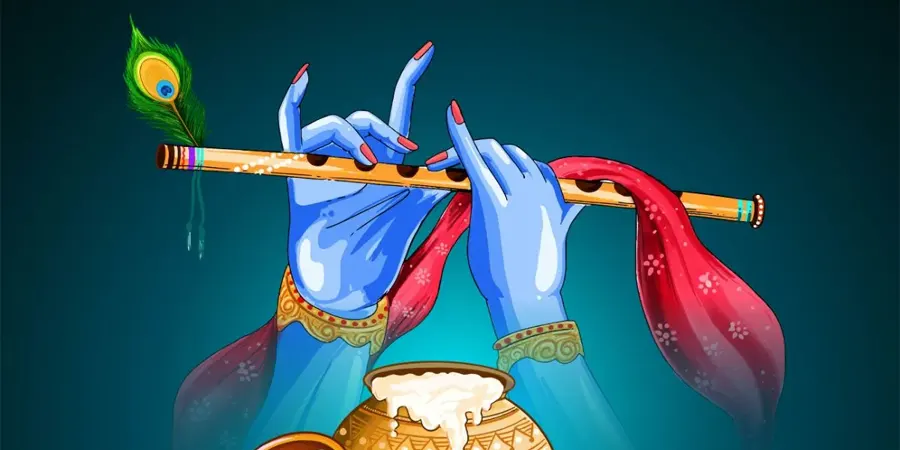
It is believed that Krishna's birth fulfilled a divine prophecy foretelling the end of Kansa's reign. Soon after his birth, Vasudeva carried the infant Krishna across the Yamuna River to Gokul, where he was lovingly raised by Nanda Baba and Yashoda. Krishna's childhood was filled with miraculous events, playful adventures, and inspiring stories that continue to be cherished by millions of devotees.
Janmashtami celebrates not only Krishna's birth but also his teachings on truth, devotion, courage, and selfless duty, especially as conveyed through the Bhagavad Gita.
Janmashtami 2026 Date
Janmashtami is celebrated every year on the Ashtami Tithi of Krishna Paksha in the month of Bhadrapada, according to the Hindu lunar calendar. The festival is observed with great devotion, and the most significant rituals are performed at midnight, which is traditionally believed to be the time of Lord Krishna's birth.
In many regions, celebrations begin early in the morning with fasting, devotional singing, and temple visits, continuing until the midnight birth ceremony. Temples remain open late into the night as devotees gather to participate in special prayers and witness the symbolic birth of Lord Krishna.
The Story Behind Lord Krishna's Birth
The birth of Lord Krishna is one of the most inspiring stories in Hindu mythology. King Kansa, the ruler of Mathura, was warned through a prophecy that the eighth child of his sister Devaki would one day bring about his downfall. Driven by fear, Kansa imprisoned Devaki and her husband Vasudeva and ordered that each of their newborn children be killed.
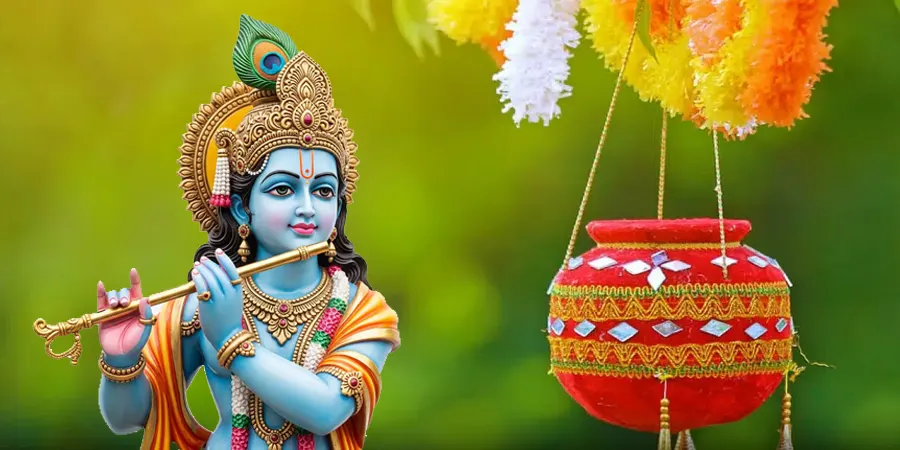
When Krishna was born, a series of divine miracles unfolded. The prison doors opened on their own, the guards fell into a deep sleep, and the Yamuna River parted to allow Vasudeva to safely carry the infant across to Gokul. There, Krishna was exchanged with the newborn daughter of Yashoda and Nanda Baba. Raised in Gokul, Krishna grew into a compassionate leader who ultimately defeated Kansa and restored justice.
This story symbolizes the victory of truth over tyranny and reinforces the belief that divine power always protects righteousness.
Spiritual Significance of Janmashtami
Janmashtami is much more than a celebration of Lord Krishna's birth. It is a reminder of the timeless values that Krishna taught through his life and the Bhagavad Gita. His message encourages people to perform their duties with honesty, remain detached from selfish desires, and maintain faith even in difficult times.
For devotees, the festival is an opportunity to strengthen their spiritual connection through fasting, prayer, meditation, and acts of kindness. Many people spend the day reading sacred scriptures, chanting Krishna's names, and participating in community celebrations.
The festival also promotes values such as compassion, humility, forgiveness, and devotion, making Janmashtami one of the most meaningful occasions in the Hindu calendar.
Major Rituals of Janmashtami
Devotees across India celebrate Janmashtami with great enthusiasm by following various traditional rituals that have been practiced for generations.
Popular Rituals
- Observing a day-long fast
- Decorating homes and temples with flowers and lights
- Performing Abhishek of Lord Krishna's idol
- Singing bhajans and kirtans
- Creating beautiful Jhankis depicting Krishna's childhood
- Reading the Bhagavad Gita and Bhagavata Purana
- Offering Makhan (butter), Mishri, fruits, and sweets
- Performing the midnight Krishna Aarti
- Organizing devotional processions
- Participating in Dahi Handi celebrations
Why Millions Visit Krishna Temples During Janmashtami
Janmashtami transforms Krishna temples across India into vibrant centers of devotion. Temples are illuminated with thousands of lights, adorned with flowers, and filled with continuous chanting of devotional hymns. Devotees wait eagerly for the midnight birth celebration, when bells ring, conches are blown, and the idol of infant Krishna is ceremonially placed in a beautifully decorated cradle.
Pilgrims especially visit sacred destinations such as Mathura, Vrindavan, Dwarka, Govardhan, Barsana, and ISKCON temples, where grand celebrations attract devotees from around the world.
Puja Muhurat for Janmashtami 2026
The most sacred rituals of Janmashtami are performed at midnight, as it is traditionally believed to be the exact time when Lord Krishna was born in Mathura. Devotees observe a day-long fast, decorate temples and homes, and gather for special prayers that culminate in the midnight celebration. Since the exact Nishita Kaal Muhurat and Ashtami Tithi timings depend on the Hindu Panchang and local location, devotees should refer to their regional calendar for precise timings.
Janmashtami Puja Vidhi
Janmashtami Puja is performed with devotion and simplicity. The rituals symbolize welcoming the birth of Lord Krishna and expressing gratitude for his teachings.
Step-by-Step Puja Vidhi
- Wake up early and take a holy bath.
- Clean the home and decorate the puja area with flowers and rangoli.
- Place an idol or picture of Bal Gopal (Baby Krishna) in a decorated cradle.
- Offer Panchamrit (milk, curd, honey, ghee, and sugar) for Abhishek.
- Dress the idol in fresh clothes and ornaments.
- Offer Tulsi leaves, Makhan (butter), Mishri, fruits, and sweets.
- Light a diya and incense sticks.
- Chant Krishna mantras and recite the Bhagavad Gita or Bhagavata Purana.
- Sing bhajans and perform the midnight aarti.
- Break the fast after offering prasad.
Sacred Offerings to Lord Krishna
Lord Krishna is lovingly offered simple yet meaningful items that symbolize purity, devotion, and abundance.
|
Offering |
Religious Significance |
|
Makhan (Butter) |
Krishna's favorite childhood food |
|
Mishri |
Sweetness and happiness |
|
Tulsi Leaves |
Sacred and essential in Krishna worship |
|
Panchamrit |
Purification and blessings |
|
Fresh Fruits |
Gratitude and prosperity |
|
Milk |
Purity and devotion |
|
Curd |
Health and abundance |
|
Dry Fruits |
Prosperity |
|
Ladoo & Peda |
Traditional festive offerings |
|
Flowers |
Love and devotion |
Janmashtami Fasting Rules
Many devotees observe a Nirjala, Phalahar, or Satvik fast throughout the day until the midnight birth celebration. The fast is undertaken with devotion and self-discipline rather than as a ritual alone.
Common Fasting Practices
- Wake up before sunrise.
- Maintain cleanliness and purity.
- Observe silence or chant Krishna mantras whenever possible.
- Avoid onion, garlic, alcohol, and non-vegetarian food.
- Consume fruits, milk, dry fruits, and vrat-friendly dishes if observing a partial fast.
- Read or listen to the Bhagavad Gita.
- Participate in evening bhajans and kirtans.
- Break the fast only after the midnight puja or as per family tradition.
Dahi Handi Celebration
Dahi Handi is one of the most exciting traditions associated with Janmashtami, particularly in Maharashtra and several other states. Inspired by Lord Krishna's childhood love for butter, an earthen pot filled with curd, butter, sweets, or prizes is suspended high above the ground. Teams of enthusiastic participants, known as Govindas, form human pyramids to reach and break the pot while thousands of spectators cheer them on.
The event symbolizes teamwork, determination, courage, and Krishna's playful spirit. Today, Dahi Handi celebrations feature cultural performances, music, and community participation, making them one of the festival's biggest attractions.
Famous Krishna Temples to Visit During Janmashtami
Janmashtami is the best time to experience the grandeur of Krishna temples, where elaborate decorations, devotional music, and midnight celebrations create an unforgettable spiritual atmosphere.
|
Temple |
Location |
|
Shri Krishna Janmabhoomi Temple |
Mathura, Uttar Pradesh |
|
Banke Bihari Temple |
Vrindavan, Uttar Pradesh |
|
Prem Mandir |
Vrindavan, Uttar Pradesh |
|
Dwarkadhish Temple |
Dwarka, Gujarat |
|
ISKCON Temple |
Mayapur, West Bengal |
|
ISKCON Temple |
Bengaluru, Karnataka |
|
Jagannath Temple |
Puri, Odisha |
|
Govind Dev Ji Temple |
Jaipur, Rajasthan |
|
Nathdwara Shrinathji Temple |
Rajasthan |
|
Udupi Sri Krishna Temple |
Karnataka |
Best Places to Celebrate Janmashtami in India
Every region celebrates Janmashtami with unique customs, but a few destinations are especially famous for their grand festivities.
Top Destinations
- Mathura – Birthplace of Lord Krishna with grand midnight celebrations.
- Vrindavan – Famous for Jhankis, Ras Leela, and temple festivities.
- Dwarka – Ancient kingdom of Lord Krishna and home to the Dwarkadhish Temple.
- Mayapur – Renowned ISKCON celebrations with international devotees.
- Mumbai – Spectacular Dahi Handi competitions across the city.
- Jaipur – Beautifully decorated Krishna temples and cultural programs.
- Udupi – Traditional rituals at the Sri Krishna Temple.
- Puri – Special prayers and devotional events at Jagannath Temple.
Traditional Foods Prepared on Janmashtami
Festive meals are an important part of Janmashtami celebrations. Since many devotees observe a fast, special vrat-friendly dishes are prepared after the midnight puja.
Popular Janmashtami Foods
- Makhan Mishri
- Panchamrit
- Sabudana Khichdi
- Kheer
- Peda
- Panjiri
- Singhara Flour Poori
- Makhana Kheer
- Fruit Chaat
- Dry Fruit Ladoo
Travel Tips for Janmashtami
Janmashtami attracts millions of pilgrims to major Krishna temples across India. Planning your visit in advance ensures a smoother and more comfortable experience.
Helpful Travel Tips
- Book hotels and transportation early, especially in Mathura and Vrindavan.
- Reach temples well before the evening rush.
- Wear comfortable and modest clothing.
- Carry drinking water and essential medicines.
- Keep your belongings secure in crowded places.
- Follow temple guidelines and security instructions.
- Use public transport where available to avoid traffic congestion.
- Respect local customs and maintain cleanliness.
Why Janmashtami is Celebrated Worldwide
Today, Janmashtami is celebrated not only in India but also in countries across Asia, Europe, North America, Australia, and Africa. ISKCON temples and Hindu communities organize devotional singing, cultural performances, scripture readings, and charity events, allowing people from different backgrounds to experience Lord Krishna's teachings of love, peace, and devotion.
Janmashtami 2026 Quick Facts
|
Particular |
Details |
|
Festival |
Janmashtami (Krishna Janmashtami) |
|
Dedicated To |
Lord Krishna |
|
Hindu Month |
Bhadrapada |
|
Main Ritual |
Midnight Krishna Puja |
|
Popular Tradition |
Dahi Handi |
|
Sacred Offering |
Makhan Mishri & Tulsi Leaves |
|
Famous Destinations |
Mathura, Vrindavan, Dwarka & ISKCON Temples |
|
Best For |
Devotees, Families & Spiritual Travelers |
Why Janmashtami Holds a Special Place in Indian Culture
Janmashtami is more than a religious festival—it is a celebration of faith, love, and timeless values. Lord Krishna's life inspires millions through his teachings on righteousness, compassion, wisdom, and selfless action. The festival brings families and communities together through devotional singing, fasting, cultural performances, and acts of charity.
From beautifully decorated temples and colorful Jhankis to the joyful Dahi Handi celebrations, Janmashtami reflects India's rich spiritual and cultural heritage. It is a time to remember Krishna's message of living with honesty, courage, and devotion while strengthening family bonds and community spirit.
Janmashtami 2026 is a sacred occasion that celebrates the divine birth of Lord Krishna and his eternal message of truth, devotion, and righteousness.
The festival offers devotees an opportunity to deepen their spiritual connection through fasting, prayer, temple visits, and the chanting of Krishna's holy names. Whether you participate in the midnight puja, witness the excitement of Dahi Handi, or visit the holy cities of Mathura and Vrindavan, Janmashtami creates unforgettable memories rooted in faith and tradition.
May this auspicious festival fill your life with happiness, wisdom, prosperity, and the blessings of Lord Krishna. Jai Shri Krishna!
Faq About Janmashtami 2026: Date, Puja Muhurat, Significance, Rituals & Celebration
Ans: Janmashtami is a major Hindu festival that celebrates the birth of Lord Krishna, the eighth incarnation of Lord Vishnu. It commemorates his arrival on Earth to protect righteousness, destroy evil, and guide humanity through his teachings in the Bhagavad Gita.
Ans: Janmashtami is observed on the Ashtami Tithi of Krishna Paksha in the Hindu month of Bhadrapada. The exact date varies each year according to the lunar calendar.
Ans: According to Hindu tradition, Lord Krishna was born at midnight in a prison cell in Mathura. Therefore, the most significant Janmashtami rituals, including the special aarti and Abhishek, are performed at midnight.
Ans: Dahi Handi is a popular Janmashtami tradition, especially in Maharashtra, where teams form human pyramids to break a pot filled with curd, butter, or sweets. The event recreates Lord Krishna's playful childhood pastime of stealing butter.
Ans: The most famous destinations include Mathura, Vrindavan, Dwarka, Mayapur, Mumbai, Jaipur, Udupi, and Puri, where grand temple celebrations, devotional music, and cultural programs are organized.
Ans: Popular festive dishes include Makhan Mishri, Panchamrit, Kheer, Peda, Panjiri, Sabudana Khichdi, Makhana Kheer, Fruit Chaat, and Dry Fruit Ladoo.
Ans: Yes. Children often dress as Bal Krishna and Radha, take part in cultural performances, devotional songs, and temple activities, making the festival especially joyful for families.
Ans: No. Fasting is a personal act of devotion and is not mandatory. Many devotees observe a complete fast, while others follow a fruit-based or satvik diet according to their health, age, and family traditions.
Ans: Devotees commonly offer Makhan (butter), Mishri, Tulsi leaves, Panchamrit, milk, curd, fruits, sweets, flowers, and dry fruits, all of which are associated with Lord Krishna's childhood and devotion.
Ans: Janmashtami reminds devotees to follow the path of truth, compassion, humility, and selfless duty. Lord Krishna's teachings encourage people to perform their responsibilities with sincerity while remaining devoted to righteousness and inner peace.
Comments (0)