
Kushinagara – Mahaparinirvana Sthal of Gautama Buddha
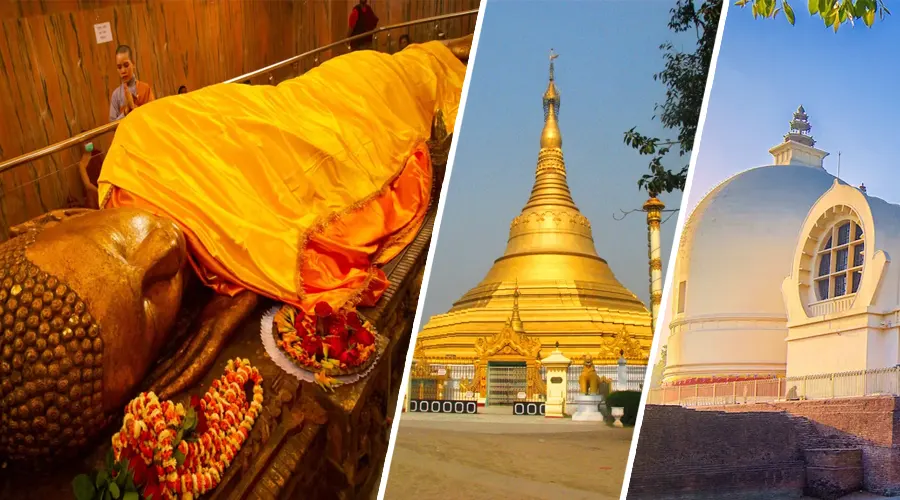
Kushinagara occupies a position of supreme sanctity in Buddhism as the Mahaparinirvana Sthal, the sacred place where Gautama Buddha attained Mahaparinirvana, the final liberation from the cycle of birth and death. Located in the Kushinagar district of eastern Uttar Pradesh near the Indo-Nepal border, Kushinagara marks the culmination of the Buddha’s spiritual journey on earth.
Along with Lumbini, Bodh Gaya, and Sarnath, Kushinagara forms one of the four holiest Buddhist pilgrimage sites, collectively known as Chatush Parikrama. These sites were personally identified by the Buddha himself, making Kushinagara not only historically important but also philosophically profound in Buddhist tradition.
History of Kushinagara
In ancient India, Kushinagara was known as Kushinara or Kusinara and served as the capital of the Malla Republic, one of the sixteen Mahajanapadas of the 6th century BCE. The Mallas followed a republican system of governance and were devoted followers of Buddhist teachings.
According to the Mahaparinibbana Sutta of the Digha Nikaya, Gautama Buddha reached Kushinagara during his final journey at the age of 80. After a lifetime dedicated to teaching compassion, wisdom, and the Middle Path, the Buddha consciously chose Kushinagara as the place to attain Mahaparinirvana, elevating the city’s spiritual and historical importance.
Meaning of Mahaparinirvana
Mahaparinirvana refers to the final nirvana attained by the Buddha after the dissolution of his physical body. While Nirvana is achieved during life through enlightenment, Mahaparinirvana marks complete freedom from samsara, the cycle of rebirth.
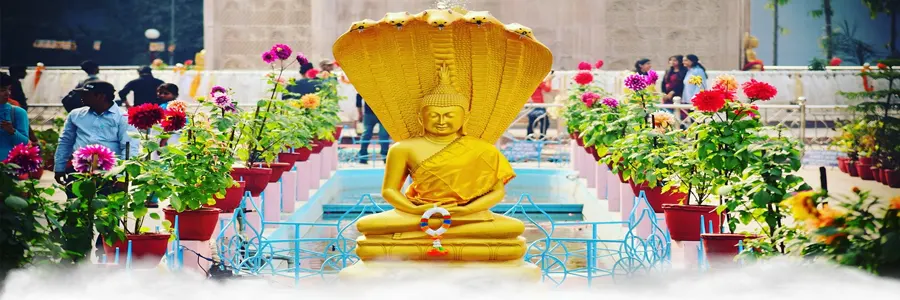
At Kushinagara, the Buddha lay between two Sal trees (Shorea robusta) in the Mahaparinirvana posture, reclining on his right side with his head facing north. His final message emphasized impermanence (Anicca) and self-effort:
“All conditioned things are impermanent. Strive on with diligence.”
This moment transformed Kushinagara into a timeless symbol of liberation and spiritual awakening.
Religious Importance of Kushinagara
Site of Buddha’s Final Passing
Kushinagara represents the completion of the Eightfold Path and the ultimate goal of Buddhist practice, making it the most emotionally and spiritually significant Buddhist site.
Cremation and Relic Distribution
After the Buddha’s Mahaparinirvana, his body was cremated here. His relics were divided into eight portions, leading to the construction of stupas across Asia and playing a crucial role in the spread of Buddhism.
Scriptural Significance
Canonical texts like the Mahaparinibbana Sutta give Kushinagara a central place in Theravada Buddhism, while Mahayana and Vajrayana traditions also revere it deeply.
Kushinagara as One of the Four Sacred Buddhist Sites
|
Sacred Buddhist Site |
Associated Event |
Key Significance |
Present Location |
Important Monument |
|
Lumbini |
Birth of Siddhartha Gautama (563 BCE) |
Beginning of the Buddha’s earthly life |
Nepal |
Mahadevi Temple |
|
Bodh Gaya |
Attainment of Enlightenment |
Transformation from seeker to Buddha under the Bodhi Tree |
Bihar, India |
Mahabodhi Temple |
|
Sarnath |
First Sermon (Dhammachakrapravartana) |
Foundation of the Sangha and spread of Dhamma |
Uttar Pradesh, India |
Sarnath Complex |
|
Kushinagara |
Mahaparinirvana of Buddha |
Completion of Buddha’s mission and final liberation |
Uttar Pradesh, India |
Mahaparinirvana Temple |
While the first three represent beginnings, Kushinagara symbolizes completion and transcendence.
Archaeological & Monumental Significance
Kushinagara is one of the most important Buddhist archaeological sites in India. Excavations since the 19th century have revealed stupas, monasteries, sculptures, and inscriptions confirming its religious continuity from the Mauryan to Gupta periods.
1. Mahaparinirvana Temple
The Mahaparinirvana Temple is the most sacred monument in Kushinagara and houses the famous reclining statue of Buddha, depicting his final liberation. The statue, about 6 meters long, shows the Buddha lying on his right side with a calm and peaceful expression.
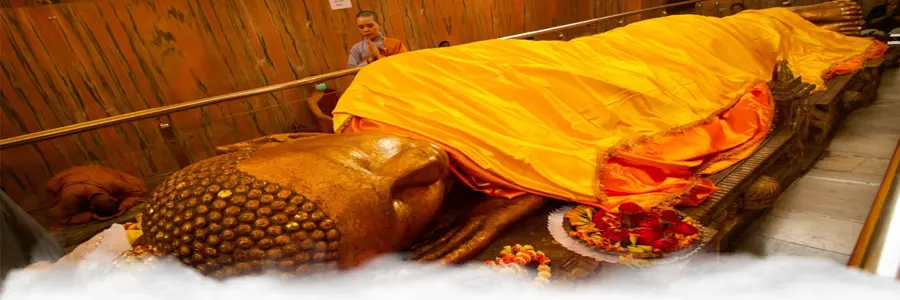
Archaeologists date the statue to the 5th century CE during the Gupta period. Carved from sandstone and coated with stucco, it reflects the refined artistic style and spiritual depth of Gupta-era Buddhist art. The temple has undergone several restorations to preserve this significant monument.
2. Ramabhar Stupa (Muktabandhana Chaitya)
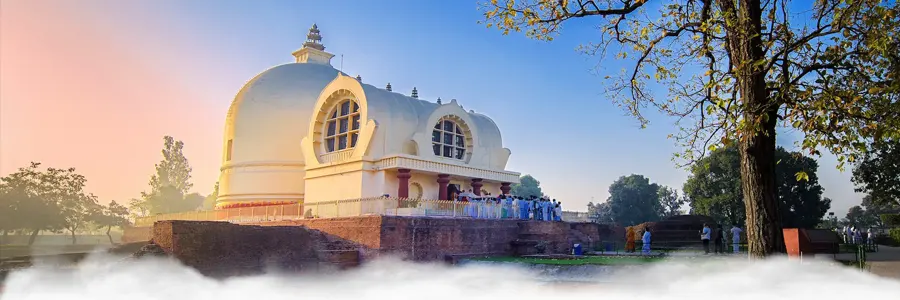
The Ramabhar Stupa marks the cremation site of Gautama Buddha and is known in ancient texts as Muktabandhana Chaitya, meaning “bond of liberation.” It is one of the most important Buddhist funerary monuments.
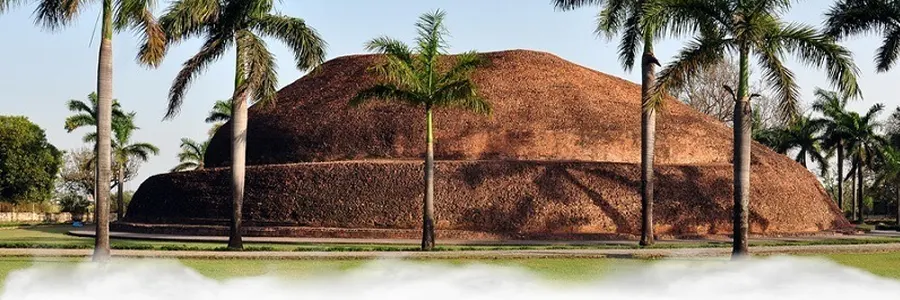
Textual sources like the Mahaparinibbana Sutta confirm this site as the place of Buddha’s cremation. Archaeological evidence suggests that the stupa was constructed and renovated during the Mauryan and Gupta periods, highlighting the early development of relic worship in Buddhism.
3. Chinese Pilgrims’ Accounts
- Fa-Hien (5th century CE) described Kushinagara as an active pilgrimage center.
- Hiuen Tsang (7th century CE) noted its gradual decline, with ruined monasteries and fewer monks.
These accounts strongly support archaeological findings.
Role of Kushinagara in the Spread of Buddhism
During the reign of Emperor Ashoka (3rd century BCE), Kushinagara became a major pilgrimage center. Ashoka promoted Buddhism and built stupas across the region.
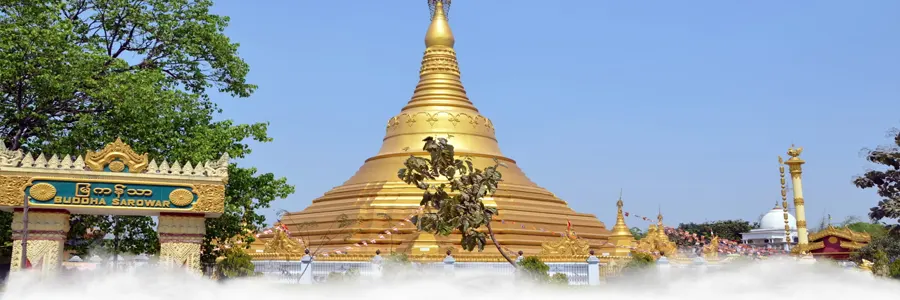
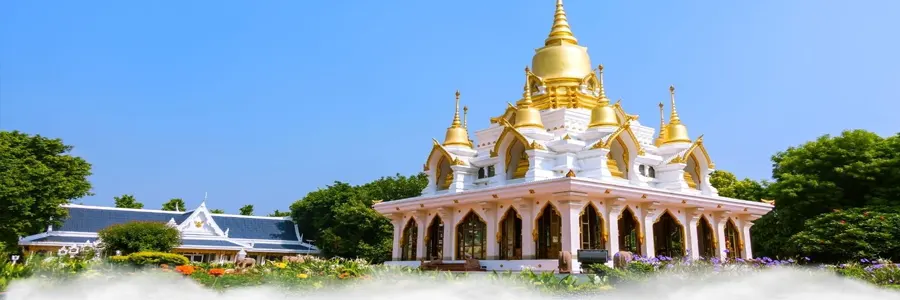
Today, monasteries built by Thailand, Myanmar, Sri Lanka, China, Japan, and Vietnam highlight Kushinagara’s continued global importance in the Buddhist world.
Philosophical Significance
Kushinagara embodies the core Buddhist teaching of impermanence (Anicca). The Buddha’s Mahaparinirvana teaches that liberation lies in:
- Following the Dhamma
- Practicing mindfulness and discipline
- Relying on self-effort
It is a place of reflection, maturity, and spiritual realization.
Quick Facts About Kushinagara
|
Aspect |
Details |
|
Religion |
Buddhism |
|
Ancient Name |
Kushinara / Kusinara |
|
State |
Uttar Pradesh |
|
District |
Kushinagar |
|
Major Attraction |
Mahaparinirvana Temple |
|
Cremation Site |
Ramabhar Stupa |
|
Best Known For |
Buddha’s Mahaparinirvana |
|
UNESCO Status |
Tentative List |
How to Reach Kushinagara
By Air
The nearest airport is Kushinagar International Airport (KKB), located around 5 km from the main pilgrimage sites. It is well-connected to major Indian cities and select international Buddhist destinations.
By Train
The nearest major railway station is Gorakhpur Junction, approximately 55 km away. Gorakhpur is well-connected to Delhi, Varanasi, Patna, Lucknow, and Kolkata.
By Road
Kushinagara is easily accessible by road from Gorakhpur, Varanasi, Patna, and Lucknow. Regular buses and taxis are available from nearby cities.
Best Time to Visit Kushinagara
October to March is ideal for pilgrimage and sightseeing.
- Oct–Feb: Pleasant & ideal
- Mar: Slightly warm
- Apr–Jun: Very hot (avoid)
- Jul–Sep: Monsoon, moderate travel
Kushinagara is not just a destination, it is a spiritual milestone that represents the completion of the Buddha’s earthly mission. As one of the four most sacred Buddhist sites, it completes the spiritual journey that begins at Lumbini and progresses through Bodh Gaya and Sarnath.
Its religious, historical, archaeological, and philosophical depth makes Kushinagara essential for understanding Buddhism as a way of life, not merely a religion.
Faq About Kushinagara – Mahaparinirvana Sthal of Gautama Buddha
Ans: Kushinagara, located in eastern Uttar Pradesh near the Indo-Nepal border, is the Mahaparinirvana Sthal of Gautama Buddha. It is the sacred site where Buddha attained Mahaparinirvana, the final liberation from the cycle of birth and death. As one of the four holiest Buddhist pilgrimage sites (Chatush Parikrama), it represents the culmination of Buddha’s spiritual journey and symbolizes the Buddhist principle of impermanence.
Ans: Kushinagara is in the Kushinagar district of eastern Uttar Pradesh, India. It is about 55 km from Gorakhpur and close to the Indo-Nepal border, making it easily accessible by air, rail, and road. The nearest airport is Kushinagar International Airport.
Ans: Mahaparinirvana is the final nirvana attained by Buddha after the dissolution of his physical body. While Nirvana is achieved through enlightenment during life, Mahaparinirvana marks complete liberation from samsara (the cycle of birth and death). Kushinagara is the place where Buddha attained this ultimate state, lying between two Sal trees in a reclining posture.
Ans: Kushinagara is prominently mentioned in the Mahaparinibbana Sutta of the Digha Nikaya, which describes Buddha’s final journey, teachings, and Mahaparinirvana. Chinese pilgrim accounts, such as those of Fa-Hien (5th century CE) and Hiuen Tsang (7th century CE), also provide valuable historical descriptions of the city and its monuments.
Ans: The two most important monuments are:Mahaparinirvana Temple – Houses the famous 6-meter-long reclining Buddha statue from the 5th century CE.Ramabhar Stupa (Muktabandhana Chaitya) – Marks the cremation site of Buddha and an early example of relic worship.
Ans: Kushinagara, ancient Kushinara, was the capital of the Malla Republic, one of India’s sixteen Mahajanapadas. The Mallas were devoted followers of Buddhism. The city became historically significant as the final resting place of Gautama Buddha and a major Buddhist pilgrimage center promoted later by Emperor Ashoka.
Ans: By Air: Kushinagar International Airport (KKB) – 5 km from main sites.By Train: Gorakhpur Junction – 55 km away, well-connected to Delhi, Varanasi, Patna, and Kolkata.By Road: Regular buses and taxis connect Kushinagara to Gorakhpur, Varanasi, Lucknow, and Patna.
Ans: The ideal time is October to March, when weather is pleasant.October–February: Perfect for pilgrims and tourists.March: Slightly warmer but comfortable.April–June: Very hot, not recommended.July–September: Monsoon season, travel possible but moderate.
Ans: Kushinagara teaches the Buddhist principle of impermanence (Anicca). Buddha’s Mahaparinirvana emphasizes self-effort, following the Dhamma, and practicing mindfulness and discipline. It symbolizes spiritual completion, reflection, and liberation from worldly attachments.
Ans: Kushinagara is one of the Chatush Parikrama along with Lumbini (birth), Bodh Gaya (enlightenment), and Sarnath (first sermon). Unlike the other three, which mark beginnings, Kushinagara marks completion and Buddha’s transcendence, making it philosophically profound and essential for pilgrims seeking spiritual fulfillment.
Comments (0)