
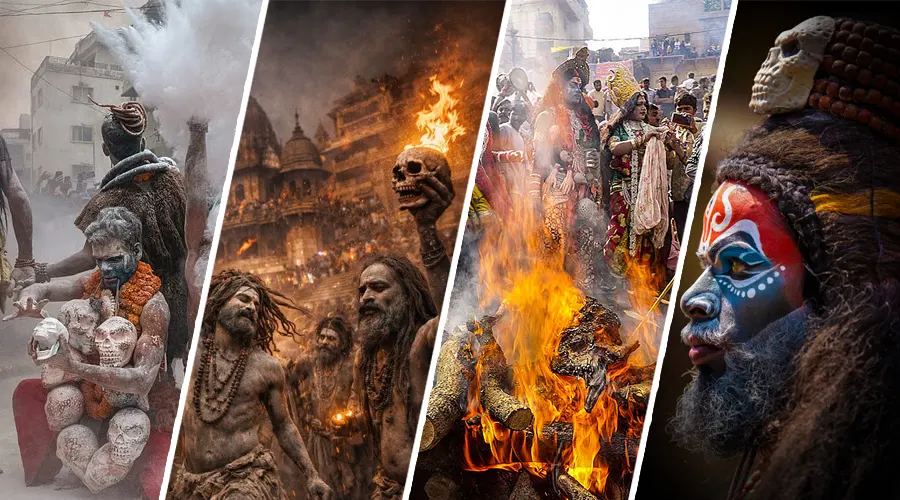
Masan Holi 2026 in Varanasi – Ashes, Shiva & the Mystical Holi of Kashi
When most parts of India celebrate Holi with bright colors, music, laughter, and festive sweets, Varanasi follows a path that is deeply spiritual and meaningful. In this ancient city, colors are replaced by ash, and celebration turns into reflection. Masan Holi in 2026 will be observed on 28 February 2026 and is celebrated at the sacred cremation grounds of Kashi, where life and death exist together in their most honest form. This powerful tradition reminds devotees that the human body is temporary and that everything ultimately returns to ash.
Masan Holi is not about joy or entertainment. It represents detachment from worldly pleasures, acceptance of death, and complete devotion to Lord Shiva, who is worshipped as the ascetic lord of time and transformation. Celebrated a few days before the colorful Holi seen across India, this rare and intense observance attracts aghoris, saints, spiritual seekers, and thoughtful travelers from around the world. They come to witness a tradition that goes beyond festivity and reflects the deeper philosophy of life, death, and liberation in the timeless city of Kashi.
Masan Holi 2026 Date & Timing
-
Masan Holi 2026 Date: 28 February 2026
-
Celebrated a few days before the main Holi festival
-
Takes place mostly at night and early morning
Note: The date is based on the Hindu lunar calendar and local Kashi traditions.
Where is Masan Holi Celebrated in Varanasi?
Masan Holi is observed at the cremation ghats of Varanasi, mainly:
-
Manikarnika Ghat
-
Harishchandra Ghat
These ghats are continuously active cremation sites, making Masan Holi one of the rarest festivals celebrated at burning pyres.
History of Masan Holi in Kashi
According to legends, Masan Holi began when Lord Shiva returned to Kashi after marrying Goddess Parvati. While the city celebrated with colors, Shiva went to the cremation ground with his ganas, smeared in ash, dancing in cosmic joy.
Since then, ascetics, aghoris, and Shiva devotees celebrate Holi in Shiva’s way — with bhasma (ash), symbolizing:
-
Death is inevitable
-
Ego and body are temporary
-
Only the soul is eternal
Rituals & How Masan Holi is Celebrated
Masan Holi rituals are deeply symbolic and spiritual:
-
Ash (Bhasma) replaces colors
-
Devotees smear ash on each other’s bodies
-
Continuous chanting of “Har Har Mahadev”
-
Shiva bhajans and damru rhythms
-
Aghoris and saints perform intense spiritual practices
-
No water, no gulal, no sweets — only ash and devotion
The atmosphere is powerful, emotional, and unforgettable.
Spiritual Significance of Masan Holi
Masan Holi teaches lessons that ordinary festivals do not:
-
Acceptance of death as a part of life
-
Detachment from material desires
-
Reminder of human mortality
-
Celebration of Shiva as Mahakaal, the lord of time
For spiritual travelers, Masan Holi is not an event — it is a life-altering experience.
Is Masan Holi Safe for Tourists?
Yes, but only as an observer.
Important Guidelines:
-
Do not treat it as entertainment
-
Avoid interfering with cremation rituals
-
Photography is restricted and sensitive
-
Follow local priests or guides
-
Maintain silence and respect
Masan Holi is not recommended for children or casual tourists.
Best Time to Visit Varanasi for Masan Holi
-
February end – March beginning
-
Weather is pleasant (15°C – 25°C)
-
Stay at least 3–4 days to experience:
-
Masan Holi
-
Rangbhari Ekadashi
-
Traditional Holi in Varanasi
-
How to Reach Varanasi
By Air:
-
Lal Bahadur Shastri International Airport (VNS)
By Train:
-
Varanasi Junction
-
Banaras Railway Station
By Road:
-
Well connected from Prayagraj, Lucknow, Patna, and Delhi
Where to Stay in Varanasi During Holi
-
Near Dashashwamedh Ghat (easy access)
-
Heritage homestays
-
Spiritual ashrams
-
Mid-range hotels in Godowlia & Assi Ghat
Book early — Holi season gets crowded.
Do’s and Don’ts During Masan Holi
Do’s
-
Observe quietly
-
Dress modestly
-
Hire a local guide
-
Respect religious sentiments
Don’ts
-
Don’t play with ash casually
-
Don’t touch funeral pyres
-
Don’t use drones or loud cameras
-
Don’t promote it as a party
Masan Holi vs Normal Holi – Quick Comparison
| Aspect | Masan Holi | Traditional Holi |
|---|---|---|
| Location | Cremation Ghats | Streets & Homes |
| Colors | Ash (Bhasma) | Gulal |
| Mood | Spiritual & Intense | Joyful & Festive |
| Deity | Lord Shiva | Radha-Krishna |
| Participation | Limited | Open for all |
Masan Holi 2026 in Varanasi is not just a festival, it is a mirror of life’s ultimate truth. It challenges comfort, questions ego, and leaves a lasting spiritual imprint.
If you are a seeker, photographer of culture (with ethics), or spiritual traveler, Masan Holi will change how you see life and death.
Faq About Masan Holi 2026 in Varanasi – Ashes, Shiva & the Mystical Holi of Kashi
Ans: Masan Holi 2026 will be observed on 28 February 2026, a few days before the main Holi festival celebrated with colors.
Ans: Masan Holi is celebrated in Varanasi, mainly at its cremation grounds such as Manikarnika Ghat and Harishchandra Ghat
Comments (0)