Taj Mahal Agra: History, Architecture & UNESCO World Heritage Site
Have You Ever Seen a Monument That Looks Like a Dream in White Marble?
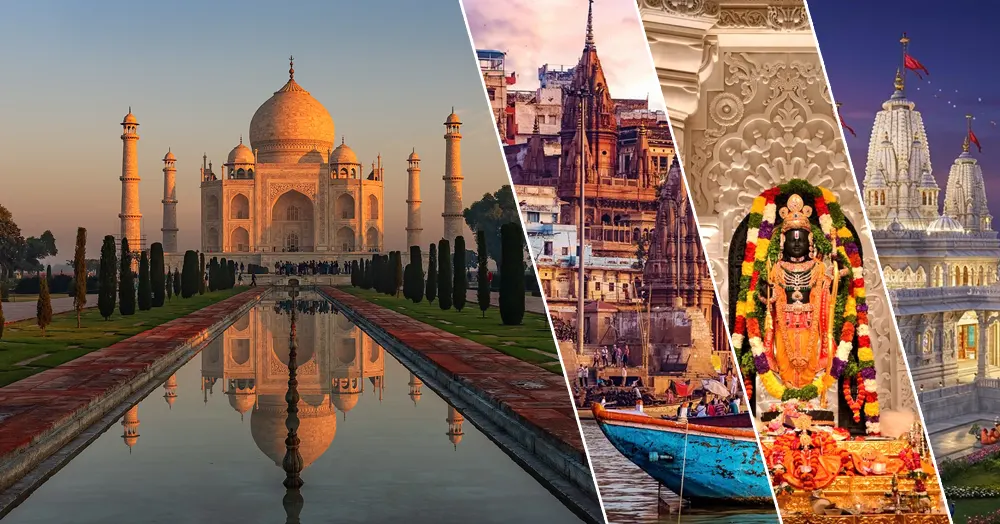
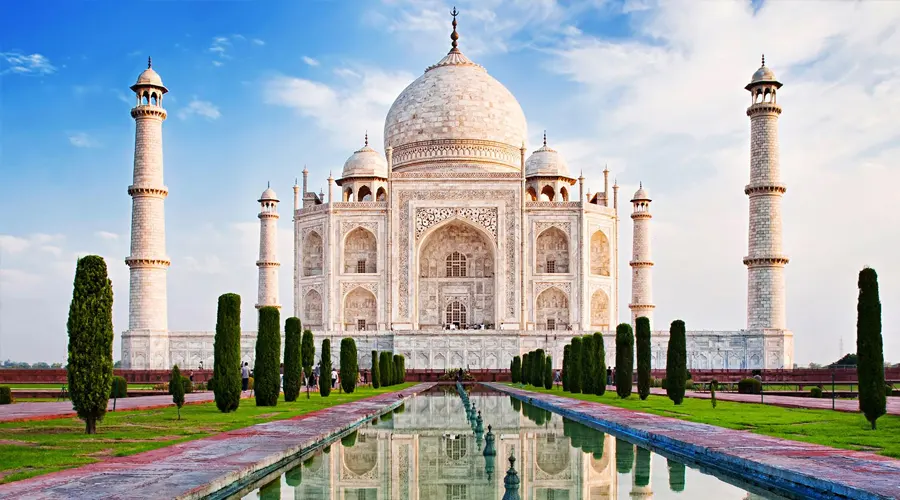
Taj Mahal is the epitome of grandeur and splendor, you cannot fathom the beauty of this white-marbled monument unless you stand in front of it. As you approach the Taj Mahal, it gradually becomes known to you that this is no ordinary monument, but a vision come to life! Moved by its beauty and the deep affection of Shah Jahan for Mumtaz, the Nobel Laureate Rabindranath Tagore called it "a teardrop on the face of eternity". A UNESCO World Heritage Site, it is located on the bank of the Yamuna River and is counted among the most popular heritage monuments in India.
Built between 1631 and 1648 AD, the Taj Mahal stands as the finest example of Indo-Islamic architecture and is one of the seven wonders of the world. The timeless beauty of the Taj is a reflection of the profound pain and longing that Shah Jahan was overcome after the death of Mumtaz Mahal. Today, visitors celebrate, reflect, and admire the splendor of the Taj. Inside, both Shah Jahan and Mumtaz lie buried in their graves, divided in life, but united in death.
There is nothing ordinary about the Taj. From its minarets which are always bent curiously outwards to its inlay work, calligraphy, gateways, panels, and arches, every nook and corner is a manifestation of divine grace that its builder seems to have been blessed with. Every intricate detail that catches your eye is worthy of being described in thousands of ways for its exquisite beauty. Unsurprisingly, the Taj Mahal always occupies the first place in the heritage tourism attractions in Uttar Pradesh.
History of Taj Mahal
The Taj Mahal was built as a mausoleum by Shah Jahan for his wife Mumtaz Mahal, who died while giving birth to their 14th child in 1631. Her death left the emperor completely heartbroken, and his hair is said to have turned grey overnight. The construction of the Taj began in 1632. The main building was completed in eight years, but the whole complex was not completed until 1653.
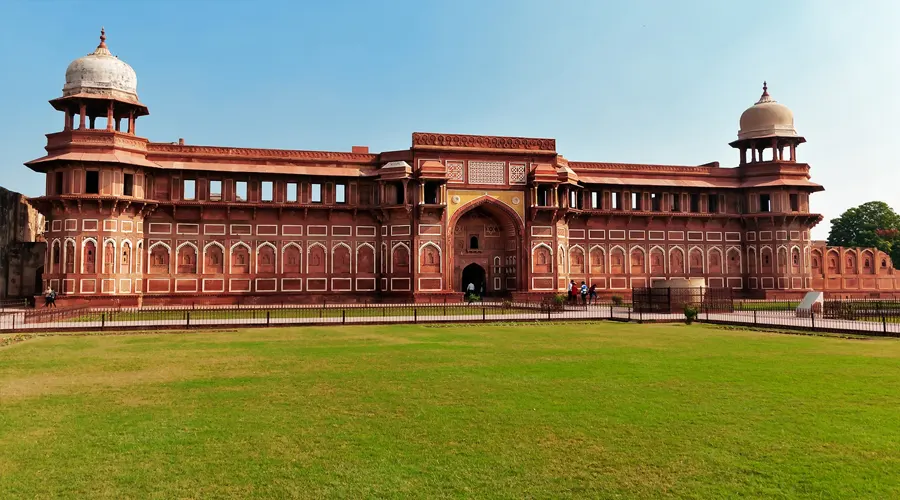
Soon after the construction was completed, Shah Jahan was overthrown by his son Aurangzeb and imprisoned in the Agra Fort. For the rest of his life, he could only gaze at his wondrous creation through a window. Shah Jahan died in 1666, after which his mortal remains were buried here alongside Mumtaz.
Over 20,000 people from all over India and Central Asia worked on this striking building. Specialists were brought from as far away as Europe who produced the beautiful marble screens and marble inlay (pietra dura) which is made of thousands of semi-precious stones. Taj Mahal was designated as a World Heritage Site by UNESCO in 1983. It looks as pristine today as it was first constructed. The monument underwent a massive restoration project in the early 20th century.
Architecture of Taj Mahal
The architecture of the Taj Mahal is considered one of the finest examples of Mughal and Indo-Islamic architecture in the world. The monument is perfectly symmetrical and built using semi-translucent white marble decorated with precious and semi-precious stones.
Key Architectural Features
- Grand white marble mausoleum
- Four 40-meter-high minarets
- Massive central dome
- Quranic calligraphy on walls and arches
- Pietra Dura floral inlay artwork
- Mughal-style Charbagh garden
- Reflecting water channels
- Red sandstone mosque and Jawab structure
The monument stands on a raised marble platform overlooking the Yamuna River, creating a majestic backdrop that enhances its beauty during sunrise and sunset.
Interior of Taj Mahal
Inside the Taj Mahal lies the cenotaph of Mumtaz Mahal and Shah Jahan. The actual tombs are located in a lower chamber beneath the main hall. Beautiful marble screens, delicate carvings, floral patterns, and Quranic inscriptions decorate the interiors.
Natural light enters through intricately carved marble lattice screens, creating a peaceful and spiritual atmosphere inside the mausoleum.
Why Taj Mahal Changes ColorOne of the most fascinating features of the Taj Mahal is its changing appearance throughout the day:
- Morning: Soft pink shade
- Daytime: Bright milky white
- Evening: Golden glow
- Moonlight: Silver-blue appearance
This changing beauty symbolizes different moods and emotions, making every visit unique.
Best Time to Visit Taj Mahal
The best time to visit Taj Mahal is between October and March when the weather remains pleasant and ideal for sightseeing.
Recommended Visiting Hours
- Sunrise visit for fewer crowds and beautiful photography
- Evening visit for sunset views
- Full moon nights for special night viewing experiences
Taj Mahal Timings
| Day | Timings |
| Friday | Closed |
| Other Days | Sunrise to Sunset |
Night Viewing
Night viewing is available on selected full moon nights and two days before and after the full moon.
Places to Visit Near Taj Mahal
Agra Fort – A magnificent Mughal fort and UNESCO World Heritage Site known for its royal palaces, courtyards, and historical significance.
Mehtab Bagh – A beautiful garden located across the Yamuna River offering stunning sunset views of the Taj Mahal.
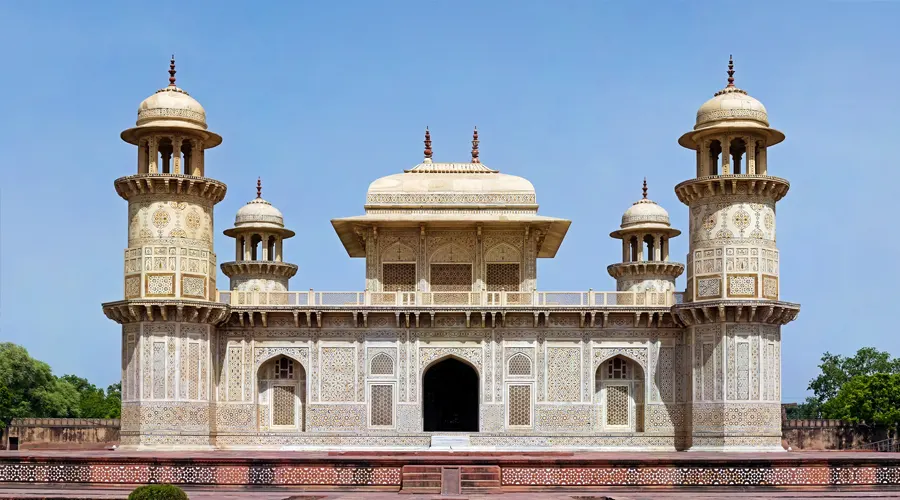
Itmad-ud-Daulah – Often called the “Baby Taj,” this elegant marble tomb is famous for its intricate Mughal architecture.
Fatehpur Sikri – A historic Mughal city built by Emperor Akbar, known for its grand palaces, mosques, and red sandstone architecture.
Travel Tips for Taj Mahal Visit- Carry a valid ID proof
- Visit early morning to avoid crowds
- Avoid weekends and public holidays
- Wear comfortable footwear
- Keep cameras and phones charged for photography
- Follow monument security guidelines
17 Interesting Facts About Taj Mahal:
1. Taj Mahal is named after Shah Jahan's favorite wife - Mumtaz Mahal
Arjumand Banu Begum was rechristened Mumtaz Mahal by Shah Jahan after their marriage. Mumtaz Mahal in Persian means the "Jewel of the Palace". Though Shah Jahan had seven wives, Mumtaz Mahal was his favorite, and she accompanied him everywhere. She died while giving birth to their 14th child due to some complications in the year 1631.
2. The Construction of the Taj Mahal Involved the Help of an Army of Pachyderms
The construction materials for building the Taj Mahal, like marbles, precious gemstones, and others were transported with the help of more than 1,000 elephants.
3. Precious Stones Were Imported from Outside India for the construction of the Taj Mahal
Inlay work precious and semi-precious stones were used which ranged a variety of around 28 different types. These stones were sourced from Sri Lanka, Tibet, China, and even several places in India.
4. The Taj Mahal Appears in Varying Shades Throughout the Day
Taj Mahal appears to be of a different color at different times of the day. It is pinkish in the morning, milky white in the evening, and golden when the moon shines.
5. 'Allah' is Inscribed Many times onto the Tomb of Mumtaz
Ninety-nine names of Allah can be seen as calligraphic inscriptions on the tomb of Mumtaz Mahal.
6. Annual Number of Visitors to the Taj Mahal Is Equivalent to a City's Population
The Taj attracts around 2 to 4 million visitors annually from around the globe including 200,000 from overseas.
7. Taj Mahal is Hidden by a Bamboo Cover During Wars
Taj Mahal was covered with a stockpile of bamboo to save it from the bombers in the 20th century. During the Indo - Pak war of 1971, it was camouflaged with green cloth to protect it.
8. An Amputee Was the Architect of the Taj Mahal
The foundation of the Red Fort was laid by Ustad Ahmed Lahauri who was the head architect for the Taj project too. It becomes quite absurd that an amputated architect would be entrusted by Shah Jahan who believed in perfect craftsmanship.
9. Safety Measures Were Considered During Taj Mahal's Construction
If you happen to look at the minarets of the Taj closely you would find them tilting outwards. This was done to protect the dome in the event of a natural disaster like an earthquake. It was done to protect the tomb from being destroyed hence ensuring its safety.
10. The Taj's Foundation Is Quite Surprising
Taj's foundation, which many will be bewildered to know, is made of timber whose longevity and durability are quite less. The foundation should have crumpled till now due to rotting if not for the Yamuna River. The river keeps the wood moist and strong hence helping to maintain a strong foundation.
11. Making Taj Mahal Today Would Cost over a Billion USD
Between 1632-and 1653, INR 32 million was spent by Shah Jahan for its construction. If the first thought that crosses your mind is how much would it amount to today, then the amount would be close to around 1,062,834,098 USD.
12. There Was Almost the "Black Mahal' as Well
Taj Mahal is among the Seven Wonders of the World and is known worldwide. However, the fact that Shah Jahan wanted to build a black Taj Mahal for himself would surely astonish you. He began to build his tomb on the other side of the river but was unable to complete it as he was taken captive by his son Aurangzeb.
13. The Interiors of Taj Mahal Are Adorned with Holy Calligraphy
Emphasis has been laid to stylize the interiors (especially walls) of the Taj Mahal; calligraphic inscriptions from the holy book, 'Quran' can be seen. Verses from it can also be located on the tombs of Mumtaz and Shah Jahan.
14. The British Left an Influence on the Taj Mahal
According to records, the initial landscaping of the Taj Mahal included an abundance of daffodils, roses, and fruits. However, by the onset of the 20th century when the British took control over large parts of India, a change in the landscaping of the forecourts of the Taj Mahal was observed. It was done to assert their authority over the people of India via imposing their architectural style.
15. The Taj Mahal Was to Be Built Elsewhere Initially
Agra was NOT the actual site for the Taj Mahal. To commemorate his beloved wife, Shah Jahan had conceptualized the structure to be built in Burhanpur, Madhya Pradesh- the town in which Mumtaz died. Since enough white marble could not be procured from the site, the structure had to be shifted to the city of Agra, which has now become a heritage city.
16. The Rooms with the Tombs Are Not Adorned or Decorated
Islamic scriptures forbid any inscriptions and decorations on the tomb. That is why despite the exuberant exteriors of the Taj Mahal, the actual room in which the tombs of Mumtaz and Shah Jahan now rest is devoid of any stucco work on the walls.
17. The Taj Mahal Houses Other Burials as Well
Shah Jahan's other wives and favorite servants are buried in the mausoleums (outside the Taj Mahal but in the same complex).
Taj Mahal Quick Facts
| Category | Details |
| Monument Name | Taj Mahal |
| Location | Agra, Uttar Pradesh, India |
| Built By | Shah Jahan |
| Dedicated To | Mumtaz Mahal |
| Construction Period | 1632 – 1653 |
| Architecture Style | Mughal & Indo-Islamic Architecture |
| UNESCO Status | UNESCO World Heritage Site |
| Famous For | Symbol of Eternal Love |
| River Nearby | Yamuna River |
| Main Material Used | White Marble |
| Height of Minarets | Approximately 40 meters |
| Best Time to Visit | October to March |
| Opening Days | Saturday to Thursday |
| Closed On | Friday |
| Visiting Timings | Sunrise to Sunset |
| Night Viewing | Available on Full Moon Nights |
| Nearest Airport | Agra Airport |
| Nearest Railway Station | Agra Cantt Railway Station |
| Famous Nearby Attractions | Agra Fort, Mehtab Bagh, Fatehpur Sikri |
| Annual Visitors | Around 2–4 million tourists |
How to Reach Taj Mahal
By Air:
Nearest airport: Agra Airport
By Train:
Major railway stations:
- Agra Cantt Railway Station
- Raja Ki Mandi Railway Station
By Road:
Agra is well connected via:
- Yamuna Expressway
- National Highway routes from Delhi, Jaipur, and Lucknow
Taj Mahal is not just a historical monument; it is an emotional masterpiece that reflects eternal love, artistic excellence, and India’s rich Mughal heritage. Whether you admire its architecture, explore its history, or simply witness its changing beauty under the sky, the Taj Mahal offers an unforgettable experience for every traveler.