Ibadat Khana Agra
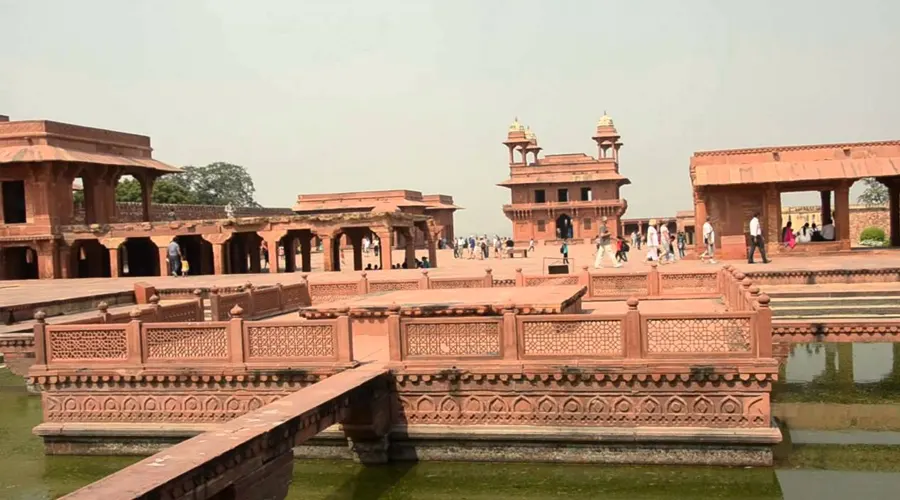
Ibadat Khana, or the House of Worship, is one of the most historically significant structures within Fatehpur Sikri, located near Agra in Uttar Pradesh. Built in 1575 AD by the Mughal Emperor Akbar the Great, Ibadat Khana was more than just an architectural marvel — it was a bold social experiment aimed at fostering interfaith dialogue.
Akbar envisioned the Ibadat Khana as a platform where spiritual leaders from various religions could come together to engage in thoughtful discussions on religious philosophies, ethics, and metaphysical questions. Initially, it hosted Islamic scholars for debates held on Thursday evenings, but as Akbar's curiosity deepened, he extended invitations to Hindu pandits, Jain monks, Christian priests, Buddhist monks, and even Zoroastrians. This progressive act marked one of the earliest known efforts at secularism in Indian history.
History of Ibadat Khana
Ibadat khana was conceptualized in 1575 A.D and the building was erected for them. Like Sulaiman who is said to spend the night amid hundreds of spiritual leaders, Akabar also spent his Thursday in the building. Here in the edifice, he invited mystics and theologies from different religions such as Hinduism, Jainism, Buddhism, Christianity, Zoroastrianism (Parsis, Islam, and also the nonbelievers in him. Each of these spiritual leaders had a congregation at Ibadat Khan and discussed with Akabar the respective features of their religions. The origin controversies by the historians of different ages.
The Vision Behind Ibadat Khana
The creation of Ibadat Khana was deeply influenced by Akbar's growing spiritual inclination, particularly his faith in Sufi saint Salim Chishti. Akbar credited the saint not only for his military victories but also for the birth of his heir, Prince Salim (later Emperor Jahangir). As Salim Chishti’s blessings came true, Akbar's desire to explore and understand the deeper aspects of faith intensified.
Though illiterate, Akbar was known for his sharp intellect and philosophical nature. He used Ibadat Khana as a space to openly question dogmas and understand the moral teachings of different faiths. Eventually, these conversations laid the foundation for his syncretic philosophy known as Din-i-Ilahi – a new spiritual path that aimed to merge the best practices from all religions.
Architecture of Ibadat Khana
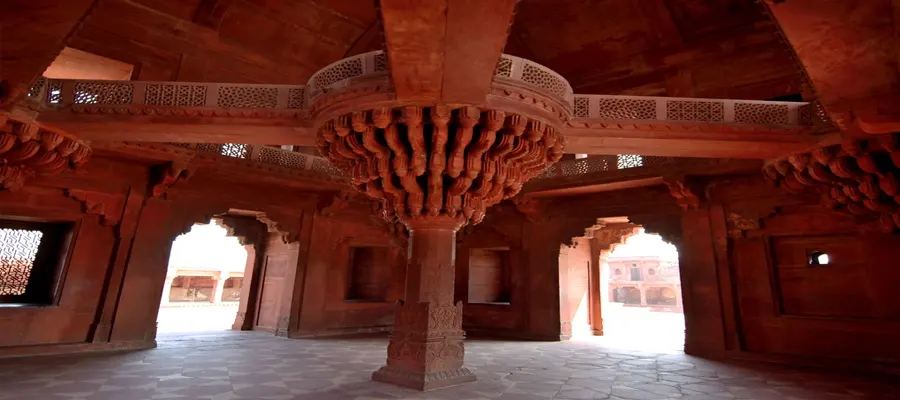
The architectural design of Ibadat Khana stands as a testament to its founder’s inclusive vision. Constructed using red sandstone, a signature of Mughal design, the structure features a central carved pillar topped by a raised platform, believed to be the Emperor’s seat. From this central spot, four paths extend outwards in different directions where his advisors and religious scholars would sit — symbolizing that Akbar welcomed ideas from all directions before forming a judgment.
However, the exact location of Ibadat Khana remains debated among historians. Scholars like V.A. Smith and Percy Brown associate it with the single pillar room in Fatehpur Sikri, while others, such as Saeed Ahmed Muraravi, believe it stood between Jodha Bai’s Mahal and the main mosque. Some also suggest that structures like the Lotus Pillar, Abdarkhana, Girls’ Madrasa, or parts of the Daulat Khana quadrangle could have been the true Ibadat Khana.
Why Visit Ibadat Khana in Fatehpur Sikri?
Whether you’re a history buff, architecture enthusiast, or a spiritual traveler, the Ibadat Khana offers a deep insight into the liberal mindset of Emperor Akbar — a man truly ahead of his time. It's not just a place; it’s a reminder of an era when ideas mattered more than identity, and dialogue was chosen over division.
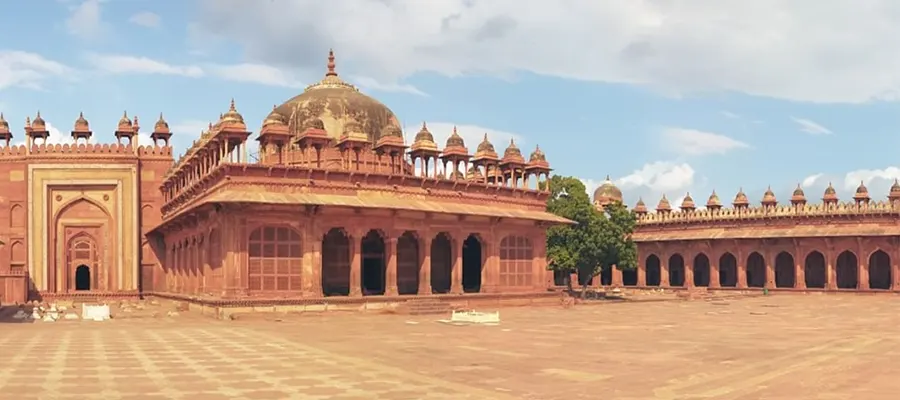
When visiting Fatehpur Sikri, don’t miss this iconic structure that echoes with the wisdom and debates of the past. Walk through the same pathways that once hosted the world’s greatest minds, and reflect on a time when India took its first steps toward religious harmony.
FAQs about Ibadat Khana, Fatehpur Sikri
1. What is Ibadat Khana?
Ans: Ibadat Khana, meaning House of Worship, was built by Emperor Akbar in 1575 AD in Fatehpur Sikri. It served as a meeting place for spiritual leaders of various religions to engage in open discussions on faith and philosophy.
2. Why did Akbar build Ibadat Khana?
Ans: Akbar built Ibadat Khana to promote religious tolerance and interfaith dialogue. It was part of his vision to understand different religions and unite people through shared values.
3. Where is Ibadat Khana located?
Ans: Ibadat Khana is located within the complex of Fatehpur Sikri, near Agra in Uttar Pradesh. Its exact historical location is debated, but it is considered one of the key sites in the palace city.
4. What religions were represented in Ibadat Khana?
Ans: Initially, only Islamic scholars were invited. Later, Akbar welcomed representatives of Hinduism, Jainism, Buddhism, Christianity, and Zoroastrianism, making it a pioneering center of interfaith discourse.
5. What is the architectural significance of Ibadat Khana?
Ans: The structure features a central pillar with a platform believed to be Akbar's seat, surrounded by four paths symbolizing openness to ideas from all directions. It reflects Akbar's inclusive philosophy.
6. Is Ibadat Khana open to visitors today?
Ans: Yes, visitors to Fatehpur Sikri can view the structure believed to be Ibadat Khana. While historians differ on its exact location, several spots in the complex are associated with it.