Mahabalipuram Group Of Monuments: A UNESCO Heritage Site In India
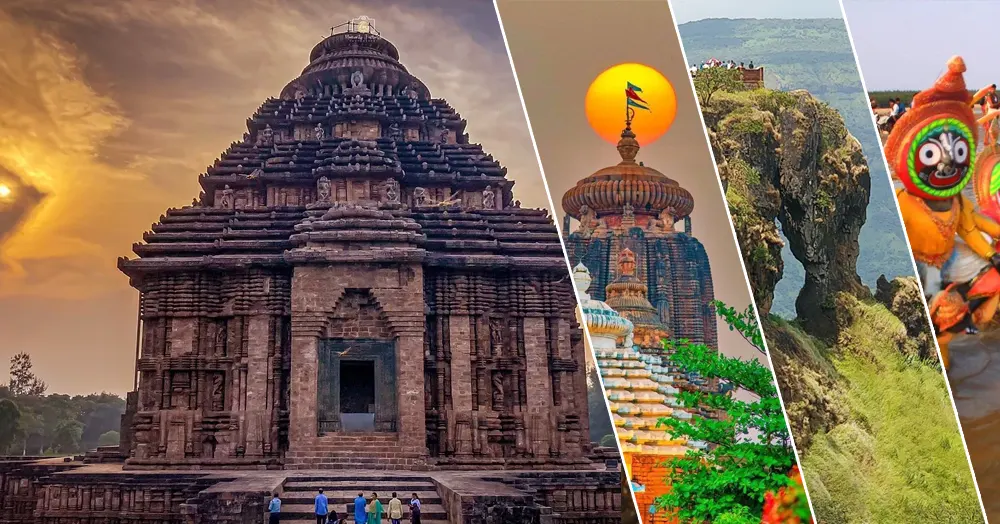
Mahabalipuram Group of Monuments is a stunning collection of nearly 400 ancient religious structures carved along the Coromandel Coast in Tamil Nadu. Recognized as a UNESCO World Heritage Site in India, this historical treasure showcases the rich cultural and architectural legacy of the Pallava Dynasty. Whether you’re an architecture enthusiast or a history lover, Mahabalipuram promises a journey back in time through its magnificent stone-carved temples, mandapas, rathas, and open-air reliefs.
History of Mahabalipuram Group of Monuments
The historical city of Mahabalipuram, also known as Mamallapuram, flourished as the capital of the Pallava Dynasty in the 7th century AD. Following the decline of the Gupta Empire, the Pallavas rose to prominence in southern India. Renowned for their patronage of Tamil art and architecture, the Pallava rulers especially Narasimha Varman I and Narasimha Varman II initiated the construction of several iconic temples and rock-cut structures that now form part of the Mahabalipuram group of monuments.
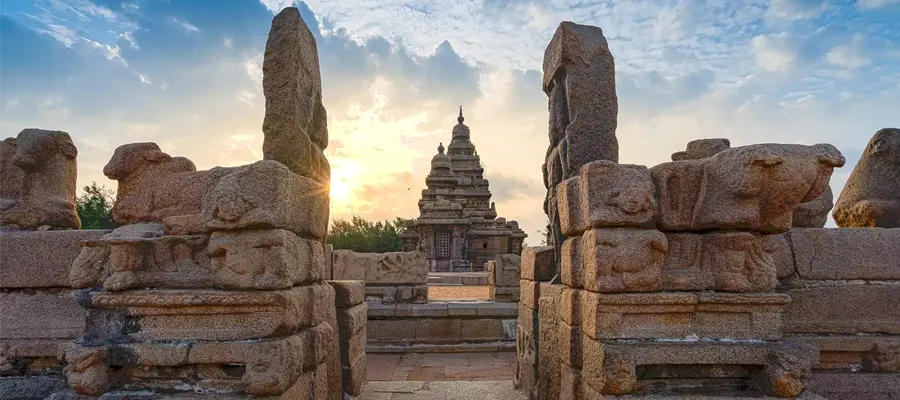
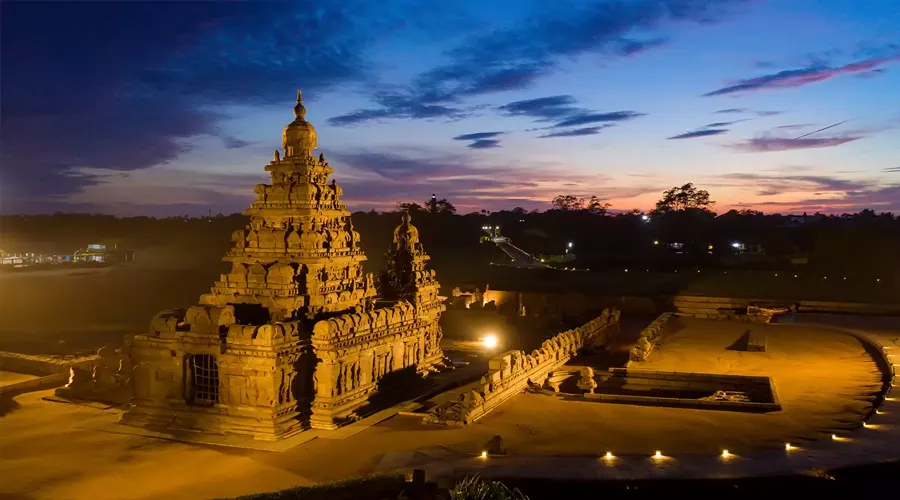
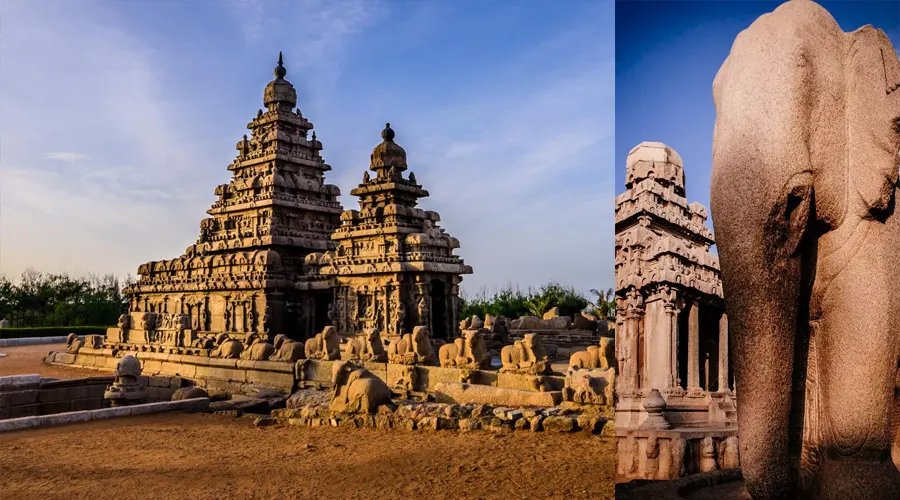
One of the most notable creations from this period is the Shore Temple, built under the reign of Rajasimha. Other remarkable structures include the cave temples and monolithic rathas (chariot temples), which reflect the dynasty’s peak in artistic and architectural innovation.
Architectural Brilliance of the Mahabalipuram Monuments
The architecture of the Mahabalipuram Group of Monuments is a remarkable testament to the creative excellence of the Pallava dynasty. These monuments, located in Mahabalipuram, are carved from solid granite rock and reflect a seamless blend of Dravidian, Buddhist, and early Indian temple architecture. This unique and ancient construction style is a key reason why Mahabalipuram is recognized as a UNESCO World Heritage Site in India.
List of Major Monuments at Mahabalipuram
| Monument Name | Type | Dedicated To | Highlights |
|---|---|---|---|
| Shore Temple | Structural Temple | Shiva & Vishnu | Sea-facing, intricate carvings |
| Dharmaraja Ratha | Monolithic Ratha | Shiva | Largest of the Panch Rathas |
| Draupadi Ratha | Monolithic Ratha | Durga | Smallest, thatch-like roof |
| Arjuna Ratha | Monolithic Ratha | Shiva | Fine carvings of gods and humans |
| Bhima Ratha | Monolithic Ratha | Unfinished | Massive and barrel-roofed |
| Nakula-Sahadeva Ratha | Monolithic Ratha | Indra (Elephant near) | Simpler design, with elephant sculpture |
| Varaha Cave Temple | Rock-Cut Cave Temple | Vishnu (Varaha) | Boar incarnation lifting Earth goddess |
| Mahishasurmardini Cave | Rock-Cut Cave Temple | Durga | Depiction of goddess slaying demon |
| Krishna Cave Temple | Rock-Cut Cave Temple | Krishna | Krishna lifting Govardhan Hill |
| Descent of the Ganges | Open-Air Rock Relief | Ganga | Massive bas-relief with celestial figures |
List of Panch Rathas Temples:
- Dharmaraja Ratha – The largest, with three unfinished storeys
- Bhima Ratha
- Arjuna Ratha – Dedicated to Lord Shiva
- Nakula-Sahadeva Ratha
- Draupadi Ratha – The smallest, with a thatch-like roof and dedicated to Goddess Durga
These temples are intricately carved with mythological figures and deities, and the fact that they are monolithic (carved from a single rock) adds to their wonder.
Notable Temples and Attractions
Here are some of the most captivating structures in Mahabalipuram:
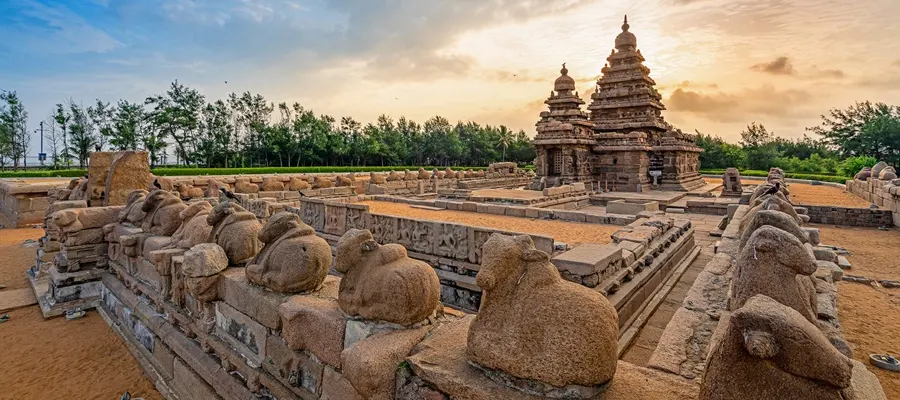
Shore Temple
Situated close to the sea, the Shore Temple was built in the 7th century by Rajasimha. Unlike later massive Dravidian structures, the Shore Temple is simple yet elegant in its design. It houses shrines of both Lord Shiva and Lord Vishnu and is one of the oldest structural stone temples in South India.
Cave Temples (Mandapas)
These are sanctuaries carved into rock faces and feature sculptural panels with detailed depictions of mythological events. Key mandapas include:
- Krishna Cave Temple
- Mahishasurmardini Cave Temple
- Varaha Cave Temple
- Panchpandava Cave Temple
Descent of the Ganges
This massive open-air rock relief is one of the largest bas-reliefs in the world. It depicts the sacred story of the river Ganges descending from heaven, surrounded by celestial beings, animals, sages, and gods.
Why Mahabalipuram is a Must-Visit Heritage Site in India
As one of the most culturally rich heritage sites in India, the Mahabalipuram group of monuments offers deep insights into early South Indian temple architecture. It has inspired historians, architects, and tourists from around the globe.
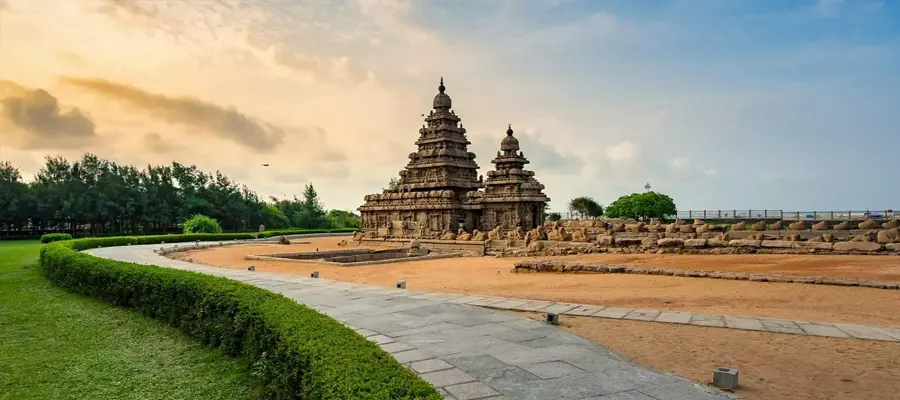
The area was once known as the Land of Seven Pagodas by European sailors due to the seven prominent temple spires visible from the sea. Today, even after centuries of wind and sea erosion, the structures remain astonishingly intact, reflecting the engineering prowess of the Pallava artisans.
Plan Your Visit to Mahabalipuram
- Location: Mahabalipuram, Tamil Nadu
- Best Time to Visit: November to February
- Major Attractions: Shore Temple, Five Rathas, Descent of the Ganges
- Entry Fee: Nominal charges for Indian and foreign tourists
- Timings: 6 AM to 6 PM
Overview Table: Mahabalipuram Group of Monuments
| Feature | Description |
|---|---|
| Location | Mahabalipuram, Tamil Nadu, India |
| UNESCO World Heritage Status | Inscribed in 1984 |
| Built By | Pallava Dynasty |
| Period | 7th – 8th Century AD |
| Architecture Style | Dravidian, Rock-cut, Structural |
| Main Attractions | Shore Temple, Five Rathas, Cave Temples, Descent of the Ganges |
| Entry Fee | ?40 (Indians), ?600 (Foreigners) (subject to change) |
| Best Time to Visit | November to February |
Conclusion
If you are exploring iconic destinations or heritage sites in India, make sure to add Mahabalipuram to your itinerary. The Mahabalipuram group of monuments is not just a historical site—it’s a living testimony of India’s glorious architectural and spiritual heritage.
FAQs About Mahabalipuram Group of Monuments
Q1. What is the Mahabalipuram Group of Monuments?
A: The Mahabalipuram Group of Monuments is a collection of nearly 400 ancient rock-cut and structural monuments in Tamil Nadu, India. Built during the Pallava dynasty in the 7th and 8th centuries, these monuments include temples, cave sanctuaries (mandapas), rathas (chariot temples), and massive open-air reliefs. It is a UNESCO World Heritage Site.
Q2. Why is Mahabalipuram a UNESCO World Heritage Site?
A: Mahabalipuram was designated as a UNESCO World Heritage Site for its exceptional architectural and artistic achievements. The monuments reflect the early stages of Dravidian temple architecture and showcase the creativity and engineering skills of the Pallava artisans.
Q3. Which are the most famous monuments in Mahabalipuram?
A: The most famous monuments in Mahabalipuram include:
- Shore Temple
- Five Rathas (Dharmaraja, Bhima, Arjuna, Nakula-Sahadeva, Draupadi)
- Descent of the Ganges (Arjuna’s Penance)
- Krishna's Butterball
- Mahishasuramardini Cave Temple
- Varaha Cave Temple
Q4. Who built the Mahabalipuram monuments?
A: The monuments were built by the rulers of the Pallava dynasty, particularly during the reigns of King Narasimha Varman I and Narasimha Varman II between the 7th and 8th centuries AD.
Q5. What is the significance of the Five Rathas in Mahabalipuram?
A: The Five Rathas are monolithic rock-cut temples carved from single stones, each named after the Pandavas and Draupadi from the Mahabharata. They represent different styles of temple architecture and are considered prototypes of Dravidian temple design.
Q6. What is the best time to visit Mahabalipuram?
A: The best time to visit Mahabalipuram is from November to February, when the weather is pleasant and ideal for sightseeing.
Q7. How to reach Mahabalipuram?
A: Mahabalipuram is located around 60 km from Chennai and is easily accessible by road. The nearest airport is Chennai International Airport, and the nearest railway station is in Chengalpattu, about 30 km away.
Q8. Is there an entry fee to visit the Mahabalipuram monuments?
A: Yes, there is a nominal entry fee. Charges may vary for Indian and foreign tourists. Children under a certain age may enter for free.
Q9. Why is Mahabalipuram also called the Land of Seven Pagodas?
A: European sailors referred to Mahabalipuram as the Land of Seven Pagodas due to the seven temple spires (pagodas) they saw rising above the coastline, especially the Shore Temple.
Q10. Is Mahabalipuram suitable for family and educational trips?
A: Absolutely. Mahabalipuram offers a rich blend of history, art, architecture, and mythology, making it ideal for family visits, educational tours, and heritage explorations.