Discover Nagaland: A Hidden Gem of Northeast India | Tribes, Traditions & Tranquility
Have you ever dreamed of visiting a destination where ancient tribal traditions, colorful festivals, misty mountains, unique cuisine, and untouched natural beauty come together perfectly? Nagaland, located in the northeastern region of India, is one of the country’s most fascinating travel destinations that offers a unique cultural and adventure experience.
Known as the “Land of Festivals,” Nagaland is famous for its indigenous Naga tribes, vibrant cultural heritage, scenic hills, traditional villages, and the globally celebrated Hornbill Festival. Surrounded by lush forests and rolling mountains, the state shares an international border with Myanmar and offers travelers an authentic glimpse into tribal life, traditions, and nature.
From the peaceful capital city of Kohima and the bustling town of Dimapur to remote tribal villages and breathtaking valleys, Nagaland tourism attracts culture lovers, adventure seekers, photographers, and offbeat travelers from around the world.
Whether you want to experience tribal festivals, explore hidden villages, enjoy mountain landscapes, taste authentic Naga cuisine, or discover traditional handicrafts, Nagaland promises unforgettable memories for every traveler.
History of Nagaland
Nagaland has a rich tribal history dating back centuries. The state has long been home to several indigenous Naga tribes, each with its own traditions, customs, dialects, and social systems.
Historically, the Naga tribes lived independently in hilltop villages and maintained strong warrior traditions. Many tribes practiced headhunting in ancient times, considering it a symbol of bravery, honor, and protection.
The British entered the Naga Hills during the 19th century and introduced Christianity, modern education, and administrative systems. Over time, Christianity became deeply rooted in the region and today Nagaland is one of India’s most Christian-majority states.
After India’s independence, Nagaland witnessed political movements demanding autonomy and recognition of tribal identity. Finally, on 1 December 1963, Nagaland officially became the 16th state of India.
Today, Nagaland proudly preserves its tribal heritage while embracing tourism, education, and modern development.
Culture and Traditions of Nagaland
Nagaland’s culture is one of the richest tribal cultures in India. The state is home to 16 officially recognized tribes including:
- Angami
- Ao
- Konyak
- Sumi
- Lotha
- Chakhesang
- Rengma
- Zeliang
Each tribe has its own language, dress, festivals, music, and customs.
Traditional Naga attire includes colorful shawls, bead jewelry, feathered headgear, and handcrafted ornaments. Tribal dances, folk songs, and warrior performances are important parts of cultural celebrations.
Music also plays a major role in Naga society. Traditional drums, bamboo instruments, and folk songs reflect stories of bravery, harvest, and tribal life.
The warm hospitality of the Naga people makes travelers feel welcomed and connected to local culture.
Architecture of Nagaland
Nagaland’s architecture reflects its deep tribal roots and connection with nature. Traditional Naga homes are built using bamboo, wood, cane, and thatch.
Morungs – Traditional Youth Dormitories: Morungs are large communal houses that served as cultural learning centers for young tribal men. These structures are decorated with wooden carvings, animal motifs, and tribal symbols.
Stilt Houses: Many traditional homes are built on stilts to protect against rain, wildlife, and uneven terrain.
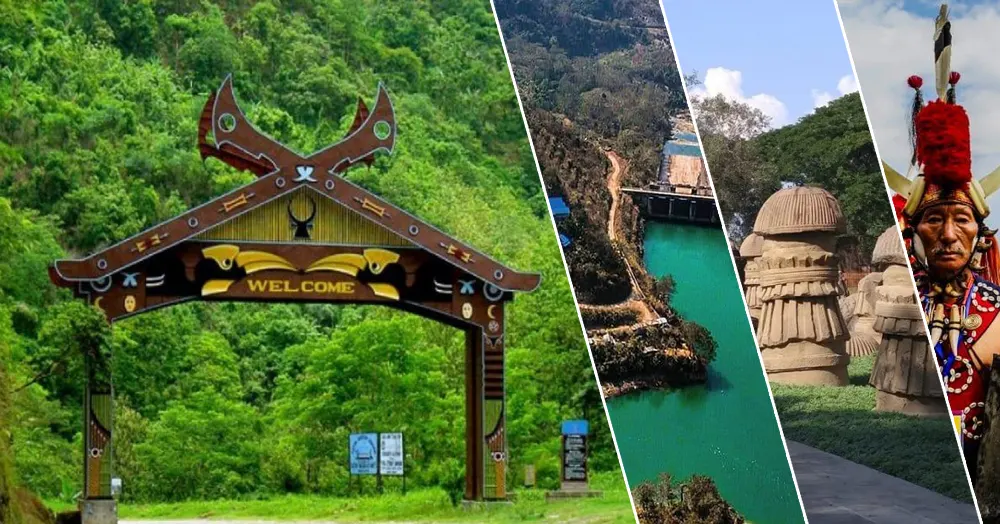
Village Gates: Naga villages are famous for beautifully carved wooden gates representing tribal identity and warrior history.
Sacred Structures: Traditional shrines and ceremonial spaces continue to play an important role in tribal rituals and community gatherings.
Top Tourist Places to Visit in Nagaland
- Kohima: Kohima, the capital city of Nagaland, is known for scenic mountain views, war history, tribal culture, and the famous Hornbill Festival venue at Kisama Heritage Village. Attractions like Kohima War Cemetery, local markets, and nearby villages make it one of the most important tourist destinations in Northeast India.
- Dimapur: Dimapur is Nagaland’s largest city and commercial hub, famous for shopping markets, historical ruins, cafes, and transportation connectivity. The city serves as the main entry point to Nagaland and offers travelers a mix of urban convenience, local culture, traditional food, and nearby scenic attractions.
- Mokokchung: Mokokchung is considered the cultural heartland of the Ao tribe and is known for beautiful hills, traditional villages, festivals, and warm hospitality. The town offers visitors opportunities to experience authentic tribal culture, local cuisine, handicrafts, and peaceful mountain landscapes surrounded by greenery.
- Mon: Mon district is famous for the Konyak tribe, once known for headhunting traditions. Visitors can explore tribal villages, traditional tattoos, wooden carvings, and unique cultural practices. Mon offers one of the most authentic tribal tourism experiences in Nagaland for travelers interested in indigenous heritage and history.
- Wokha: Wokha is a scenic district known for lush hills, Doyang Reservoir, tribal villages, and beautiful landscapes. The region is especially popular among birdwatchers and nature lovers because of migratory Amur Falcons, peaceful surroundings, and traditional Lotha tribal culture.
- Tuophema Village: Tuophema is a heritage village designed to promote Naga culture and eco-tourism. Visitors can stay in traditional huts, enjoy folk performances, taste local cuisine, and experience authentic village life while learning about tribal customs, handicrafts, and rural traditions of Nagaland.
Famous Festivals of Nagaland
Nagaland is widely known as the “Land of Festivals” because tribal communities celebrate colorful festivals throughout the year.
Hornbill Festival: The Hornbill Festival is Nagaland’s biggest cultural celebration held every December at Kisama Heritage Village near Kohima. The festival showcases tribal dances, folk music, indigenous games, local cuisine, handicrafts, and cultural performances, attracting tourists, photographers, musicians, and travelers from across the world annually.
Aoleang Festival: Aoleang Festival is celebrated by the Konyak tribe during the first week of April to welcome spring and the traditional New Year. The festival features tribal dances, warrior costumes, community feasts, folk songs, and rituals reflecting the vibrant cultural heritage of the Konyak people.
Gaan-Ngai Festival: Gaan-Ngai is an important post-harvest festival celebrated by the Zeliangrong community with prayers, music, dance performances, and traditional rituals. The festival symbolizes prosperity, community bonding, and cultural preservation while offering travelers opportunities to witness authentic tribal celebrations and indigenous customs.
Moatsu Festival: Celebrated by the Ao tribe, Moatsu Festival marks the completion of agricultural activities. The festival includes traditional dances, singing, feasting, and social gatherings where villagers celebrate peace, friendship, and prosperity with cultural performances and colorful traditional attire.
Famous Temples and Spiritual Places in Nagaland
Although Nagaland is predominantly Christian, the state also has important churches, spiritual sites, and peaceful religious landmarks.
- Kohima Cathedral: Kohima Cathedral is one of the largest churches in Northeast India known for its unique architecture, peaceful atmosphere, and beautiful hilltop location. The cathedral reflects Nagaland’s strong Christian heritage and attracts visitors seeking spirituality, architecture, and panoramic views of Kohima city.
- Mary Help of Christians Cathedral, Kohima: This beautiful cathedral is admired for modern architecture, peaceful interiors, and spiritual significance. It serves as an important center of prayer and community gatherings while offering visitors a calm atmosphere surrounded by scenic mountain landscapes.
- Dimapur Jain Temple: Dimapur Jain Temple is one of Nagaland’s most colorful religious landmarks known for intricate glasswork, artistic architecture, and peaceful surroundings. The temple reflects religious diversity in the state and attracts tourists interested in architecture and spirituality.
Nature, Hills, and Scenic Beauty of Nagaland
Dzukou Valley: Dzukou Valley is one of Northeast India’s most beautiful trekking destinations known for seasonal flowers, rolling green hills, crystal-clear streams, and breathtaking landscapes. Located near the Nagaland-Manipur border, the valley attracts trekkers, photographers, and nature lovers throughout the year.
Japfu Peak: Japfu Peak is Nagaland’s second-highest mountain and a popular trekking destination offering panoramic Himalayan views, dense forests, and scenic landscapes. The region is also famous for the world’s tallest rhododendron tree recorded by the Guinness World Records.
Shilloi Lake: Shilloi Lake is a picturesque natural lake located near the Indo-Myanmar border surrounded by lush hills and peaceful villages. The lake is considered sacred by locals and offers travelers a relaxing atmosphere ideal for photography and nature exploration.
Doyang Reservoir: Doyang Reservoir is famous for scenic beauty, fishing activities, boating, and migratory Amur Falcons. The surrounding hills and peaceful environment make it one of Nagaland’s best eco-tourism destinations.
Adventure Activities in Nagaland
Nagaland offers exciting adventure opportunities for thrill seekers and nature enthusiasts.
- Trekking in Dzukou Valley
- Camping in mountain villages
- Birdwatching in Doyang
- Rock climbing and hiking
- Village tourism experiences
- Photography tours
- Cultural exploration trails
Adventure tourism in Nagaland is growing rapidly because of its untouched natural beauty and tribal heritage.
Tribal Handicrafts and Shopping in Nagaland
Nagaland is famous for handmade tribal products and traditional crafts.
Popular shopping items include:
- Handwoven Naga shawls
- Bamboo handicrafts
- Tribal jewelry
- Wooden carvings
- Cane products
- Traditional bags
- Decorative tribal masks
Best Shopping Places
- Kohima local market
- Dimapur Hong Kong Market
- Kisama Heritage Village stalls
- Tribal village craft centers
These handicrafts reflect the artistic skills and cultural identity of Naga communities.
Famous Food of Nagaland
Naga cuisine is bold, smoky, spicy, and deeply connected to local traditions.
- Smoked Pork with Bamboo Shoot: One of Nagaland’s most famous dishes made with smoked meat and fermented bamboo shoots.
- Akhuni: Fermented soybean used in curries and chutneys with strong flavors.
- Galho: A traditional rice dish cooked with vegetables, meat, and herbs.
- Bamboo Shoot Curry: Prepared using fresh or fermented bamboo shoots with local spices.
- Zutho: Traditional rice beer enjoyed during festivals and celebrations.
Food lovers visiting Nagaland can experience unique flavors rarely found elsewhere in India.
Wildlife and Eco-Tourism in Nagaland
Nagaland offers excellent eco-tourism experiences with forests, birds, and wildlife sanctuaries.
Fakim Wildlife Sanctuary: Fakim Wildlife Sanctuary, located near the India–Myanmar border, is known for dense forests, rare orchids, colorful butterflies, and exotic bird species. The sanctuary offers rich biodiversity and peaceful natural surroundings, making it an excellent destination for wildlife lovers, nature photographers, and eco-tourism travelers exploring Nagaland’s untouched landscapes.
Ntangki National Park: Ntangki National Park is one of Nagaland’s most important wildlife reserves, famous for hoolock gibbons, elephants, hornbills, barking deer, and dense tropical forests. The park attracts adventure seekers, birdwatchers, and wildlife enthusiasts looking to experience the rich biodiversity and scenic wilderness of northeastern India.
Pulie Badze Wildlife Sanctuary: Pulie Badze Wildlife Sanctuary, located near Kohima, is popular for forest trekking, birdwatching, and scenic mountain landscapes. The sanctuary is home to rare bird species, colorful orchids, and lush greenery, offering peaceful natural surroundings for travelers seeking eco-tourism and outdoor adventure experiences in Nagaland.
Doyang Bird Habitat: The Doyang Bird Habitat becomes globally significant during migratory season when millions of Amur Falcons arrive from Siberia and East Asia. The region attracts birdwatchers, wildlife photographers, and eco-tourists who come to witness one of the world’s largest bird migrations in Nagaland’s scenic landscapes.
Best Time to Visit Nagaland
|
Season |
Highlights |
|
October – March |
Pleasant weather and festivals |
|
December |
Best for Hornbill Festival |
|
April – June |
Green landscapes and village tourism |
|
July – September |
Monsoon greenery but slippery roads |
Winter is considered the best season to explore Nagaland comfortably.
How to Reach Nagaland
By Air
Dimapur Airport is the main airport connecting Nagaland with:
- Delhi
- Kolkata
- Guwahati
By Train
Dimapur Railway Station is the primary rail gateway to Nagaland.
By Road
Nagaland is connected to Assam and Manipur through NH-29 and other highways.
Shared taxis, buses, and private vehicles are commonly used for intercity travel.
Travel Tips for Nagaland
- Carry warm clothes during winter.
- Respect tribal customs and traditions.
- Obtain Inner Line Permit (ILP) if required.
- Book accommodation early during Hornbill Festival.
- Avoid littering in eco-sensitive regions.
- Try authentic tribal food and village stays.
- Carry cash while visiting remote areas.
Quick Facts About Nagaland
Feature | Details |
Capital | Kohima |
Largest City | Dimapur |
Official Language | English |
Major Tribes | Ao, Angami, Konyak, Lotha, Sumi |
Famous Festival | Hornbill Festival |
Best Time to Visit | October to March |
Famous For | Tribal culture, festivals, handicrafts |
Bordering Country | Myanmar |
Statehood Day | 1 December 1963 |
Popular Food | Smoked Pork, Bamboo Shoot dishes |
Why Nagaland Should Be on Your Travel Bucket List
Nagaland offers a rare combination of tribal heritage, mountain beauty, colorful festivals, adventure, and authentic cultural experiences. From the energetic Hornbill Festival and peaceful hill villages to scenic valleys and traditional Naga cuisine, every part of Nagaland tells a unique story.
Whether you want to explore tribal traditions, enjoy scenic landscapes, experience indigenous festivals, taste local food, or discover offbeat destinations, Nagaland promises unforgettable memories for every traveler.
Explore the vibrant culture and untouched beauty of Northeast India with Explore Our India. and discover the magical charm of Nagaland.
Faq About Nagaland
Ans: Nagaland is famous for its vibrant tribal culture, colorful festivals, scenic hills, traditional handicrafts, and unique lifestyle of its indigenous tribes. The state is known for attractions like Kohima, Dzukou Valley, and the Hornbill Festival. It is also called the “Land of Festivals” because of its rich cultural celebrations.
Ans: The best time to visit Nagaland is from October to May when the weather is pleasant for sightseeing and cultural exploration. December is especially popular due to the Hornbill Festival, which showcases tribal traditions, music, dance, and crafts.
Ans: Nagaland offers many scenic and cultural destinations. Some of the best places include:Kohima – Capital city with historical sitesDimapur – Main commercial hubDzukou Valley – Famous for trekking and flowersKhonoma Village – India’s first green villageKisama Heritage Village – Hornbill Festival venueJapfu Peak – Popular trekking destination
Ans: Hornbill Festival is famous for showcasing the rich culture and traditions of Naga tribes. Held every December at Kisama Heritage Village, it features traditional dances, music, food, handicrafts, and cultural performances, attracting tourists from all over the world.
Ans: Nagaland is famous for its traditional tribal cuisine, which is simple, spicy, and unique. Popular foods include smoked pork, bamboo shoot dishes, fermented fish, rice-based meals, and axone (fermented soybean). The food reflects the local tribal lifestyle and natural ingredients.
Ans: Yes, Nagaland is one of the best destinations in India for cultural tourism. The state offers deep tribal traditions, festivals, handicrafts, folk music, and traditional village experiences. Travelers can explore authentic indigenous culture that is still well-preserved.
Ans: Nagaland is accessible mainly through Dimapur, which is the only airport in the state. Dimapur connects with major Indian cities. The state is also accessible by road from Assam, especially from Guwahati, and has railway connectivity up to Dimapur.
Ans: Yes, Nagaland is generally safe for tourists, especially in major tourist areas like Kohima, Dimapur, and Dzukou Valley. The locals are welcoming and friendly. Travelers should still follow local guidelines and respect tribal customs while visiting villages and festivals.
Ans: Nagaland is known for its numerous tribal festivals such as Hornbill Festival, Moatsu Festival, Sekrenyi, and Tuluni. These festivals celebrate harvests, traditions, and tribal heritage with dance, music, feasts, and cultural events.
Ans: A trip of 5 to 7 days is usually enough to explore Nagaland comfortably. This allows travelers to visit Kohima, Dimapur, Dzukou Valley, and cultural villages. During Hornbill Festival, extra days are recommended to fully experience the celebrations.