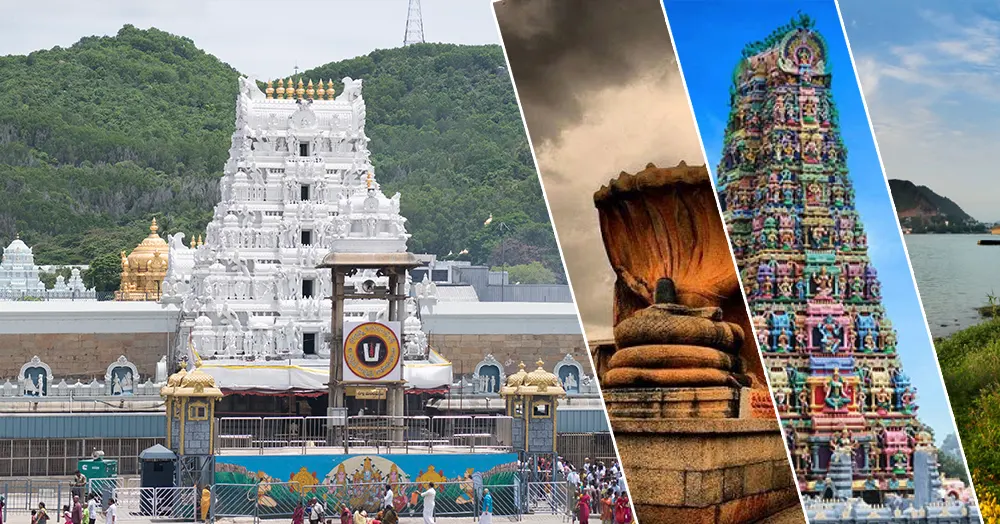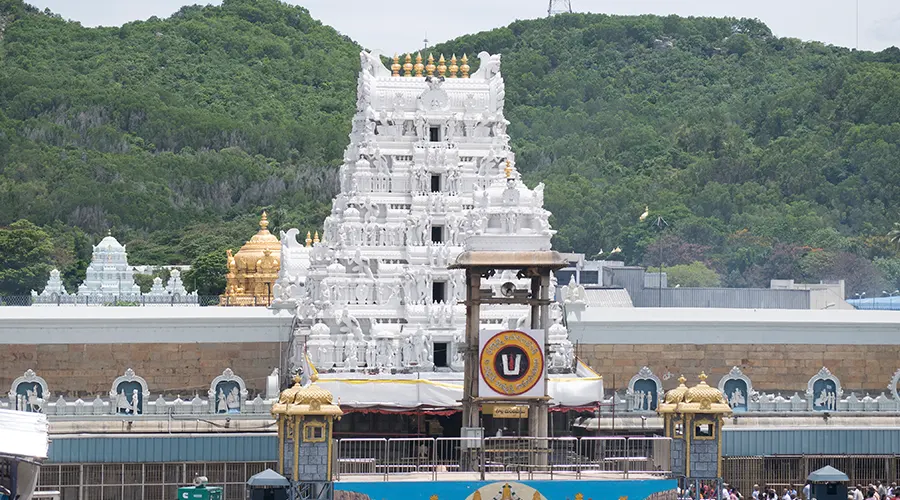
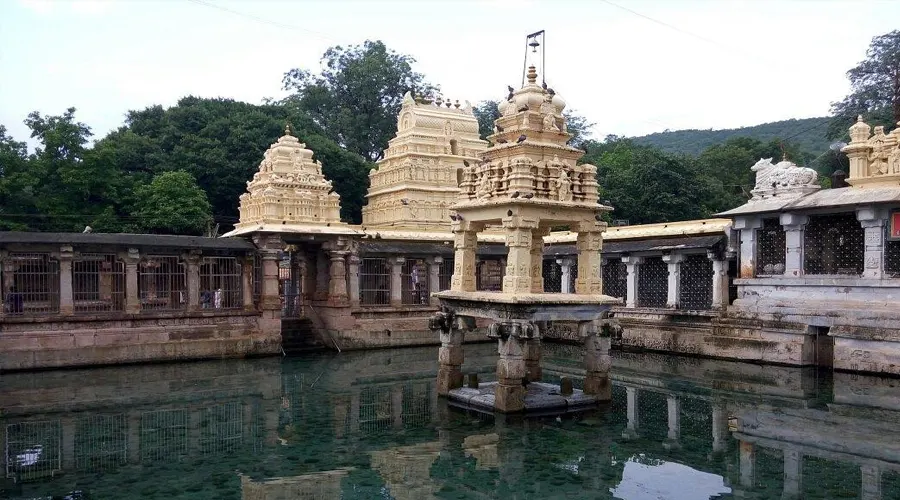
Mahanandi Temple – Sacred Shiva Shrine In Andhra Pradesh
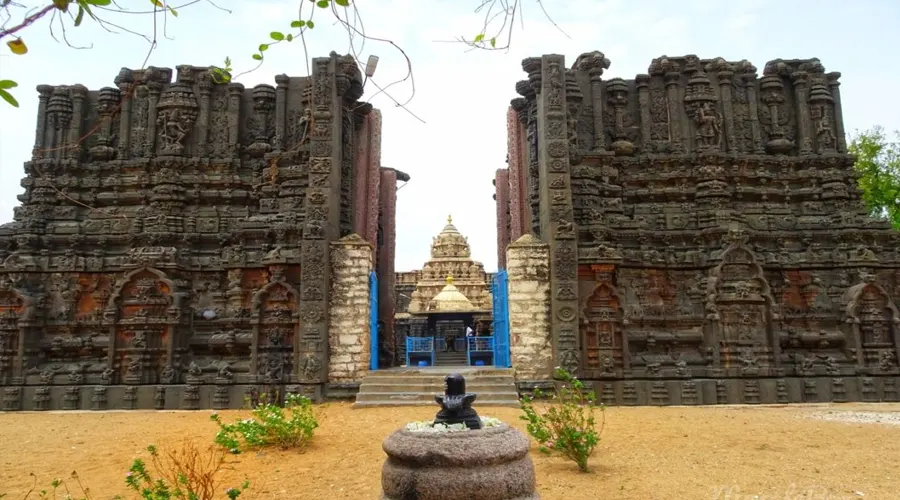
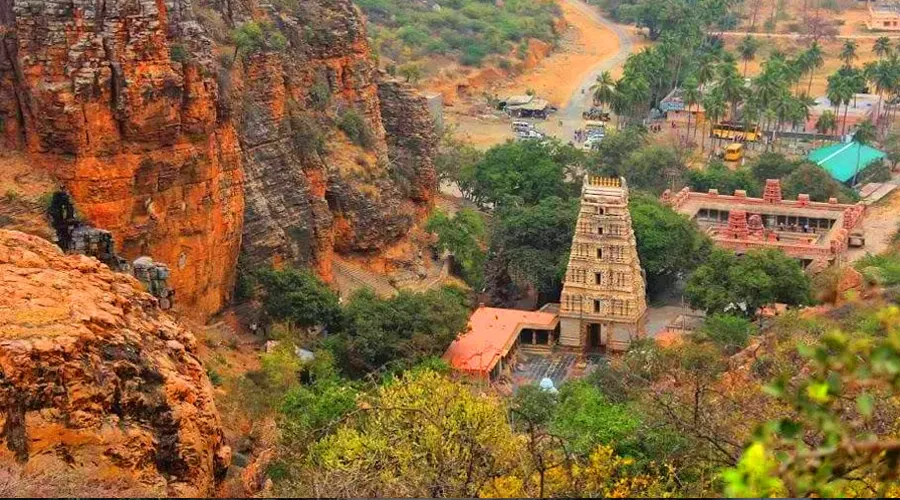
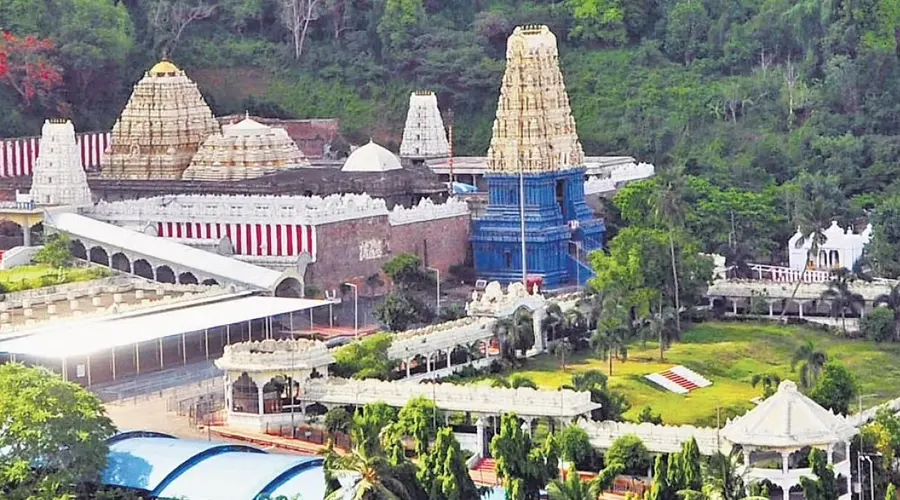
Located amidst lush forests and the scenic Nallamala Hills in Mahanandi village, Mahanandiswara Swamy Temple is one of South India's most ancient and revered temples dedicated to Lord Shiva. With a rich history spanning over 10 centuries, this temple stands as a testament to the region's religious, architectural, and cultural significance. It is especially popular during Maha Shivaratri, celebrated annually in February or March, drawing thousands of pilgrims and devotees.
Surrounded by natural beauty and spiritual calm, Mahanandi is one of the Nine Nandi Shrines (Navanandis), which include:
- Mahanandi
- Shivanandi
- Vinayakanandi
- Somanandi
- Prathamanandi
- Garudanandi
- Suryanandi
- Krishnanandi (also called Vishnunandi)
- Naganandi
History of Mahanandi Temple
The shrine's origins date back to the 7th century, with the main deity, Lord Shiva (Mahanandiswara Swamy), considered Swayambhu (self-manifested).
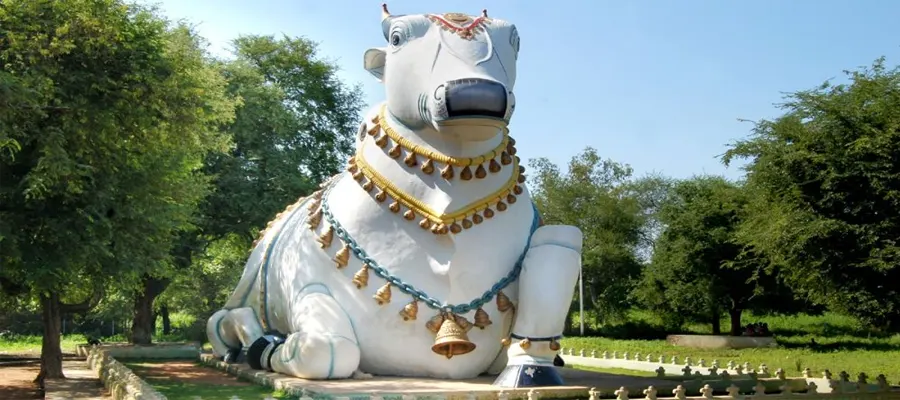
The temple’s structure was initially built by the Chalukyas and later expanded during the Nanda Dynasty in the 10th century and again under the patronage of Vijayanagara Kings in the 15th century. Several stone inscriptions and tablets from the 10th century confirm the temple’s continuous renovation and spiritual significance through the ages.
The Nine Nandi Temples (Navanandis)
| Name | Description |
|---|---|
| Mahanandi | The main temple dedicated to Lord Shiva |
| Shivanandi | Associated with Shiva worship |
| Vinayakanandi | Dedicated to Lord Ganesha |
| Somanandi | Related to the Moon God (Soma) |
| Prathamanandi | “First” among the Nandis |
| Garudanandi | Associated with Garuda, the mount of Vishnu |
| Suryanandi | Linked to the Sun God (Surya) |
| Krishnanandi | Also known as Vishnunandi, linked to Krishna |
| Naganandi | Associated with serpents (Nagas) |
Architecture & Features of Mahanandi Temple
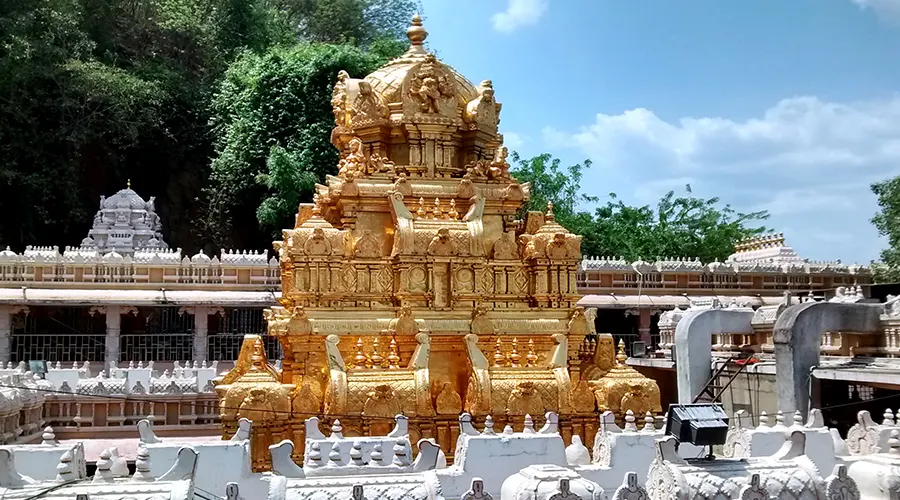
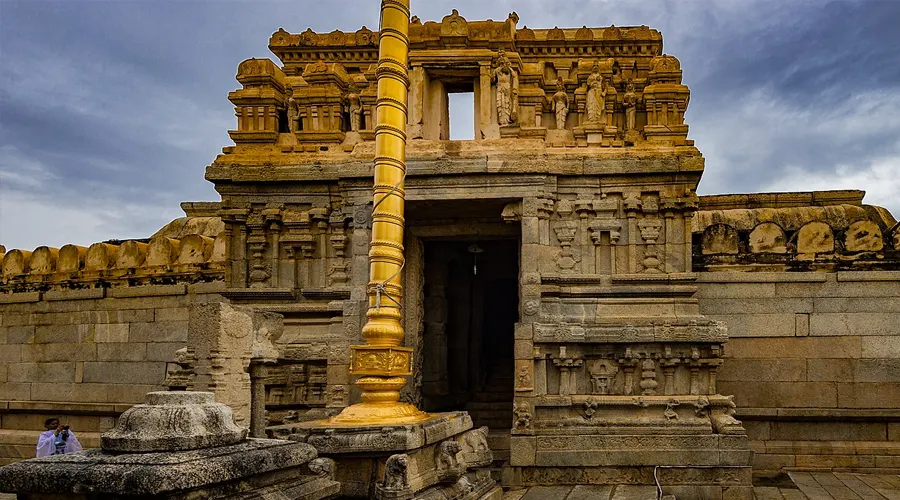
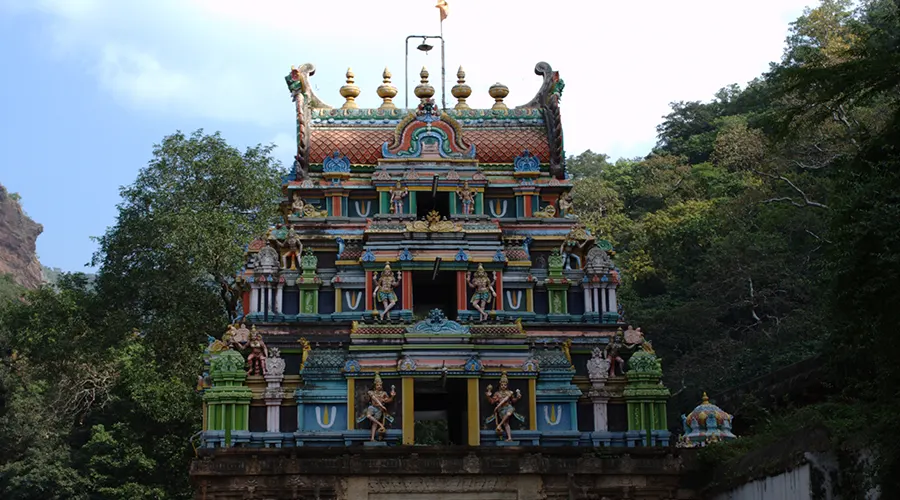
The temple architecture is a fusion of Chalukyan and Vijayanagara styles. The main Gopuram (gateway) reflects the grandeur of the Badami Chalukyan design, while the inner shrines and halls showcase Vijayanagara artistic influence.
Pushkarni (Koneru)
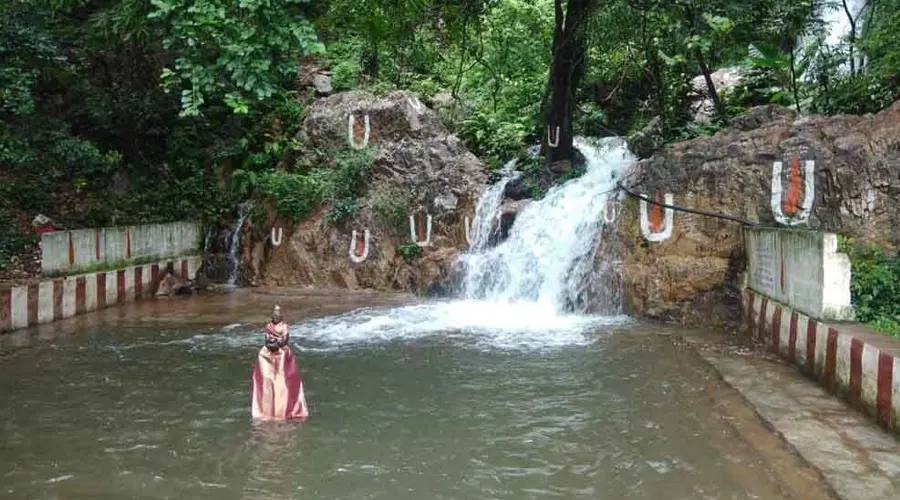
One of the key highlights of Mahanandiswara Temple is the Pushkarni (sacred tank), which holds Pancha Lingams (five Shiva Lingas), with the central one known as Varuna Lingam. The water level in this tank remains constant at 5 feet throughout the year, regardless of the season—a rare phenomenon.
It is believed that the source of the water lies beneath the Garbhagriha (sanctum sanctorum), where the Swayambhu Shiva Lingam resides. Devotees are allowed to touch the Lingam, perform Abhishekam, and collect the holy water (Thirtham).
Agricultural Significance
The outflowing water from the Pushkarni is channelled for irrigation to nourish the fertile agricultural lands surrounding the temple, making it not only a spiritual center but also an eco-cultural one.
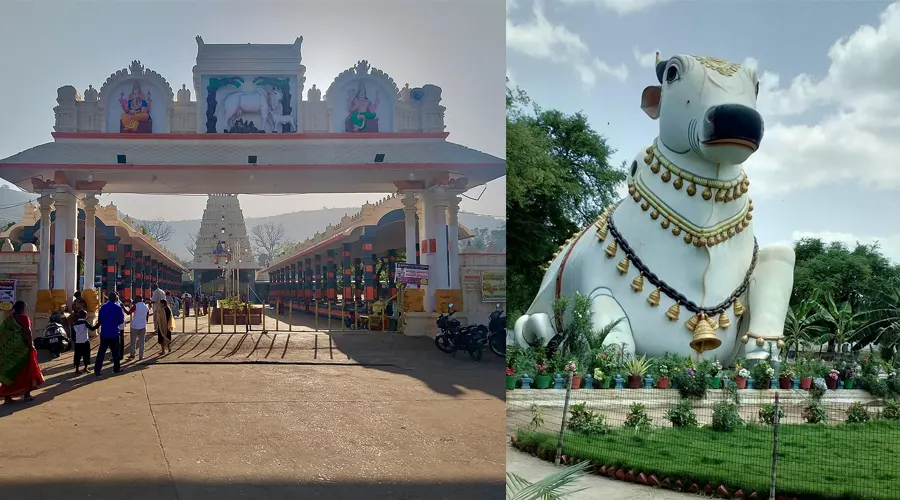
World’s Largest Nandi Idol
Just outside the temple stands one of the world’s largest monolithic Nandi statues, measuring approximately 15 feet high and 27 feet long. This magnificent statue adds to the temple’s grandeur and religious significance as Nandi (the bull) is the sacred vehicle of Lord Shiva.
Key Details – Mahanandiswara Swamy Temple
| Feature | Details |
|---|---|
| Location | Mahanandi, near Nandyal, Andhra Pradesh |
| Main Deity | Lord Shiva (Mahanandiswara Swamy) |
| Built By | Chalukyas (7th century), enhanced by Nandas & Vijayanagara Kings |
| Architectural Styles | Chalukyan and Vijayanagara |
| Sacred Water Source | Pushkarni (Koneru) with constant water flow |
| Unique Ritual | Devotees can touch the Shiva Lingam |
| Nearby Landmark | One of the world’s largest Nandi statues (15 ft × 27 ft) |
Final Word:
Mahanandiswara Swamy Temple is not only a powerful spiritual center but also a site of architectural beauty, natural harmony, and cultural depth. From the sacred waters of the Pushkarni to the legendary Nandi statue, every element here speaks of devotion, history, and divine presence. A visit to Mahanandi offers a soulful blend of faith, history, and serenity—a true gem in the spiritual map of South India.
FAQs – Mahanandi Temple, Andhra Pradesh
Q1: Where is Mahanandiswara Swamy Temple located?
Ans: The temple is in Mahanandi village, east of the Nallamala Hills, near Nandyal, Andhra Pradesh.
Q2: What is special about Mahanandi Temple?
Ans: It has a Swayambhu Shiva Lingam, a sacred Pushkarni with constant water flow, and one of the largest Nandi idols in the world.
Q3: Who built the Mahanandi Temple?
Ans: Originally built by the Chalukyas in the 7th century, later renovated by the Nanda and Vijayanagara dynasties.
Q4: What are the Nine Nandi Temples?
Ans: Mahanandi, Shivanandi, Vinayakanandi, Somanandi, Prathamanandi, Garudanandi, Suryanandi, Krishnanandi, and Naganandi.
Q5: Can devotees touch the Shiva Lingam?
Ans: Yes, devotees are allowed to touch the Lingam and perform puja, which is rare in most Shiva temples.