
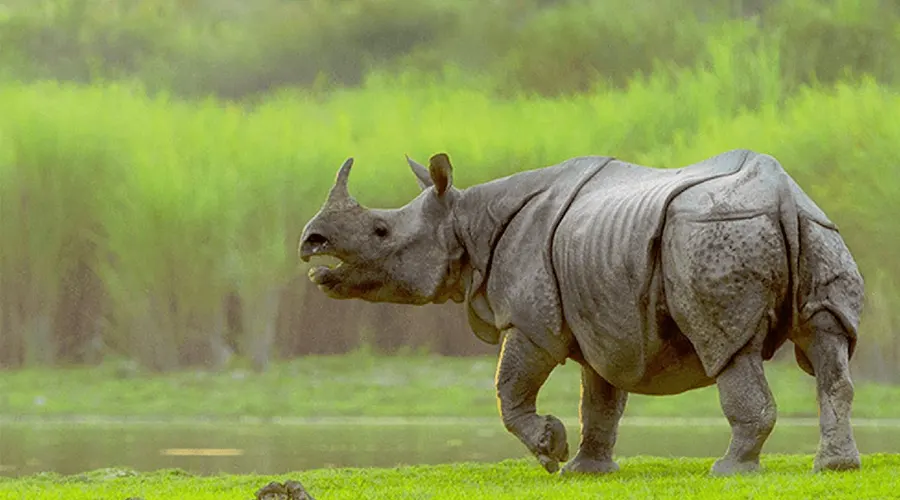
Kaziranga National Park Assam - A Home to One Horned Rhinoceros
Kaziranga National Park is one of India’s most iconic wildlife reserves and a UNESCO World Heritage Site, often referred to as the Pride of North East India. Nestled in the lush regions of Golaghat and Nagaon districts of Assam, the park lies between the Brahmaputra River to the north and the Karbi Anglong hills to the south, offering a breathtaking mix of grasslands, wetlands, and forests.
Established as a National Park in 1974, Kaziranga spans over 1,000 sq. km and is one of the last remaining natural habitats for many endangered species. It’s globally celebrated for having the largest population of the Great Indian One-Horned Rhinoceros and a high density of tigers.
Quick Facts About Kaziranga National Park
| Feature | Details |
|---|---|
| Location | Golaghat & Nagaon, Assam, India |
| Area Covered | ~1,090 sq. km |
| Established | 1905 as a reserve forest, declared NP in 1974 |
| UNESCO World Heritage Site | Yes (since 1985) |
| Famous For | One-Horned Rhino, Tigers, Birds, Elephants |
| Best Time to Visit | November to April |
| Safari Options | Elephant Safari, Jeep Safari, Boat Cruise |
| River Near the Park | Brahmaputra River |
| Vegetation | Elephant grass, marshland, reeds |
| Nearest Airport | Jorhat Airport (~97 km) |
Wildlife in Kaziranga National Park
Kaziranga is a paradise for wildlife enthusiasts. The park’s chief attraction is the One-Horned Rhinoceros, with over 2,400 rhinos according to the latest census. It also harbors:
- Royal Bengal Tigers (highest density in India)
- Wild Asiatic Water Buffaloes
- Swamp Deer (Barasingha)
- Hog Deer, Sambar, Indian Muntjac
- Asian Elephants
- Gaur (Indian Bison)
- Leopards, Fishing Cats, Jungle Cats
- Reptiles like King Cobra, Rock Python, and Reticulated Python
Birdwatchers will also delight in over 480 species of birds, including migratory and endangered varieties. The park is a designated Important Bird Area (IBA) by Birdlife International.
Flora & Landscape
Kaziranga's terrain resembles the vast grasslands of Africa. It is dominated by:
- Tall Elephant Grass
- Common Reeds
- Sugarcane
- Marshes and Swamps
- Semi-evergreen forests
These ecosystems support an intricate web of flora and fauna, with many medicinal and rare plant species.
History of Kaziranga National Park
The origin of the park dates back to 1904, when Mary Curzon, wife of Lord Curzon, was alarmed by the dwindling rhino population. She urged her husband to take action, which led to Kaziranga being declared a Reserve Forest in 1905. It achieved National Park status in 1974 and later became a UNESCO World Heritage Site.
The name “Kaziranga” is believed to derive from the Karbi language: “Kajir-a-rong” meaning “Village of Kajir,” a local woman believed to have ruled the area.
Activities & Safari Experience
Kaziranga offers thrilling wildlife experiences like:
- Elephant Safari: Best for spotting rhinos early morning.
- Jeep Safari: Covers the park’s main zones – Central (Kohora), Eastern (Agoratoli), Western (Bagori), and Burapahar.
- Boat Safari: Along the Brahmaputra, spotting river dolphins and migratory birds.
Safaris are operational from November to April, closed during the monsoon due to flooding.
Travel Tips for Visiting Kaziranga National Park
- Safari Booking in Advance:
Book your jeep or elephant safari online or through your hotel well in advance, especially during the peak winter season. - Carry Valid ID Proof:
Indian tourists should carry an Aadhar card or any government ID; foreign tourists must carry a passport and valid visa for entry. - Dress for the Jungle:
Wear earth-toned clothes (green, brown, beige) to blend with surroundings. Opt for full sleeves and long pants to protect from insects. - Respect Wildlife Boundaries:
Do not get off the safari jeep or make loud noises. Feeding animals or throwing food is strictly prohibited. - Photography Etiquette:
Carry a zoom lens for better wildlife shots. Use silent shutter mode and never use flash during safaris. Drones are banned. - Stay Near the Park Entry Gates:
Choose eco-lodges or forest resorts near Kohora, Bagori, or Agaratoli gates for better access to early morning safaris. - Pack Essentials:
Bring binoculars, insect repellent, sunscreen, hat, water bottles, and a small first-aid kit for a comfortable trip. - Cash is King:
While ATMs are available in nearby towns, carry sufficient cash, as digital payments may not work in remote areas. - Combine with Tea Garden Visit:
Take time to visit the scenic Assamese tea estates around the park – they offer peaceful breaks and photo opportunities. - Support Local Guides:
Hire a certified local guide during the safari. They are knowledgeable about the park’s biodiversity and enhance your overall experience.
How to Reach Kaziranga
| Mode | Details |
|---|---|
| By Air | Nearest airport is Jorhat Airport (97 km) or Guwahati (217 km) |
| By Train | Nearest railhead is Furkating Railway Station (75 km) |
| By Road | Well connected by NH-37; regular buses and taxis from Guwahati, Tezpur |
Best Time to Visit
The ideal time to visit is from November to April when the weather is dry and pleasant. The park remains closed from May to October due to heavy monsoon rains and risk of flooding.
Faq About Kaziranga National Park Assam - A Home to One Horned Rhinoceros
Ans: Kaziranga is globally renowned for its population of the Great Indian One-Horned Rhinoceros, as well as its status as a UNESCO World Heritage Site.
Ans: It is located in Golaghat and Nagaon districts of Assam, on the banks of the Brahmaputra River.
Ans: The park is open to tourists from November to April every year.
Ans: Visitors can enjoy elephant safaris, jeep safaris, and boat rides along the Brahmaputra.
Ans: Apart from rhinos, Kaziranga is home to tigers, elephants, swamp deer, leopards, water buffaloes, and exotic birds.
Ans: Kaziranga was established as a protected forest in 1905 on the recommendation of Mary Curzon, who was concerned about the rhino population.
Ans: Yes, Kaziranga is an Important Bird Area, home to numerous resident and migratory bird species.
Ans: The park is inhabited by King Cobra, Rock Python, and Reticulated Python, among others.
Ans: The park features tall elephant grasses, reeds, sugarcane, and marshlands, resembling African savannas.
Ans: As per the latest census, Kaziranga houses around 2,413 One-Horned Rhinoceroses, the largest population in the world.
Comments (1)
I enjoyed reading about Kaziranga National Park — it is amazing how many wild animals live there, especially the one-horned rhinos and tigers, and the nature looks so beautiful and full of life; anyone planning a trip to nice coastal stays can also check Hotels in Nagaon for a good stay suggestion.
Apr 11, 2026